Home › Guides › Care and cleaning
How to season cast iron: 3 methods and which oil to use
Seasoning is oil baked onto iron until it polymerizes. Use a very thin coat of vegetable or canola oil at 450–500°F for an hour, repeat, and skip the thick coats that turn sticky.
Seasoning is cooking oil baked onto iron until it hardens into a slick, dark coating. The reliable way to build it is a very thin coat of a neutral, high-smoke-point oil, baked upside down at 450–500°F for an hour and repeated two or three times. Lodge, maker of the Lodge 10.25-Inch Pre-Seasoned Cast Iron Skillet, uses plain vegetable or canola oil. The stovetop works for touch-ups, and a pre-seasoned pan only needs regular cooking to get better.
What seasoning actually is
Lodge's seasoning page puts it in one line: "Seasoning is just oil baked onto the pan through a process called polymerization." Heat the oil past a certain point and it changes "from a wet liquid into a slick, hardened surface."
America's Test Kitchen describes the chemistry: when fat "is heated at a certain temperature for a particular length of time, it polymerizes," and the fat molecules "break down and reorganize into a layer of new molecules that adhere to the pan." That layer releases food and keeps water off the bare iron. Lodge's myth list calls the "chemical coating" idea a myth; the coat is baked-on oil.
The practical consequence: seasoning is built in layers, and each layer has to be thin enough to fully harden.
Method 1: the oven (most reliable)
This is Lodge's method, from its seasoning page and its rusty skillet restoration page. It coats the inside, outside and handle evenly, which the stovetop cannot do.
- Wash and dry. Warm soapy water, then dry completely. Lodge suggests a few minutes on a low burner to be sure.
- Oil, then wipe almost all of it off. "Add a very thin layer of cooking oil to the surface of your cast iron (inside and out) with a cloth or lint-free paper towel. Go easy on the oil—you want just a thin layer, not enough to drip or run when you tilt it."
- Bake upside down. "Preheat your oven to 450–500°F. Place aluminum foil on the bottom rack of the oven to catch any excess oil. Put your cookware upside down on the center rack." Bake for one hour.
- Cool in the oven. "Turn off the heat and allow the cast iron skillet to cool in the oven. This allows the seasoning to further adhere to the iron."
Expect smoke. America's Test Kitchen notes a 500-degree oven is "just past the smoke point" of the oils that work best, which is the point.
Method 2: the stovetop (fast, for touch-ups)
America's Test Kitchen says the oven is preferred but "the stovetop also works well; simply heat the pan to the oil's smoke point for a few minutes." Isaac Morton, founder of Smithey Ironware, goes further in Gear Patrol, arguing that stovetop seasoning builds a cooking surface faster, while the oven mainly protects the pan from rust.
The routine:
- Dry the clean pan over medium heat for a few minutes.
- Wipe on a very thin coat of oil, then wipe it back until the surface looks dry.
- Raise the heat until the pan smokes for a couple of minutes, then turn it off and let it cool.
- Repeat for another layer.
The limit: a burner only seasons the cooking surface and heats the center more than the edges. A pan stripped to grey metal still needs an oven run. Lodge's troubleshooting page says uneven-looking seasoning "is totally normal and won't affect your pan's performance."
Method 3: let the factory and your cooking do it
Most pans sold today, including the Lodge 12-Inch Cast Iron Skillet with Silicone Handle Holder, arrive pre-seasoned. Lodge's seasoning science page says the foundry sprays on a "Kosher-certified, soy-based vegetable oil" and bakes it on. Lodge's advice for a new pan: rinse, hand dry, start cooking.
After that, cooking beats ceremony: "The best—and easiest—way is to use your pan regularly." Every batch of bacon or pan of roast potatoes polymerizes a little more fat onto the surface, in what Lodge calls patchy layers that "interlock like puzzle pieces to create a well-seasoned cooking surface."
The catch is that factory seasoning is thin, enough to cook on but not enough to survive a soak in the sink. Lodge files "never has to be seasoned again" under myths. If a new pan rusts on day one, which is common, here is how to fix it.
Which oil to use, and how much
The oil should be neutral and should polymerize well at oven temperature. Lodge's oil guide recommends "a neutral oil with a high smoke point" and says, "In the Lodge Test Kitchen, we often reach for vegetable or canola oil." Its seasoning page adds melted shortening to the list.
Smoke points, from the Wikipedia smoke point table:
- Refined canola: 400°F
- Grapeseed: 421°F
- Vegetable oil (refined blend): 428°F
- Soybean: 453°F
- Refined avocado: 520°F
- Extra virgin olive oil: 374°F
- Unrefined flaxseed: 225°F
Notes on the outliers:
- Flaxseed oil has a following. America's Test Kitchen says it "forms a particularly durable seasoning layer" because it is so highly unsaturated. It also has the lowest smoke point on the list, Lodge does not mention it, and it is unforgiving: a coat that is a hair too thick does not bond, and Lodge's all-about-seasoning page says flaking happens when "layers of seasoning have not fully bonded to the metal."
- Lard, tallow, ghee. Lodge does not recommend them for seasoning "because it can go rancid." Cooking in them is fine.
For the oven method, plain vegetable or canola oil is cheap and does the job.
As for how much: the most important instruction on all of Lodge's pages is the tilt test: the oil "should not run or drip when you tilt your skillet." Apply oil, then wipe with a clean towel as if you were trying to remove it. What remains is the right amount.
Then repeat. Farmers' Almanac suggests repeating the hour-long bake "two or three times" after a full strip. After that, cooking takes over, and the oil wipe at the end of every wash is a micro-season. That routine is in how to clean a cast iron skillet.
How to tell the pan is seasoned
Lodge does not publish a color chart and says patchy, uneven seasoning is normal. The useful signs come from Lodge's own descriptions of what seasoning does.
- It feels slick and dry, not tacky. Lodge calls good seasoning "a slick, hardened surface." A gummy feel is unbaked oil.
- Food releases with a little fat and a proper preheat. Lodge's sticking guide says to preheat 4 to 5 minutes and add enough oil to coat the bottom before food goes in. A seasoned pan plus that routine releases eggs; a bare pan does not.
- It is dark, not grey. Lodge says to re-season in the oven if the pan "appears dull." Grey, matte spots are exposed iron.
The mistake almost everyone makes: too much oil
A sticky, gummy skillet after seasoning is the most common complaint. Lodge's troubleshooting page: "This is just a sign of excess oil built up on your cast iron." The oil pooled, did not fully polymerize and stayed soft. A too-short bake does the same thing.
The fix: back in the oven upside down at 450–500°F for another hour, "or until the stickiness is gone." Next time, wipe off more.
Two smaller mistakes. Hotter is not better; America's Test Kitchen warns that "heating the pan too hot can actually cause the coating to break down." And black flakes are not dangerous. Lodge: "These flakes are just carbonized bits of oil and they are not harmful to you or your cookware."
Bottom line
Seasoning is baked-on oil, built in layers that each have to be thin enough to harden. Learn the oven method: wash, dry, wipe on vegetable or canola oil and wipe most of it back off, bake upside down at 450–500°F for an hour, cool in the oven, repeat two or three times. Use the stovetop for touch-ups, and let regular cooking do the rest. A sticky pan needs another hour in the oven and less oil next time. For how seasoning fits with stainless, ceramic and enamel care, see how to care for non-toxic cookware.
Sources
- Lodge Cast Iron — How to Season — accessed 2026-10-09
- Lodge Cast Iron — All About Seasoning — accessed 2026-10-09
- Lodge Cast Iron — The Science of Cast Iron Seasoning — accessed 2026-10-09
- Lodge Cast Iron — What oils should you use for cast iron cooking and seasoning? — accessed 2026-10-09
- Lodge Cast Iron — How to Restore and Season a Rusty Cast Iron Skillet — accessed 2026-10-09
- Lodge Cast Iron — How to Fix Common Cast Iron Concerns — accessed 2026-10-09
- Lodge Cast Iron — 10 Myths About Cast Iron Cookware, Busted! — accessed 2026-10-09
- Lodge Cast Iron — How to Keep Food From Sticking to Cast Iron — accessed 2026-10-09
- America's Test Kitchen — The Science of Seasoning — accessed 2026-10-09
- Gear Patrol — Experts Agree: Don't Season Your Cast-Iron Skillet This Way — accessed 2026-10-09
- Wikipedia — Smoke point — accessed 2026-10-09
- Farmers' Almanac — How to Clean Cast Iron Properly — accessed 2026-10-09
Products mentioned in this guide
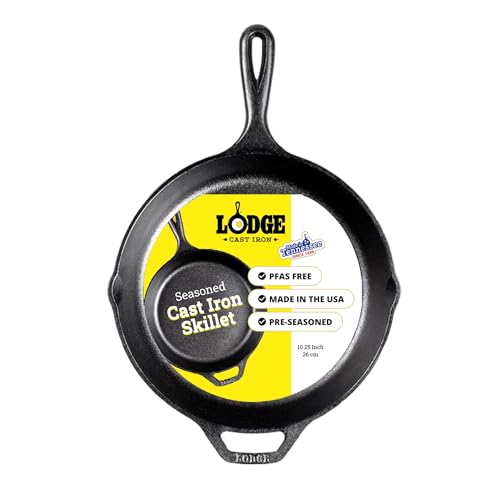
Lodge 10.25-Inch Cast Iron Skillet: 87,490 reviews, rust explained
The classic American cast iron skillet at about $22.91 with 87,490 Amazon ratings. Tough and versatile, but some buyers report rust after first use and food sticking.
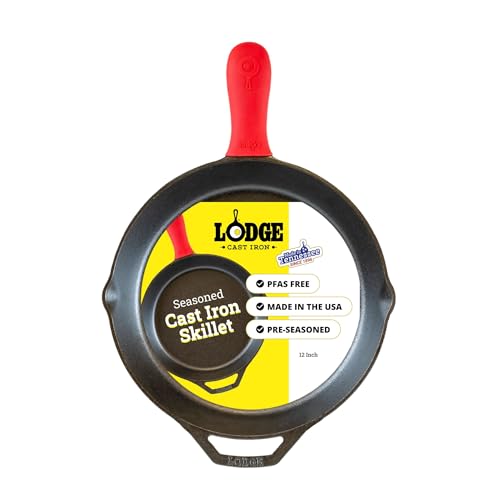
Lodge 12-Inch Cast Iron Skillet: too heavy, or just right?
A 12-inch pre-seasoned cast iron skillet at $26.68 with a red silicone handle holder and 70,566 Amazon ratings. Buyers praise durability, but size, weight and nonstick feedback are split.
Some links on this site are affiliate links. If you buy through them we may earn a small commission, at no extra cost to you.