Home › Guides › Care and cleaning
How to oil a cutting board: wood, bamboo and titanium care
Hot soapy water after each food, dry upright, sanitize after raw meat. Oil wood and bamboo with food-grade mineral oil monthly, never cooking oil; titanium needs no oil.
Wash every cutting board in hot soapy water right after use, dry it standing up, and sanitize it after raw meat. Wood and bamboo boards also need a coat of food-grade mineral oil about once a month, never olive or vegetable oil, which go rancid. Titanium and steel boards need no oil at all; wash, dry, and keep ceramic knives off them. The one hard rule for bamboo: hand wash only, because heat and soaking crack it.
The routine that applies to every board
Three steps, every time, regardless of material.
- Wash in hot, soapy water after each food. The FDA asks for this "after preparing each food item," not at the end of the meal, so raw chicken juice is gone before the salad goes on.
- Rinse and dry. Ohio State University Extension says to rinse thoroughly, then air dry or pat dry with fresh paper towels. Stand wood and bamboo on edge so both faces dry at the same rate; a board that dries on one side only can cup.
- Sanitize after raw meat, poultry or seafood. The methods are below. Also keep one board for raw meat and a different one for produce and anything eaten uncooked, which the CDC lists as a basic rule.
Retire any board, whatever it is made of, once it has grooves you cannot clean. Both Ohio State and University of Wisconsin Extension say deep cuts trap bacteria and make a board a replacement, not a cleaning, problem.
Sanitizing: bleach, vinegar, peroxide, boiling water
The standard extension-office sanitizer is diluted chlorine bleach: one tablespoon of unscented, regular bleach per gallon of water. Wisconsin Extension says to flood the surface, let it sit several minutes, then rinse and air dry. Use it after raw meat, not every day; it is a sanitizing step, not a soap substitute.
If you would rather not keep bleach around, Ohio State Extension gives two alternatives, with a warning to never mix them:
- White distilled vinegar (5 percent). Spray or pour it on and let it sit 10 minutes at room temperature before rinsing.
- Hydrogen peroxide (3 percent). Same idea: 10 minutes at room temperature, or one minute if warmed to about 150°F.
Boiling water is a home method rather than an extension recommendation. I'm Plastic Free suggests pouring boiling water over a washed board as a final step. It is fine on metal and on solid wood, but do not do it to bamboo or glued boards, which can crack from the heat shock.
None of these should go on a board with cracks or deep grooves. Replace that board.
Wood: the oiling routine
Wood dries out, and dry wood splits. The Rational Kitchen puts it simply: "Wood boards also need to be oiled occasionally or they'll dry out and can split," and recommends rubbing in food-grade cutting board oil "monthly or at least a few times a year."
What oil. Food-grade mineral oil, sold at drugstores and hardware stores. Cook's Country is specific about what not to use: "Don't use olive or vegetable oil, which can become rancid and can make the food that comes into contact with the board taste bad." Mineral oil does not oxidize, so it never turns. Board conditioners that mix mineral oil with beeswax are the same idea with a little surface wax on top.
How often. Cook's Country suggests "every month" as a general rule, or six or seven times a year depending on how often the board is used and washed. A board that is scrubbed hard after raw meat every night needs the monthly end of that range. The test: if water no longer beads on the surface, or the wood looks pale and dry, oil it.
How to apply. Start with a clean, fully dry board. Pour on a generous amount, spread it with a cloth across every face including the edges, and let it soak in for 20 to 30 minutes or overnight. Wipe off what has not absorbed. A new or very dry board can take two or three coats.
What to avoid. No dishwasher for anything glued or laminated; Wisconsin Extension says solid wood can go through, but The Rational Kitchen keeps wood on the hand-wash list, and the heat and long soak shorten its life either way. Never leave wood sitting in water. Dry it upright.
Bamboo: hand wash only, then treat it like wood
Bamboo is a grass pressed and glued into a board, which is why it is harder than most hardwoods and why it fails differently: heat and soaking move the glued strips at different rates, and the board warps or cracks. Hunker's bamboo care guide states it plainly: "Don't put your bamboo cutting board in the dishwasher. The sustained water and heat could cause it to warp or crack."
Wash it in warm or hot soapy water, rinse, wipe, and let it air dry upright. Oil it with the same food-grade mineral oil as wood, before first use and again whenever the surface looks dry or worn; Hunker also warns off vegetable and olive oil for the same rancidity reason. For sanitizing, the one-tablespoon-per-gallon bleach solution works on bamboo too.
The Astercook Deep-Carbonized Bamboo Cutting Board Set ($24.99, 4.5 stars, 3,281 ratings on Amazon as of October 2026) is labeled hand wash only, and some buyers report boards cracking. Skipping the first oiling and letting the board soak are the two habits most likely to get you there.
Titanium and stainless steel: no oil, but mind the knives
Metal boards are the low-maintenance end of the scale. There is nothing to feed, nothing to crack, and I'm Plastic Free notes that titanium is non-porous and can go in the dishwasher. Hot soapy water, the bleach or vinegar rinse, boiling water, all fine.
Two cautions:
- Dry it anyway, and look at it. America's Test Kitchen found metal boards held fingerprints and food splotches even after hand-washing, so a wipe with a dry towel after the rinse is part of cleaning them.
- Keep ceramic knives off them. Zirconia ceramic blades rate about 8.5 on the Mohs scale, against 7.5 to 8 for hardened steel, and are "brittle, subject to chipping" (Wikipedia). On a metal surface, a ceramic edge has nothing to sink into, and chipping is the risk. Steel knives survive but dull faster; Prudent Reviews measured the loss, and our guide on whether titanium boards are real titanium or steel covers that and the magnet test.
Scratches are cosmetic on metal, not a hygiene problem the way grooves in wood are, but they are permanent. The maker of the Katori (Yiorr) Titanium Cutting Board Set says scratches are normal, and buyers of the sufkodu Titanium Cutting Board Set of 3 ($59.99, 988 ratings) report mixed results. Dual-sided boards such as the Mirtan Dual-Sided Titanium Cutting Board ($25.19, 155 ratings) need one more check: if the listing shows a plastic second face, as the Sumzzz Titanium/PP board has, wash and sanitize that face like a plastic board and skip the dishwasher's heated-dry cycle unless the maker clears it.
Getting smells and stains out
Onion and garlic in wood, or fish on bamboo, usually come out with the vinegar rinse above: pour 5 percent white vinegar over the board, let it sit, rinse, dry. A paste of coarse salt scrubbed in with half a lemon lifts surface stains from wood and bamboo; rinse well, dry upright, and re-oil, because scrubbing and acid strip the oil. Metal boards rarely hold smells; if yours does, the dishwasher or boiling water settles it.
What not to do: no steel wool on any board, no soaking, no leaving wood face-down on a wet surface.
Bottom line
Hot soapy water after each food, dry upright, sanitize after raw meat. Wood and bamboo get food-grade mineral oil about once a month and never cooking oil. Bamboo never sees the dishwasher. Titanium and steel need only a wash and a dry, plus a steel knife rather than a ceramic one. Replace any board with grooves you cannot clean. The same thinking runs through our guide to caring for non-toxic cookware; if you are still choosing a board, start with non-toxic cutting boards for raw meat.
Sources
- FDA, Safe Food Handling — accessed 2026-10-09
- CDC, Four Steps to Food Safety — accessed 2026-10-09
- Ohio State University Extension, Live Smart Ohio, cutting board safety — accessed 2026-10-09
- University of Wisconsin Extension, "How Safe Is Your Cutting Board?" — accessed 2026-10-09
- Cook's Country, preventing wooden cutting boards from cracking — accessed 2026-10-09
- The Rational Kitchen, wood vs plastic cutting boards — accessed 2026-10-09
- Hunker, how to care for bamboo cutting boards — accessed 2026-10-09
- I'm Plastic Free, "Best Non-Toxic Cutting Boards (No Microplastics)" — accessed 2026-10-09
- America's Test Kitchen, metal cutting boards review — accessed 2026-10-09
- Wikipedia, Ceramic knife — accessed 2026-10-09
Products mentioned in this guide
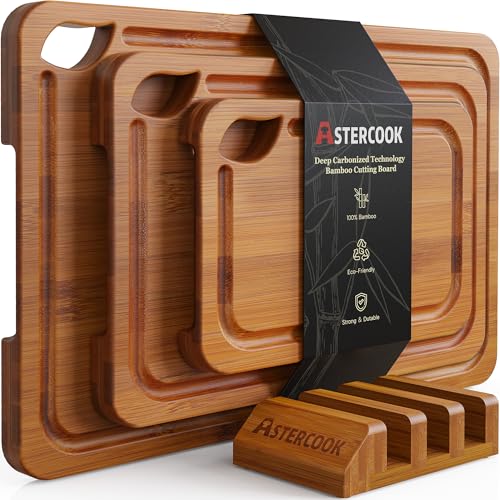
Astercook Bamboo Cutting Board Set: why some boards crack
A $24.99 bamboo set with three reversible boards and a stand. Buyers love the look and the gift appeal, but some report cracking and boards smaller than expected.
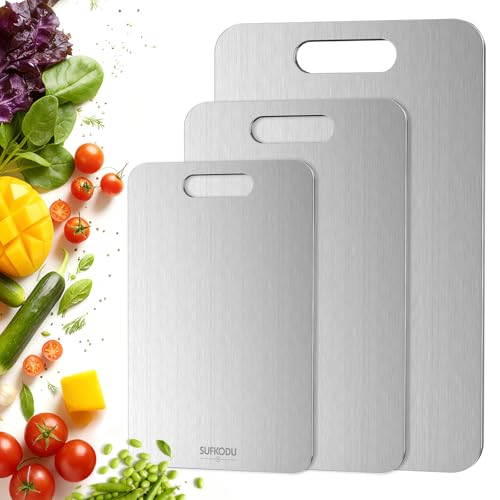
sufkodu Titanium Board Set: does titanium scratch? 988 reviews
A three-size titanium board set for $59.99 that buyers call well-made, light and easy to clean. It has under 1,000 ratings, the scratch reports are mixed, and the titanium claims come from the seller.
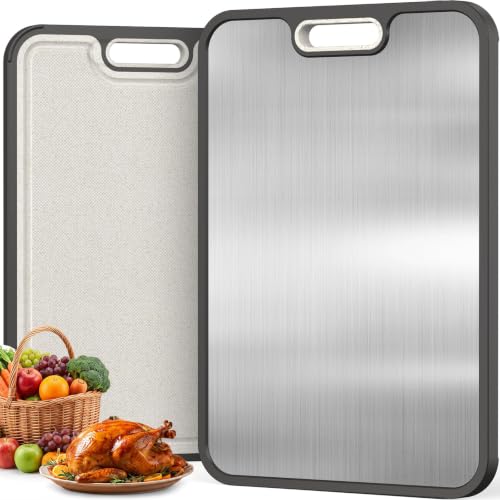
Mirtan Titanium Cutting Board: $25, 155 reviews, too new?
The cheapest board in this group at $25.19, with a titanium side for raw meat and a PP plastic side for produce. Early buyer feedback is positive, but it has only 155 ratings.

Katori Titanium Cutting Boards: 30 reviews, promising or unproven?
A new three-size titanium set at $59.75 with a 4.7-star rating, but only 30 ratings and no Amazon review summary yet. Treat it as promising but unproven.
Some links on this site are affiliate links. If you buy through them we may earn a small commission, at no extra cost to you.