Home › Guides › Care and cleaning
How to clean a cast iron skillet: bacon, steak, burnt-on food
Warm water, a brush, a drop of soap, a full dry on the stove and a thin wipe of oil. Soap is fine per Lodge; soaking and the dishwasher are what cause rust.
Wash it in warm water with a little dish soap and a stiff brush, dry it completely, then wipe on a thin film of oil. That is the whole routine for most nights. Lodge, the company behind the Lodge 10.25-Inch Pre-Seasoned Cast Iron Skillet, says soap is fine, soaking is not, and burnt-on food comes off with a scraper, a short simmer or coarse salt rather than steel wool.
The three-step routine, straight from the maker
Lodge's cleaning page boils daily care down to three steps:
- Wash. "Start with warm, soapy water and scrub with a stiff-bristled brush or scrubbing pad."
- Dry. "Dry completely with a paper towel or lint-free cloth."
- Oil. "Add a thin layer of oil, using a paper towel to distribute it over the entire surface."
Every situation below is a variation on those three steps. The difference is how much scrubbing happens in step one and how careful you are in step two. Water left on bare iron is the most common reason a new skillet turns orange, which is covered in what to do when cast iron rusts after the first use.
The whole thing takes about two minutes. It is less work than scrubbing a stainless pan, and it is a big part of why the Lodge 12-Inch Cast Iron Skillet with Silicone Handle Holder holds 4.6 stars across 70,566 Amazon ratings as of October 2026 even though it is heavy and hand-wash only.
Situation 1: after a normal dinner
This covers eggs, sauteed vegetables, a quick chicken breast, anything that leaves a light residue.
- Let the pan cool until the handle is safe to hold.
- Rinse under warm water. Scrub with a stiff brush or a scrub pad. A drop of dish soap is fine (more on that below).
- Towel-dry, then set the pan over low heat for a minute or two. Lodge's rust restoration page suggests the stovetop step "to make sure it's completely dry."
- While it is still warm, rub in a thin coat of neutral oil. The test is simple: tilt the pan. If oil runs or pools, you used too much. Wipe the extra off.
Situation 2: burnt-on or stuck food
Stuck rice, a scorched sauce, cheese welded to the bottom. The instinct is to fill the pan with water and let it sit. Do not. Lodge is blunt: "Soaking cast iron in water is a recipe for rust."
Work through these in order and stop when the pan is clean:
- Scrape while warm. Lodge recommends "a nylon scrubbing brush or a pan scraper" under warm running water. A plastic pan scraper gets under burnt edges without cutting into the seasoning.
- Simmer water for a minute. Put half an inch of water in the pan and bring it to a simmer on the stove. Most carbonized food lifts within a minute or two. Scrape, pour out, rinse. This is a short boil, not a soak.
- Coarse salt scrub. Pour in a few tablespoons of coarse kosher salt and scrub with a folded paper towel or a cut potato. Farmers' Almanac describes it the same way: "The salt does the scrubbing." Salt is rough enough to lift crust and too soft to strip seasoning.
- Chainmail or a stiff brush for anything left. Save steel wool for rust. Lodge: "We don't recommend these tools for daily cleanup, but it's perfectly fine to use steel wool or a metal scrubber to remove rust."
Then dry and oil exactly as in Situation 1. If you scrubbed hard enough to expose grey metal, that spot needs a proper re-season. How to season cast iron: 3 methods and which oil to use walks through it.
Situation 3: after bacon, steak or anything greasy
Bacon and seared steak leave a lot of rendered fat and small browned bits. The fat itself is not a problem. Cooking with fat is how seasoning gets built. But leaving a quarter inch of bacon grease in the pan overnight invites a rancid smell and a gummy surface.
- Pour off the liquid fat while the pan is warm (into a jar, not the drain).
- Wipe the pan with a paper towel to pick up the loose browned bits.
- Rinse with warm water and a brush. Soap is fine here and is the quickest way to get the greasy film off.
- Dry on the stovetop and wipe on a thin coat of fresh oil.
If the pan smells like last week's bacon, Lodge's troubleshooting page says to wash it in warm soapy water, then either sprinkle salt on the surface overnight or bake it at 400°F for 15 minutes.
One note on animal fat as a seasoning oil: Lodge's oil guide says the company does not recommend "beef tallow, lard, or ghee to season your skillet because it can go rancid." Cooking in bacon fat is fine. Leaving bacon fat as the protective coat is not.
Can you use soap on cast iron?
Yes. This is the most repeated piece of bad advice in cast iron care, and the maker has answered it directly. Lodge's cleaning page: "Soap is totally okay! The soap we use for washing dishes today is no longer strong enough to remove seasoning from cast iron." Its myth-busting article puts it more mildly, "Soap isn't necessary, but you can use mild dish soap to clean cast iron," but the answer is the same.
Lodge's wording, "no longer strong enough," is the clue to why the myth survives. Older soaps were harsher. Modern dish detergent is not. Seasoning is oil that has been baked onto the iron through polymerization, per Lodge, not a film of grease sitting on top, which is explained in the seasoning guide.
Where to draw the line: a drop of soap on a brush, not a sink full of suds with the pan sitting in it. The soap is not the problem. The soaking is.
5 things not to do
- Do not soak it. Not overnight, not "just while we eat." Lodge calls soaking "a recipe for rust."
- Do not put it in the dishwasher. Lodge: "A dishwasher will remove the seasoning and likely cause rust." The long wet cycle and the heated dry do the damage.
- Do not put it away wet or merely towel-dried. Towels leave moisture in the pores. A minute or two on a low burner is cheap insurance.
- Do not over-oil. A sticky or gummy surface "is just a sign of excess oil built up on your cast iron," per Lodge's troubleshooting page. The fix is to bake it upside down at 450–500°F for an hour.
- Do not reach for steel wool on a healthy pan. Lodge reserves steel wool and metal scrubbers for rust. On a seasoned pan, use a brush, scraper or salt.
A sixth, softer rule: Lodge's myth article says large amounts of acidic food cooked for a long time can break down seasoning, while small quantities are fine. A quick tomato sauce is okay. A three-hour chili in a brand-new pan is asking for a dull, grey surface.
Bottom line
Clean a cast iron skillet the same way every time: warm water, a brush, a drop of soap if you want it, a full dry on the stove, a thin wipe of oil. For burnt-on food, simmer water briefly or scrub with coarse salt instead of soaking. After bacon or steak, pour off the fat and wash as usual. The five mistakes that actually hurt the pan are soaking, the dishwasher, storing it damp, too much oil, and steel wool on a pan that only needed a brush. For the material-by-material routine, see how to care for non-toxic cookware.
Sources
- Lodge Cast Iron — How to Clean — accessed 2026-10-09
- Lodge Cast Iron — How to Restore and Season a Rusty Cast Iron Skillet — accessed 2026-10-09
- Lodge Cast Iron — How to Fix Common Cast Iron Concerns — accessed 2026-10-09
- Lodge Cast Iron — 10 Myths About Cast Iron Cookware, Busted! — accessed 2026-10-09
- Lodge Cast Iron — What oils should you use for cast iron cooking and seasoning? — accessed 2026-10-09
- Farmers' Almanac — How to Clean Cast Iron Properly — accessed 2026-10-09
Products mentioned in this guide
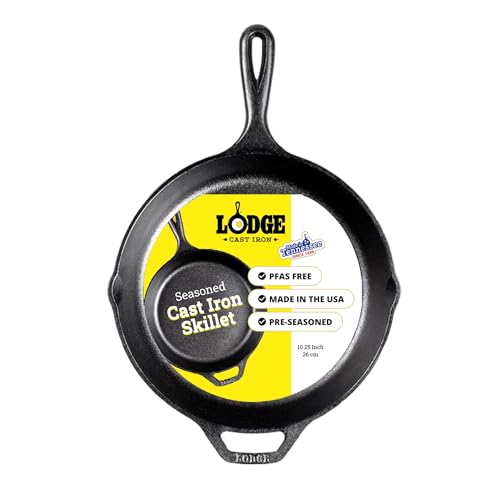
Lodge 10.25-Inch Cast Iron Skillet: 87,490 reviews, rust explained
The classic American cast iron skillet at about $22.91 with 87,490 Amazon ratings. Tough and versatile, but some buyers report rust after first use and food sticking.
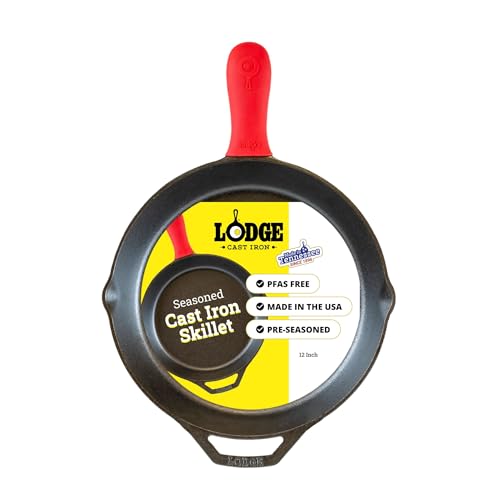
Lodge 12-Inch Cast Iron Skillet: too heavy, or just right?
A 12-inch pre-seasoned cast iron skillet at $26.68 with a red silicone handle holder and 70,566 Amazon ratings. Buyers praise durability, but size, weight and nonstick feedback are split.
Some links on this site are affiliate links. If you buy through them we may earn a small commission, at no extra cost to you.