Home › Guides › Care and cleaning
Cast iron rusted after first use: fix it in 6 steps
A new skillet that rusts after one wash is not ruined. Scrub or soak in 50/50 vinegar for an hour at most, wash, dry on the stove, oil thinly and bake at 450–500°F for an hour.
A new cast iron skillet that shows rust after its first wash is not defective and not ruined. Factory seasoning is thin, and a pan left wet in the rack is enough to raise orange spots. Scrub the rust off with steel wool or a short 50/50 vinegar soak (an hour at most), wash, dry on the stove, wipe on a very thin coat of oil and bake it upside down at 450–500°F for an hour. The pan comes back better seasoned than it was out of the box.
Why a brand-new pan rusts, and why it is so common
On Amazon, the Lodge 10.25-Inch Pre-Seasoned Cast Iron Skillet carries 87,490 ratings as of October 2026, and "rust after first use" is one of the recurring complaints in that pile. It is not a bad batch. It is three things stacking up:
- Factory seasoning is a starter coat, not armor. Lodge sprays a "Kosher-certified, soy-based vegetable oil" onto the pan and bakes it on a hanging conveyor, per its seasoning science page, which also notes the hanging process can leave small unfinished spots. Lodge's myth list calls it a myth that foundry-seasoned cast iron "never has to be seasoned again."
- The first wash is usually the longest one. People scrub a new pan hard, then leave it to air-dry. Lodge's cleaning page: "Soaking cast iron in water is a recipe for rust," and "A dishwasher will remove the seasoning and likely cause rust."
- Bare iron plus water plus air equals rust, fast. Overnight in a damp rack is plenty.
Lodge's instructions for a new pan are short: "Just give it a quick rinse, hand dry, and start cooking," per its quick start guide. The rust usually comes from skipping "hand dry."
Is a little rust dangerous?
Short version: light surface rust is a maintenance problem, not an emergency, but remove it before cooking rather than eat it. This is not medical advice; if you have a health condition, ask your doctor.
Fox News Health quotes James H. Woods, PhD, a toxicologist at the University of Washington: "I am not aware of any studies showing any significant health issues associated with eating food prepared in rusted cookware, but why take the risk?" The same article clears up the tetanus worry: tetanus comes from a bacterium found in soil, not from rust itself. Tasting Table notes the USDA position that rust is not food safe and should not be ingested, and flags hemochromatosis, a condition in which the body stores too much iron, as the one group with a specific reason to be careful. The NIDDK, part of the National Institutes of Health, says doctors may advise people with hemochromatosis to avoid supplements that contain iron.
So: a few orange flecks are not a reason to throw the pan out; Lodge lists "ruined if it rusts" as a myth. But do not cook on it until the rust is gone.
Steps 1 and 2: scrub, or soak in vinegar (briefly)
For light rust, which is what a first-use pan almost always has, skip the vinegar. Lodge's restoration page: "Scour the rusty sections with steel wool or the Lodge Rust Eraser. Then wash the pan with warm, soapy water."
For heavier rust, a vinegar soak loosens it first. The ratio is the same everywhere: equal parts white vinegar and water. The time limit is what matters.
- Farmers' Almanac: "Soak the pan in a 50/50 mix of white vinegar and water. Do not leave it in longer than an hour; vinegar pits the iron if you forget it."
- Southern Cast Iron suggests checking at 30 minutes to an hour, and explains why: "After it gets done eating the rust, it will start eating the iron."
- Bob Vila allows longer for badly rusted pans but gives the same warning, "as soon as the rust lifts away, that vinegar will start on the metal itself," and adds that deep pitting means the pan is probably beyond repair.
Lodge itself has used the method: in its restoration story, a staffer brought a rusted kettle back with "a wire wheel brush and a mixture of vinegar and water." For a first-use skillet, set a timer for 30 minutes, check, and never pass one hour.
Steps 3 and 4: wash, then dry on the stove
After scrubbing or soaking, wash with warm water and dish soap to get the grit and any vinegar off. Soap is fine; Lodge says modern dish soap "is no longer strong enough to remove seasoning from cast iron."
Then dry it properly. A towel is not enough on bare iron. Lodge: "You can place it on the stovetop on low heat for a few minutes to make sure it's completely dry." Farmers' Almanac says 5 to 8 minutes over medium heat "to be sure it is bone dry." A pan that rusts again the next day skipped this step.
Steps 5 and 6: oil thin, then bake
This is the re-season. Lodge's steps, from the restoration page:
- "Add a very thin layer of cooking oil to the entire surface of your cast iron with a cloth or lint-free paper towel." Inside, outside, handle. Then wipe it back until the pan looks almost dry; the oil should not run when you tilt the pan.
- Preheat the oven to 450–500°F. Put foil on the bottom rack to catch drips.
- Put the pan upside down on the center rack so oil cannot pool. Bake for one hour.
- "Turn the heat off and allow the cast iron skillet to cool in the oven. This allows the seasoning to further cure and adhere to the iron."
One coat protects the pan. Farmers' Almanac suggests repeating two or three times for a thicker base. For oil choice, the stovetop alternative and the signs that the coat took, see how to season cast iron: 3 methods and which oil to use. The same steps apply to the Lodge 12-Inch Cast Iron Skillet with Silicone Handle Holder; take the silicone sleeve off first.
Enameled cast iron is a different case
If the rust is on a Lodge 6-Quart Enameled Cast Iron Dutch Oven or any enameled piece, skip the vinegar and the steel wool. The enamel does not rust; the exposed iron on the rim does. Lodge's enameled care page says rim rust shows up when the rim "is not dried sufficiently after being washed," and the fix is gentle: "Clean with a nylon sponge and dish detergent and dry thoroughly. Rub a small amount of cooking oil around the rim to create a seal and prevent rust from re-appearing."
The same page warns to "avoid citrus-based cleaners" because acid dulls the enamel's gloss, so keep vinegar soaks away from enamel too. Enameled pieces never need seasoning. Chipped enamel with iron showing inside the pot is covered in is chipped enameled cast iron safe?
How to keep it from happening again
- Dry on the burner, every time. A minute or two on low after the towel.
- Wipe on a thin coat of oil while warm. Tilt test: nothing should run.
- Never soak, never dishwasher. Both are on Lodge's short list of rust causes.
- Cook fatty food early. Bacon, fried potatoes, cornbread. Lodge says the easiest way to build seasoning is to "use your pan regularly."
- Go easy on long acidic simmers in a new pan. Lodge says large amounts of acidic food cooked for a long time can break down seasoning; small quantities are fine.
The everyday version, including bacon and burnt-on food, is in how to clean a cast iron skillet. Every other material is in how to care for non-toxic cookware.
Bottom line
Rust after the first use is a drying problem, not a defect. Scrub light rust with steel wool, or soak heavier rust in 50/50 vinegar and water for no more than an hour. Wash, dry on the stove until bone dry, wipe on the thinnest coat of oil you can and bake upside down at 450–500°F for an hour. Light rust is not a health emergency, but remove it before cooking; if you have a condition like hemochromatosis, ask your doctor. Enameled pieces get a nylon sponge and oil on the rim, not vinegar.
Sources
- Lodge Cast Iron — How to Restore and Season a Rusty Cast Iron Skillet — accessed 2026-10-09
- Lodge Cast Iron — How to Clean — accessed 2026-10-09
- Lodge Cast Iron — 10 Myths About Cast Iron Cookware, Busted! — accessed 2026-10-09
- Lodge Cast Iron — The Science of Cast Iron Seasoning — accessed 2026-10-09
- Lodge Cast Iron — Quick Start Guide for Cooking in Cast Iron — accessed 2026-10-09
- Lodge Cast Iron — The Story of a Cast Iron Kettle — accessed 2026-10-09
- Lodge Cast Iron — Cleaning & Care: Enameled Cast Iron — accessed 2026-10-09
- Farmers' Almanac — How to Clean Cast Iron Properly — accessed 2026-10-09
- Southern Cast Iron — After Hurricane Harvey, my cast iron was covered in rust — accessed 2026-10-09
- Bob Vila — How To: Remove Rust from Cast Iron — accessed 2026-10-09
- Fox News Health — Is using rusty cookware really that big of a deal? — accessed 2026-10-09
- Tasting Table — Is Rust On Cast Iron Safe? — accessed 2026-10-09
- NIDDK (NIH) — Hemochromatosis: Eating, Diet, & Nutrition — accessed 2026-10-09
Products mentioned in this guide
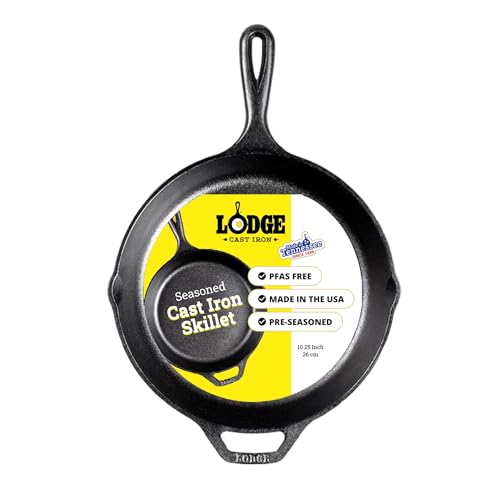
Lodge 10.25-Inch Cast Iron Skillet: 87,490 reviews, rust explained
The classic American cast iron skillet at about $22.91 with 87,490 Amazon ratings. Tough and versatile, but some buyers report rust after first use and food sticking.
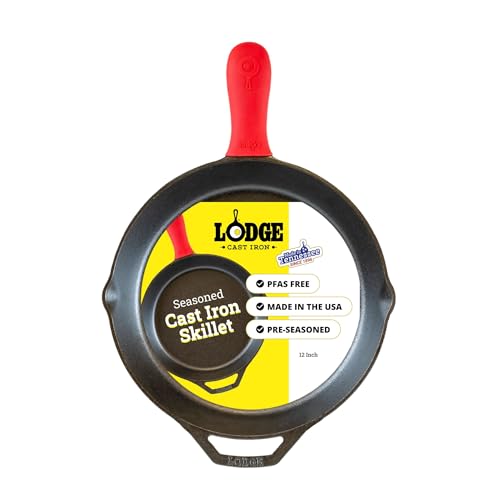
Lodge 12-Inch Cast Iron Skillet: too heavy, or just right?
A 12-inch pre-seasoned cast iron skillet at $26.68 with a red silicone handle holder and 70,566 Amazon ratings. Buyers praise durability, but size, weight and nonstick feedback are split.
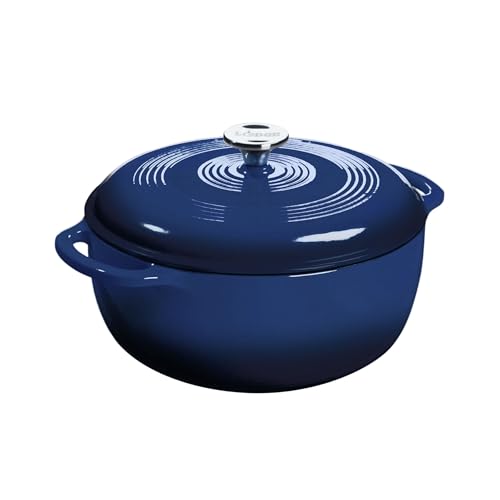
Lodge 6-Qt Enameled Dutch Oven: $69.99, does the enamel chip?
A $69.99 enameled cast iron Dutch oven with 4.7 stars from 39,227 ratings. Buyers love the quality and cleanup, but some report enamel chipping and a heavy build.
Some links on this site are affiliate links. If you buy through them we may earn a small commission, at no extra cost to you.