Home › Guides › Care and cleaning
Is chipped enameled cast iron safe? Rust, lead and when to toss
An exterior chip exposes iron that rusts but is not toxic; oil it and keep cooking. An interior chip or crack means retire the pot, because glass enamel keeps shedding fragments.
A chip on the outside or the rim of an enameled Dutch oven is cosmetic. Keep cooking, and rub a little oil on the bare spot so it does not rust. A chip or crack on the inside cooking surface is different: Le Creuset's own instructions say to stop using the pot, because glass enamel that has started to flake keeps flaking into food. The exposed iron itself is not toxic; it rusts, and small amounts of rust are harmless. The real hazard in a chipped interior is sharp enamel fragments, not metal.
What enamel actually is
Enameled cast iron is plain cast iron with a coat of glass fused onto it. Lodge describes its enameled line as "cast iron with a smooth porcelain surface bonded to the iron" and adds that the enamel "is resistant against acidic and alkaline foods," on its enameled cast iron care page. "Porcelain enamel" means powdered glass melted onto metal at high temperature.
Glass does not react with tomato sauce or wine, does not need seasoning, and wipes clean. Glass is also brittle. Cast iron underneath flexes very slightly with heat and with knocks; the glass on top does not. When the two disagree, the glass loses, and a chip pops off.
Exposed iron: rust, not poison
When enamel chips, what shows is bare grey cast iron, the same material as an unenameled skillet. Left wet, it rusts.
Lodge's cast iron troubleshooting page puts it this way: "Sometimes rust happens and that's totally okay!" and goes on to describe scrubbing it off and re-oiling. A home-care article citing the University of Illinois at Urbana-Champaign says that "eating a little bit of rust isn't dangerous to your health. Rust is iron oxide, and it is considered a benign substance in small quantities," per Hunker.
So a rusty chip on the outside of a Dutch oven is a cosmetic and maintenance issue. Treat the bare spot like a plain cast iron pan: dry it after washing and wipe on a film of cooking oil. Our guide to cast iron that rusted after first use covers the full rust-removal routine if a spot has gotten ahead of you, and the seasoning guide explains why the oil film works.
One caveat: if you have been told by a doctor to limit iron intake, for example because of hemochromatosis, ask your doctor before cooking acidic food on bare cast iron, enameled or not.
Lead and cadmium: what the FDA rules say
Lead and cadmium compounds were historically used in ceramic glazes, and the FDA notes that glazes "fired at inadequate or uncontrolled temperatures" can leach lead into food, in its guidance on imported pottery. The same guidance says ceramicware with any extractable lead "should not be labeled as 'Lead Free.'"
The enforcement limits are in two compliance policy guides. For lead, FDA CPG Sec. 545.450 sets action levels in micrograms of lead per millilitre of leaching solution: 3.0 for flatware, 2.0 for small hollowware, 1.0 for large hollowware, and 0.5 for cups, mugs and pitchers. For cadmium, FDA CPG Sec. 545.400 sets 0.5 for flatware and small hollowware and 0.25 for large hollowware. A 6-quart Dutch oven falls in the "large hollowware" bucket, 1.1 litres or more. Both documents cite the same leach test method, ASTM C738.
Two honest limits on what those rules tell you. First, they are written for "pottery (ceramics)"; enamel on cast iron is a glass coating on metal, and this site did not find a separate federal leach limit specific to it. Second, the test measures what leaches from an intact glaze. A chip exposes iron, not more glaze, so a chip does not by itself increase lead exposure; a chipped interior is a fragment problem, covered below.
Neither Lodge page opened for this article makes a specific lead or cadmium claim about its enamel, so this site does not repeat one. For a number on a specific pot, ask the maker for its leach test result rather than relying on "non-toxic" marketing.
Chip location decides it
Exterior or rim chip. The Takeout's enameled cast iron guide says: "If the edge does chip, you can keep using the pan. Rub the spot with oil to prevent rust, just like you would with standard cast iron," per The Takeout. Food does not sit on the outside of the pot, and the lid rim is above the food line.
Interior chip or crack. Le Creuset's printed instructions, as reproduced on a retailer product page, are blunt: "NEVER use a product when the interior enamel has chipped. It is no longer safe to use and you should immediately CEASE USING the product." The Takeout explains why: "The chip will likely keep getting bigger, which could mean glass shards in your food."
That is the whole rule. Outside: oil it and carry on. Inside: retire it.
When to retire the pot
- A chip anywhere on the interior cooking surface, including the floor and the lower walls.
- A crack, even a hairline, on the interior. Cracks spread with every heat cycle.
- Crazing, a web of fine lines in the glaze, on the interior. Fine lines are where the next chip starts.
- A chip on the lid's underside where condensation drips back into the food.
Check with the maker before tossing. Lodge's enameled care page directs questions it does not answer, chips included, to its customer service line. A pot that chipped under normal use may be covered by the maker's warranty; ask.
How to avoid the next chip
Every rule below comes from Lodge's or Le Creuset's own care instructions.
- No thermal shock. Lodge: "don't introduce cold ingredients into your hot, empty pan, such as using an ice cube to create steam during bread baking." Le Creuset: "NEVER heat the product too quickly or use on maximum/high for preheating or cooking," because thermal shock "will damage the cooking surface."
- Low to medium heat. Le Creuset: "ALWAYS use low to medium heat settings."
- No metal utensils. Lodge: "Cook with wooden, silicone, or nylon utensils—metal can scratch the enamel finish." Le Creuset: never use knives or sharp metal utensils on the enamel.
- Hand wash. Lodge: "Technically, enameled cast iron is dishwasher safe, but we prefer hand washing to preserve the piece's finish." Lodge also says to let the pot cool before washing with warm soapy water and to dry it promptly.
- Store with a buffer. Lodge: "Use pot protectors to prevent moisture buildup and chipping if you're storing with a lid." A paper towel between lid and rim does the same job.
- Oven ceiling of 500 °F. Lodge rates its enamel for stovetop and oven "up to 500℉."
The one habit people forget is the empty preheat. A dry enameled pot on a high burner gets very hot very fast, and the next splash of oil or cold stock shocks the glass. Add fat or liquid first, then heat.
What buyers report on the Lodge Dutch oven
The Lodge 6-Quart Enameled Cast Iron Dutch Oven sells for $69.99 with 4.7 stars from 39,227 ratings on Amazon as of October 2026. Enamel chipping is the most common complaint in buyer feedback, along with weight and the hand-wash requirement. Buyer feedback does not say what caused each chip, but the care rules above cover the usual causes. For comparison, the unenameled Lodge 10.25-Inch Cast Iron Skillet ($22.91, 4.6 stars, 87,490 ratings) draws rust and sticking complaints instead, which are fixable at home; the cast iron cleaning guide walks through those.
Enamel care is one part of the larger routine covered in our hub on how to care for non-toxic cookware, and the materials trade-offs between enamel, bare iron and stainless are in non-toxic cookware materials explained.
Bottom line
Enamel is glass fused to iron. A chip on the outside exposes iron that rusts and is not toxic; oil it and keep cooking. A chip, crack or crazing on the inside means retire the pot, because the glass will keep shedding fragments into food, which is what Le Creuset's instructions say outright. Lead and cadmium are an intact-glaze question governed by FDA leach limits, not a chip question. Prevent the next chip with low heat, no cold-into-hot, no metal tools, no dishwasher, and a towel between lid and rim.
Sources
- Lodge Cast Iron — Enameled Cast Iron cleaning and care — accessed 2026-10-09
- Lodge Cast Iron — Cast iron troubleshooting (rust) — accessed 2026-10-09
- Hunker — The Dangers of Rust on a Roaster Pan (citing University of Illinois) — accessed 2026-10-09
- FDA — Guidance for Industry: Safety of Imported Traditional Pottery and Use of the Term "Lead Free" — accessed 2026-10-09
- FDA — CPG Sec. 545.450 Pottery (Ceramics); Import and Domestic – Lead Contamination — accessed 2026-10-09
- FDA — CPG Sec. 545.400 Pottery (Ceramics); Import and Domestic – Cadmium Contamination — accessed 2026-10-09
- Le Creuset care instructions, as reproduced on Breuninger product page — accessed 2026-10-09
- The Takeout — The Biggest Mistakes That'll Destroy Enameled Cast Iron Pans — accessed 2026-10-09
Products mentioned in this guide
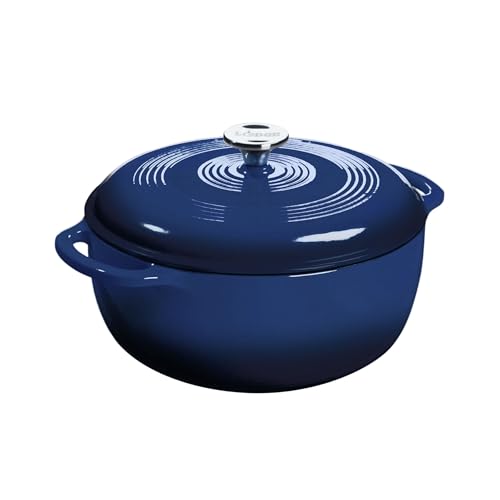
Lodge 6-Qt Enameled Dutch Oven: $69.99, does the enamel chip?
A $69.99 enameled cast iron Dutch oven with 4.7 stars from 39,227 ratings. Buyers love the quality and cleanup, but some report enamel chipping and a heavy build.
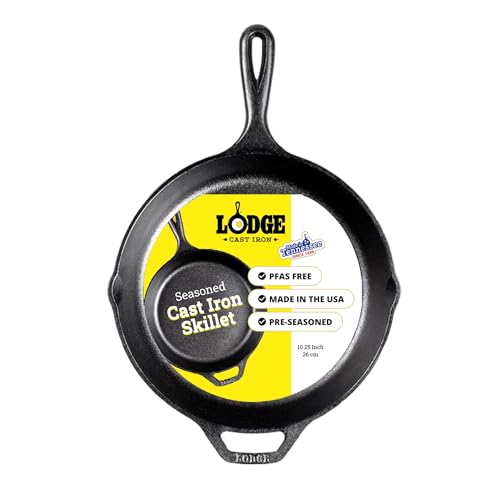
Lodge 10.25-Inch Cast Iron Skillet: 87,490 reviews, rust explained
The classic American cast iron skillet at about $22.91 with 87,490 Amazon ratings. Tough and versatile, but some buyers report rust after first use and food sticking.
Some links on this site are affiliate links. If you buy through them we may earn a small commission, at no extra cost to you.