Home › Guides › Cookware materials, explained
Non-toxic cookware materials explained: 6 options compared
Uncoated stainless, cast iron, enameled cast iron and carbon steel have no coating to wear off; PTFE needs heat limits, ceramic wears fast, and cheap 'titanium' is a coating.
There is no single safest cookware material. Uncoated stainless steel, cast iron, enameled cast iron and carbon steel have no coating to wear off and no documented fume problem at stove temperatures. PTFE (Teflon-type) nonstick is stable at normal cooking heat but breaks down when overheated, and ceramic sol-gel nonstick avoids PTFE but wears out faster. "Titanium" cookware sold under $100 is a titanium-marketed nonstick coating on aluminum, not solid titanium. Below: what each is made of, what goes wrong, heat limit, lifespan, who it suits.
What "non-toxic" means on this site
On this site, a cookware material counts as non-toxic when, used the way the maker directs, there is no documented pathway for it to release something harmful into your food or kitchen air at normal cooking temperatures, and when wear is visible so you know when to stop using it. That is narrower than "safe." Stainless releases a little nickel into long acidic simmers, cast iron adds iron, and any pan left empty on high heat is a problem. If you have a health condition, including a nickel allergy or one affected by iron intake, ask your doctor before changing cookware.
"PFAS-free," "non-toxic" and "100% titanium" on a box are maker's claims until a lab report says otherwise; see our cookware lab test tracker and our guide to PFAS-free vs PFOA-free vs "non-toxic" labels.
1. PTFE nonstick (Teflon and its relatives)
What it is. PTFE is polytetrafluoroethylene, a fluoropolymer sprayed and baked onto an aluminum pan. It is one member of the PFAS family, as Consumer Reports notes. The old manufacturing aid PFOA was phased out of US production by the eight companies in the EPA's 2010/2015 PFOA Stewardship Program, with a target of eliminating it by 2015. The EPA says PFOA and PFOS have been replaced with other PFAS, including the GenX processing aid.
The question people ask. Does it give off fumes? At normal cooking heat, no. A 2012 case report in BMJ Case Reports describes polymer fume fever after a PTFE pan was left on the burner for about five hours and puts PTFE pyrolysis at roughly 315–375°C (600–700°F). Cornell's veterinary college puts the start of degradation above 280°C (536°F) and warns the fumes can kill birds. Science News found an empty nonstick pan reached 730°F in five minutes. Full details are in our guide to whether Teflon is safe.
Heat limit. Keep it under 500°F (260°C) and never preheat it empty.
Lifespan. Until it scratches or flakes. Consumer Reports says you are unlikely to see significant PFAS exposure from a pan with no deep scratches or chips. Buyers on Amazon report wear on the Carote 10-Inch Granite Nonstick Frying Pan at around eight months, as of October 2026. The signs by coating type are in when to replace a nonstick pan.
Who it suits. Eggs, fish and crepes on low to medium heat, with no pet birds in the house.
2. Ceramic sol-gel nonstick
What it is. Not pottery. "Ceramic" nonstick is a sol-gel coating: a silica-based solution sprayed onto an aluminum pan and cured by heat. ChemSec says these coatings "comprise mostly of silica," and a published coating patent describes a silicon-dioxide matrix sprayed on and heated to 120–300°C to cure. Coating maker PPG says its sol-gel product is "made without any PFAS substances." That is a maker's claim, but Consumer Reports' 2022 lab test found no PFAS among 96 compounds screened in the two ceramic-coated pans it tested.
The question people ask. Why does it stop working? The coating is hard (the patent claims 9H pencil hardness against 3H–4H for PTFE) but the slick surface fades with heat, dishwashers and metal utensils. Buyers on Amazon report the nonstick on the Sensarte Ceramic Frying Pan with Lid fading within a week for some, and coating peeling on the Carote 21-Piece Ceramic Cookware Set, as of October 2026. Our ceramic nonstick safety guide goes deeper, and the 30/60/90-day egg test shows how to stretch its life.
Heat limit. Follow the maker's oven rating; cook on low to medium.
Lifespan. Shorter than PTFE in most buyer reports; treat it as a consumable.
Who it suits. People who want nonstick without PTFE and accept replacing the pan more often. The Our Place Always Pan 2.0 is the best-known example, at 4.3 stars on Amazon.
3. Stainless steel
What it is. An iron alloy with chromium and usually nickel. "18/10" means about 18% chromium and 10% nickel, the grade sold in the US as 304, according to Xometry. Grade 430 has 16–18% chromium and under 0.75% nickel, per AZoM.
The question people ask. Does it leach? A 2013 study in the Journal of Agricultural and Food Chemistry (Kamerud, Hobbie and Anderson) simmered tomato sauce in stainless steel and found nickel rose up to 26-fold and chromium 7-fold after six hours; leaching dropped with use and stabilized after the sixth cooking cycle. The authors recommended that people sensitive to metals lower their exposure. Who should care is in whether stainless steel cookware is safe.
Heat limit. None from a coating, because there is none.
Lifespan. Decades. Nothing wears off.
Who it suits. Searing, sauces, boiling, deglazing. The learning curve is sticking: buyers on Amazon say food sticks to the Cuisinart Chef's Classic 11-Piece Set without heat and fat, and report staining. Our guide to cooking on stainless without sticking fixes that with one test. The Cosori Stainless Steel Kettle uses a 304 interior, by the maker's description.
4. Cast iron
What it is. Iron with carbon, cast in a mold, then seasoned. Lodge describes seasoning as "just oil baked onto the pan," which builds up with use into a natural nonstick layer.
The question people ask. Does it add iron to food? Yes. A 1986 study in the Journal of the American Dietetic Association (Brittin and Nossaman) cooked 20 foods in iron and non-iron pans and found 90% picked up significantly more iron in iron, with acidity, moisture and cooking time driving the amount. For most people that is harmless or useful; people with iron-overload conditions should ask their doctor.
Heat limit. Lodge says cast iron handles any cooktop, oven, grill or open flame.
Lifespan. Lodge says "generations" with care. The failure modes are rust and stripped seasoning, both fixable: see cast iron rusted after first use and how to season cast iron.
Who it suits. Steaks, cornbread, anything that wants heat retention. Buyers on Amazon report rust after first use and sticking on the Lodge 10.25-Inch Skillet, 87,490 ratings at 4.6 stars as of October 2026; the 12-inch version with handle holder draws the same notes plus weight.
5. Enameled cast iron
What it is. Cast iron with a glass enamel fused to the surface. Lodge's enameled line needs no seasoning, "can handle acidic and alkaline ingredients (even tomato sauce!)," and is rated to 500°F in the oven.
The question people ask. Is it safe if the enamel chips? Lodge's care page focuses on preventing chips: pot protectors, no empty preheating, no thermal shock. We cover the chipped-pot question in is chipped enameled cast iron safe.
Heat limit. 500°F oven per Lodge; low to medium on the stovetop, with oil, per the same page.
Lifespan. Long, as long as the enamel stays intact. Buyers on Amazon report enamel chipping on the Lodge 6-Quart Enameled Dutch Oven, 39,227 ratings at 4.7 stars as of October 2026.
Who it suits. Braises, soups, bread, tomato-based dishes that bare cast iron handles badly.
6. Carbon steel, "titanium" and the hybrids
Carbon steel. Iron with a little carbon, spun and stamped from sheet rather than cast, which Lodge says makes it "lighter and thinner than cast iron" so it heats and cools faster. It is seasoned the same way, and Lodge warns that soaking it "will likely cause rust." Same care, lifespan and uses as cast iron, lighter in the hand. We do not yet review one.
Titanium-coated. Solid titanium cookware exists, but the sets sold around $100 are not it. The Carote 20-Piece Titanium Nonstick Cookware Set is a nonstick coating marketed as titanium; "titanium" is a coating claim, and buyer reports on scratching are mixed, as of October 2026. Treat it as nonstick with the heat rules from section 1, and ask the maker whether the coating is PTFE-based. Same question for titanium cutting boards: see titanium cutting boards: real titanium or steel.
Hybrids and microplastics. HexClad-style pans put a stainless lattice over nonstick valleys; the marketing and the lawsuit are in is HexClad non-toxic. Any coating that cracks can shed: a 2022 Flinders and Newcastle study (Flinders news) counted about 9,100 plastic particles from a single crack in a Teflon coating and 2.3 million from a broken one, and the authors called for risk assessment. Uncoated metal has nothing to shed; microplastics in the kitchen ranks the sources.
Bottom line
If you want one pan with no coating debate, buy uncoated stainless or cast iron and learn the heat control; both last decades. Enameled cast iron is the easiest no-coating option for acidic food. PTFE nonstick is fine for eggs at medium heat if you replace it when it scratches and keep birds out of the kitchen. Ceramic sol-gel avoids PTFE at the cost of a shorter life. For a ranked list, see our best non-toxic pans guide; for keeping any of these alive, our care guide for non-toxic cookware.
Sources
- Consumer Reports — You can't always trust claims on "non-toxic" cookware — accessed 2026-10-09
- EPA — Fact sheet: 2010/2015 PFOA Stewardship Program — accessed 2026-10-09
- EPA — Our current understanding of the human health and environmental risks of PFAS — accessed 2026-10-09
- BMJ Case Reports 2012 — Polymer fume fever (PMC4544973) — accessed 2026-10-09
- Cornell University College of Veterinary Medicine — PTFE (Teflon) toxicosis in ducks — accessed 2026-10-09
- Science News — Sticky situation: nonstick surfaces can turn toxic at high heat — accessed 2026-10-09
- ChemSec — Ceramic non-stick alternative to PTFE — accessed 2026-10-09
- EP1835002A2 — Non-stick ceramic coating composition and process — accessed 2026-10-09
- PPG — Fusion Pro sol-gel ceramic non-stick coating — accessed 2026-10-09
- Xometry — 18/10 stainless steel — accessed 2026-10-09
- AZoM — Stainless steel grade 430 — accessed 2026-10-09
- Kamerud, Hobbie, Anderson — Stainless steel leaches nickel and chromium into foods during cooking, J Agric Food Chem 2013 (PMC4284091) — accessed 2026-10-09
- Lodge — Cast iron cleaning and care — accessed 2026-10-09
- Lodge — Enameled cast iron cleaning and care — accessed 2026-10-09
- Lodge — Carbon steel cleaning and care — accessed 2026-10-09
- Brittin & Nossaman — Iron content of food cooked in iron utensils, J Am Diet Assoc 1986 (Europe PMC record) — accessed 2026-10-09
- Flinders University — Not-so-tough Teflon — accessed 2026-10-09
Products mentioned in this guide
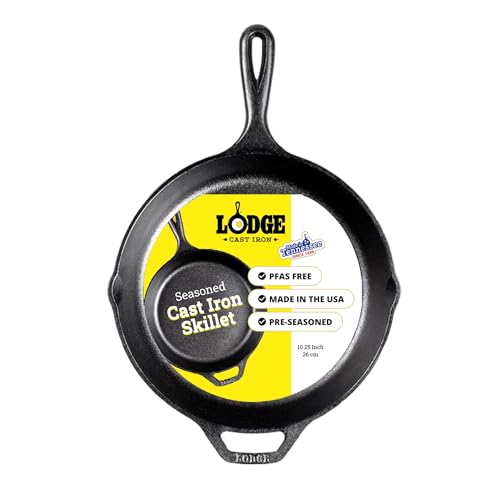
Lodge 10.25-Inch Cast Iron Skillet: 87,490 reviews, rust explained
The classic American cast iron skillet at about $22.91 with 87,490 Amazon ratings. Tough and versatile, but some buyers report rust after first use and food sticking.

Cuisinart Chef's Classic Stainless Set: no coating, some staining
A $113.15 stainless steel set with aluminum-encapsulated bases and glass lids, no nonstick coating. Buyers like the look and even heat, but some report staining and food sticking.
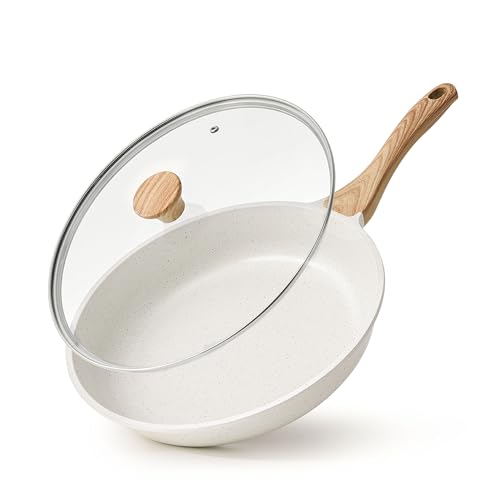
Sensarte Ceramic Frying Pan: is ceramic nonstick worth it?
A $26.99 ceramic-coated pan (price varies by size) with a glass lid. Buyers like the even heat and easy cleanup, but nonstick performance and durability are mixed.
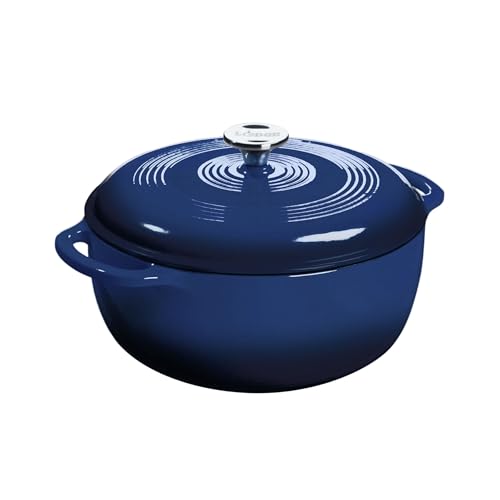
Lodge 6-Qt Enameled Dutch Oven: $69.99, does the enamel chip?
A $69.99 enameled cast iron Dutch oven with 4.7 stars from 39,227 ratings. Buyers love the quality and cleanup, but some report enamel chipping and a heavy build.
CAROTE 8-Inch Granite Pan: 36,171 reviews, 663 on durability
A small $17.99 nonstick skillet with 36,171 ratings on Amazon. Buyers love the nonstick surface and size for one or two people, but some report the handle breaking.
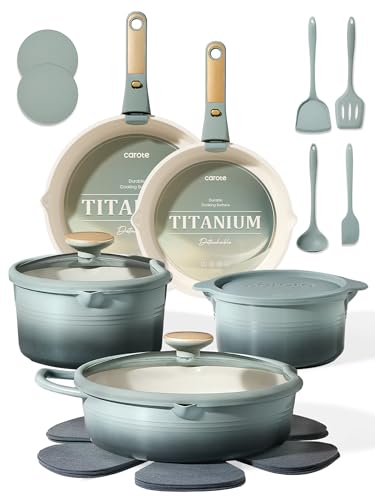
Carote 20-Piece Titanium Set: is "titanium" just a coating?
A $99.99 detachable-handle set that stacks to save space. Only 591 Amazon ratings so far, and buyers disagree on whether the coating scratches.
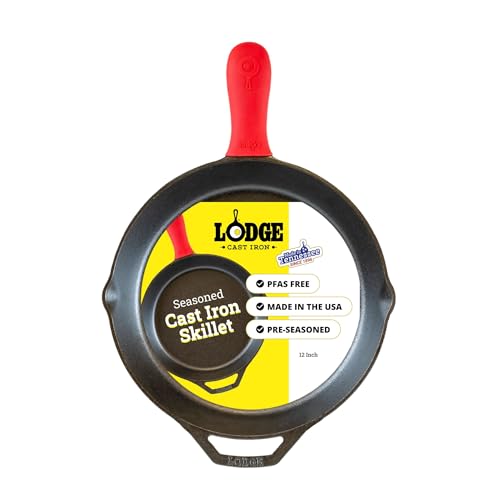
Lodge 12-Inch Cast Iron Skillet: too heavy, or just right?
A 12-inch pre-seasoned cast iron skillet at $26.68 with a red silicone handle holder and 70,566 Amazon ratings. Buyers praise durability, but size, weight and nonstick feedback are split.
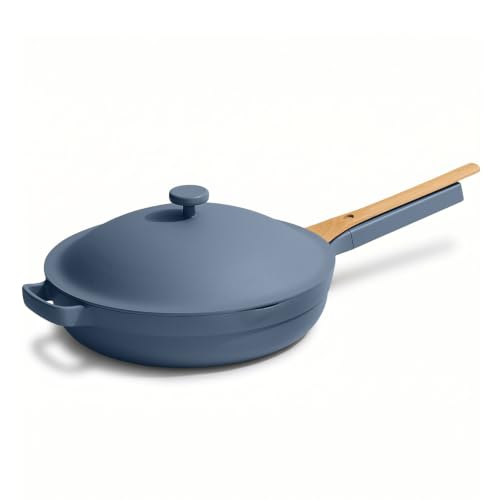
Our Place Always Pan 2.0: is it worth $95?
A $95 ceramic nonstick pan that replaces several pieces with a steamer basket and spatula. Buyers like the cooking, but value and nonstick feedback are mixed.
Some links on this site are affiliate links. If you buy through them we may earn a small commission, at no extra cost to you.