Home › Guides › Cookware materials, explained
Titanium cutting boards: real or steel, and bad for knives?
Many Amazon "titanium" boards are steel; a magnet and a scale expose them. Real or not, metal dulls knives far faster than wood, but sheds no plastic.
Many "titanium" cutting boards sold online are not solid titanium. When America's Test Kitchen weighed and measured five of them, only one was titanium; two were ordinary stainless steel. Real titanium is non-magnetic and weighs about 4.5 g/cm³ against 7.5 to 8 for stainless steel, so a fridge magnet and a kitchen scale tell you a lot. Either metal dulls a knife faster than wood or plastic. What a metal board does avoid is the plastic shedding a 2023 study measured from plastic boards.
Why reviewers disagree about titanium boards
Two careful sites reached opposite verdicts in the same year. The Rational Kitchen (September 2025) calls titanium boards "a bad fad." Its case: they "will dull knife edges very quickly," the metal-on-metal sound is unpleasant, the thin smooth sheet slides on the counter, and "you will never see a professional chef use a titanium cutting board for actual cutting." It also warns that "cheap ones are likely not pure titanium but rather a cheaper metal with a titanium coating," and puts a genuine 14 x 10 inch board at roughly $70.
I'm Plastic Free (April 2026) lists titanium among its best non-toxic boards. Its case: titanium "has been used for decades in the medical device industry," it is non-porous, nothing sticks to it, it goes in the dishwasher, and it lasts. The same article admits it "is not gentle on knives and can blunt them if you are not careful," that smelting titanium is energy-intensive, and that many boards sold as titanium contain "industrial steel alloys."
The two sites agree on the facts and differ on what matters more: knife edges, or no plastic and a dishwasher.
Is your "titanium" board actually steel?
Treat "100% pure titanium" on a listing as a maker's claim until something backs it up. The Sumzzz Titanium Cutting Board ($38.99, 4.4 stars, 7,914 ratings on Amazon as of October 2026) has buyers disputing what the metal actually is. The Mirtan Titanium Cutting Board sells for $25.19 with "100% pure titanium" in the title and only 155 ratings; at that price, the Rational Kitchen's $70 figure for a real sheet is worth keeping in mind.
America's Test Kitchen did the math on its boards: the two that turned out to be stainless steel were "significantly heavier and priced under $100." I'm Plastic Free says to look for independently tested boards; the brand it recommends shows SGS lab reports for 99.89% TA1-grade titanium and food-contact compliance. Without something like that, the label is just a label.
Three checks you can do at home
1. The magnet. Titanium is paramagnetic, which in a kitchen means a magnet does not stick to it (Wikipedia). Grade 430 stainless, the cheaper grade, is ferromagnetic; grade 304 is not (Sciencing). The limit: 304 stainless that has been bent or rolled can pick up "slight magnetic properties," and welded or cold-worked spots read differently from the rest of the sheet (Saky Steel). So a magnet that grabs hard rules titanium out. A magnet that slides off does not rule steel in, because 304 also fails the magnet test.
2. The scale. Titanium's density is about 4,500 kg/m³; stainless steel runs 7,480 to 8,000 (Engineering Toolbox). A steel sheet of the same length, width and thickness weighs about 1.7 times as much. Measure the board, multiply length by width by thickness to get the volume, weigh it, and compare. This is the check America's Test Kitchen used to catch its two steel boards.
3. The price. Titanium is expensive to smelt and form. A full-size board at $25 deserves the magnet and the scale before you trust the label.
None of these checks tells you the alloy grade, whether a coating was used, or whether the sheet meets food-contact rules. They only tell you whether the base metal could be titanium.
Do titanium boards dull knives?
Yes, and faster than most buyers expect. Prudent Reviews ran 300 rocking cuts and 300 chops on each board and measured edges with a BESS sharpness tester. The titanium board cost 444 points of sharpness, stainless steel 184, end-grain walnut 15, and rubber 10. America's Test Kitchen reported that after mincing parsley, dicing an onion, chopping squash and slicing a tomato on a metal board, the knife struggled with the tomato, while the same blade used on wood stayed "sharp as new."
Makers answer that titanium is softer than knife steel. On paper that is true. Commercially pure Grade 2 titanium reads 70 to 80 on the Rockwell B scale (Urban EDC), while quality knife blades sit around HRC 55 to 66 (Wikipedia, Rockwell hardness); the B and C scales are different tests, but on the Mohs scale titanium is 6.0 and hardened steel 7.5 to 8 (Wikipedia). The problem is not hardness. Wood lets the edge sink in slightly and spreads the force; on metal, "every cut is edge against metal," and the edge deforms and micro-chips over time (DDR BBQ Supply). Scratches tell the same story from the board's side: the maker of the Katori Titanium Cutting Board Set says scratches are normal, and buyers of the sufkodu Titanium Cutting Board Set of 3 are split on how fast they appear.
The microplastics argument, with the actual numbers
The strongest case for a metal board comes from a 2023 paper in Environmental Science & Technology (Yadav et al., PubMed 37220346). The authors chopped on polyethylene and polypropylene boards and estimated yearly exposure at 7.4 to 50.7 grams of polyethylene per person, or about 49.5 grams of polypropylene; polypropylene released 5 to 60 percent more by mass than polyethylene. In the same paper, polyethylene particles showed "no adverse effects on the viability" of mouse fibroblast cells over 72 hours, so the study measures exposure, not harm.
Two things follow. A two-sided board with a PP face, such as the Sumzzz Titanium/PP model, is a plastic board whenever you flip it, and PP was the heavier shedder in the study. And wood and bamboo avoid the plastic question just as well as titanium does. Our guide to microplastics in the kitchen covers the other sources.
Raw meat, cleaning and the "hygiene" claim
A non-porous metal sheet is easy to rinse and, per I'm Plastic Free, can go through the dishwasher. That is a real convenience for raw chicken. It is not a bacteria advantage: America's Test Kitchen's lab work found wood, plastic and bamboo washed in hot soapy water were just as effective at reducing bacteria, and the metal boards kept fingerprints and food splotches after hand-washing. Whatever the material, the FDA asks for one board for produce and a separate one for raw meat, poultry and seafood, washed after each item. See our guides to non-toxic cutting boards for raw meat and how to clean and oil cutting boards.
Who should buy one, and who should use wood
A titanium board makes sense if you want a dedicated raw-meat board with no plastic, you use the dishwasher, you accept sharpening more often, and you verify the metal. The GoodArtificer Titanium Cutting Boards, Set of 3 ($89.99, 250 ratings) is the priciest of the group, which fits the cost of real titanium better than the $25 boards do.
Use wood if you care about your knives or do most of your chopping on one board; The Rational Kitchen, America's Test Kitchen and Prudent Reviews all land there for daily cutting. The Astercook Deep-Carbonized Bamboo Cutting Board Set ($24.99, 3,281 ratings) is the plastic-free budget option, with two caveats from buyers: some boards crack, and it is hand wash only. Bamboo is also harder on edges than wood, per The Rational Kitchen. The trade-offs are the same ones that run through our non-toxic cookware materials guide: every surface gives something up.
Bottom line
A titanium cutting board is not dangerous, but it is not magic. Many cheap ones are steel, so check with a magnet and a scale before believing the label. Real or not, metal dulls knives several times faster than wood in measured tests. The genuine win is no plastic shedding and dishwasher cleanup for raw meat. Buy one for that job, keep a wood board for everything else, and sharpen more often.
Sources
- The Rational Kitchen, "Titanium Cutting Boards: A Bad Fad" — accessed 2026-10-09
- I'm Plastic Free, "Best Non-Toxic Cutting Boards (No Microplastics)" — accessed 2026-10-09
- America's Test Kitchen, metal cutting boards review — accessed 2026-10-09
- Prudent Reviews, titanium and stainless steel cutting boards — accessed 2026-10-09
- Yadav et al., "Cutting Boards: An Overlooked Source of Microplastics in Human Food?", Environ. Sci. Technol. 2023, PubMed 37220346 — accessed 2026-10-09 (abstract read via Europe PMC record)
- Wikipedia, Titanium — accessed 2026-10-09
- Engineering Toolbox, densities of metals and alloys — accessed 2026-10-09
- Sciencing, 430 vs 304 stainless steel — accessed 2026-10-09
- Saky Steel, is stainless steel magnetic — accessed 2026-10-09
- Urban EDC, titanium Grade 2 vs Grade 5 — accessed 2026-10-09
- Wikipedia, Rockwell hardness test — accessed 2026-10-09
- Wikipedia, Ceramic knife (Mohs comparison) — accessed 2026-10-09
- DDR BBQ Supply, do titanium cutting boards dull knives — accessed 2026-10-09
- FDA, Safe Food Handling — accessed 2026-10-09
- The Rational Kitchen, wood vs plastic cutting boards — accessed 2026-10-09
Products mentioned in this guide
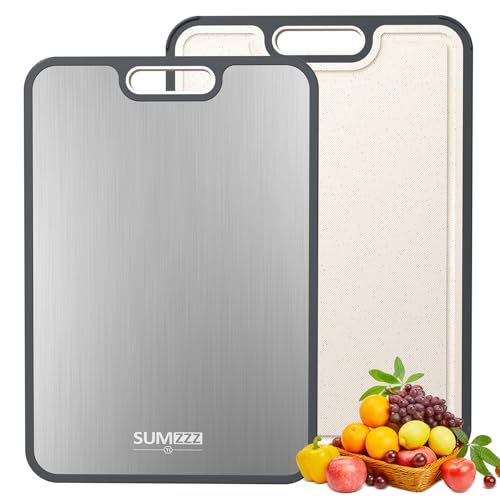
Sumzzz Titanium Cutting Board: is it really titanium?
A large two-sided board at $38.99, titanium on one side and PP plastic on the other. Buyers like the size and easy cleanup, but many dispute the titanium claim and some call it poor value.
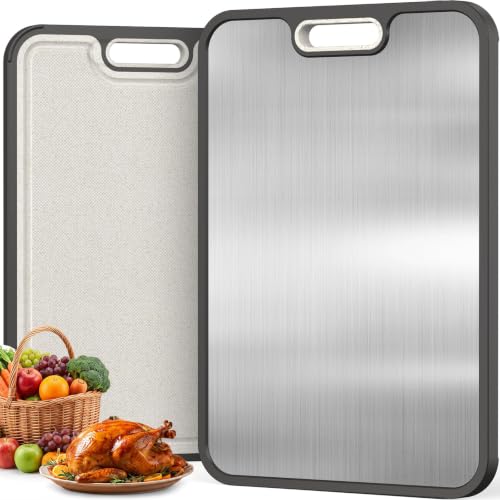
Mirtan Titanium Cutting Board: $25, 155 reviews, too new?
The cheapest board in this group at $25.19, with a titanium side for raw meat and a PP plastic side for produce. Early buyer feedback is positive, but it has only 155 ratings.
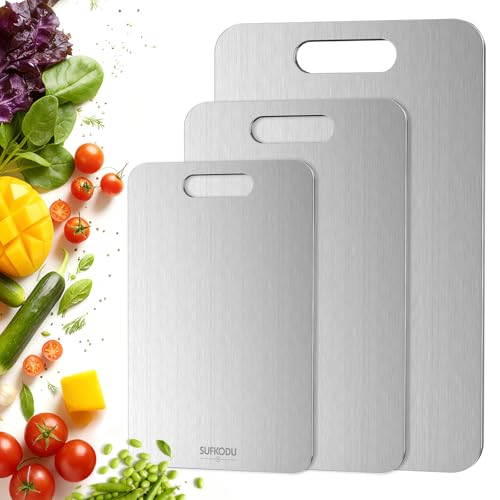
sufkodu Titanium Board Set: does titanium scratch? 988 reviews
A three-size titanium board set for $59.99 that buyers call well-made, light and easy to clean. It has under 1,000 ratings, the scratch reports are mixed, and the titanium claims come from the seller.

Katori Titanium Cutting Boards: 30 reviews, promising or unproven?
A new three-size titanium set at $59.75 with a 4.7-star rating, but only 30 ratings and no Amazon review summary yet. Treat it as promising but unproven.
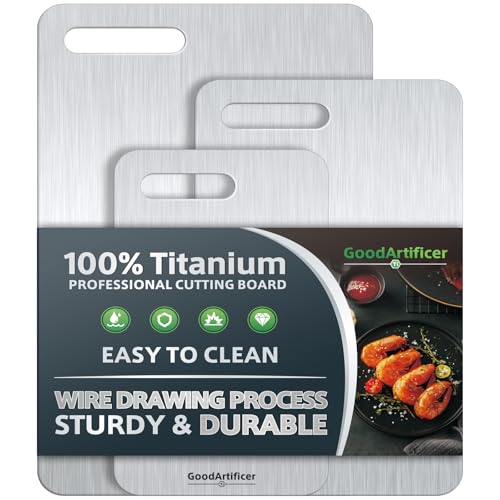
GoodArtificer Titanium Boards: worth $89.99 for three?
A three-board titanium set at $89.99, the priciest in this group. Buyers praise easy cleaning and the sizes, but it has only 250 ratings and the material claims are the seller's.
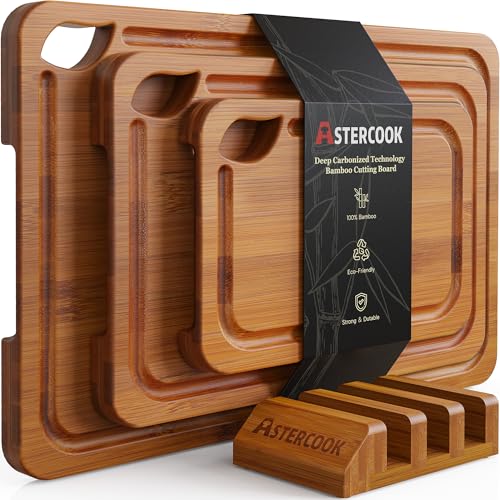
Astercook Bamboo Cutting Board Set: why some boards crack
A $24.99 bamboo set with three reversible boards and a stand. Buyers love the look and the gift appeal, but some report cracking and boards smaller than expected.
Some links on this site are affiliate links. If you buy through them we may earn a small commission, at no extra cost to you.