Home › Guides › Cookware materials, explained
Microplastics in the kitchen: 7 sources the studies measured
Seven kitchen items shed measurable microplastics in 2019-2024 studies; microwaved plastic and cutting boards top the list. No study yet shows harm in people. Swap heated items first.
Seven kitchen items have been measured shedding plastic particles in peer-reviewed studies from 2019 to 2024: plastic cutting boards, polypropylene parts that meet hot water, plastic tea bags, melamine sponges, plastic containers in the microwave, bottled water, and black recycled-plastic utensils (a different problem: flame retardants). Counts run from millions of particles a year to billions per cup. What those particles do inside a person is not settled: a 2022 World Health Organization review found the data "of only very limited use" for judging human risk. Below is what each study measured, where it falls short, and seven swaps in order of likely impact.
1. Plastic cutting boards: up to 50 grams a year
A 2023 study in Environmental Science & Technology chopped on polyethylene and polypropylene boards and counted what came off. The authors estimated that polyethylene boards release 7.4 to 50.7 grams of microplastics per person per year (14.5 to 71.9 million particles), and a polypropylene board 49.5 grams (79.4 million particles). Polypropylene shed 5 to 60 percent more mass. Chopping carrots on polyethylene released more than chopping on a bare board. Most particles were under 100 micrometers (Yadav et al., Environmental Science & Technology 2023, abstract via Europe PMC).
Limits: the yearly numbers are modeled from lab chopping, not measured in people. The same paper's preliminary test on mouse fibroblast cells saw no effect on cell viability over 72 hours. Large source by mass, no harm shown in that test.
The usual swaps are titanium or bamboo. "100% titanium" is a maker's claim that some buyers dispute; see our look at whether titanium boards are real titanium or steel. The sufkodu Titanium Cutting Board Set of 3 ($59.99, 4.5 stars, 988 ratings on Amazon as of October 2026) and the Astercook Deep-Carbonized Bamboo Cutting Board Set ($24.99, 4.5 stars, 3,281 ratings) are the two we have reviewed.
2. Polypropylene and hot water: baby bottles as the worst case
A 2020 Nature Food study from Trinity College Dublin prepared formula in polypropylene baby bottles following World Health Organization steps and found releases from a few thousand up to 16.2 million particles per liter. The team estimated infants could take in 14,600 to 4.55 million particles a day, depending on regional feeding habits, and suggested an extra rinse after sterilizing and before filling (Food Packaging Forum summary of Li et al., Nature Food 2020).
Limits: co-author John Boland said the group did not want to "unduly alarm parents" given how little is known about health consequences. For adults, the lesson is the polymer: polypropylene is the plastic in many kettle lids, water windows and filter baskets. Our guide to which kettle parts touch the water goes part by part. The Cosori 1.7L Stainless Steel Electric Kettle ($35.99, 4.5 stars, 5,486 ratings on Amazon as of October 2026) and the Cosori 1.7L Glass Electric Kettle ($24.43, 4.5 stars, 49,713 ratings) both carry a "no plastic contact with water" maker's claim.
3. Plastic tea bags: billions per cup
McGill University researchers brewed single plastic tea bags at tea temperature and counted about 11.6 billion microplastics and 3.1 billion nanoplastics released into one cup. Water fleas dosed with the particles survived but showed anatomical and behavioral abnormalities. The lead author said more research is needed before anyone can say what this does to people (McGill Newsroom, 2019, on Hernandez et al., Environmental Science & Technology).
Limits: this applies to silky mesh bags, not plain paper bags, and counts at this scale depend heavily on the detection method.
4. Melamine sponges: 6.5 million fibers per gram of wear
A 2024 paper in Environmental Science & Technology wore melamine foam ("magic eraser") sponges against textured metal and measured more than 6.5 million microplastic fibers per gram of sponge lost. Scaled against one month of Amazon sales, that came to 1.55 trillion fibers a month. Denser foams shed less (Open Access Government on Su, Xing and Ji, Environmental Science & Technology 2024).
Limits: wear was simulated on metal, and the total comes from one retailer's sales. Most fibers go down the drain, so this is an environmental figure, not a dose in food. The practical version is in our sponge, tea bag and cutting board swap guide.
5. Microwaving plastic containers: billions per square centimeter
University of Nebraska-Lincoln researchers microwaved two polypropylene baby food containers and one polyethylene pouch for three minutes at full power in a 1,000-watt oven and counted more than 2 billion nanoplastics and 4 million microplastics per square centimeter of container. Six months of fridge or room-temperature storage released particles too, just fewer. In a dish, only 23 percent of embryonic kidney cells survived two days at the highest concentration (University of Nebraska-Lincoln, 2023, on Hussain et al., Environmental Science & Technology).
Limits: cultured cells are not a body, and the team said cell infiltration is "one among many" open questions. Still, heat plus plastic gave the highest numbers on this list.
6. Bottled water (and salt, sugar, honey): 240,000 particles per liter
A 2024 PNAS study from Columbia and Rutgers used a laser microscope to count about 240,000 plastic particles per liter across three bottled water brands, 10 to 100 times earlier estimates, most of them nanoplastics. Co-author Phoebe Stapleton said researchers still "need to understand what the dose is" that reaches the body; the team suggested tap water in glass or stainless steel (ABC7 New York on the PNAS study). The WHO review lists microplastics found in fish, seafood, salt, sugar, honey, milk and drinking water (Food Packaging Forum on the WHO 2022 report). Limits: three brands, one method.
7. Black plastic utensils: flame retardants, not particles
This one is about additives, not shedding. A September 2024 Chemosphere study tested 203 black plastic products sold in the United States, 109 of them kitchenware. Among samples flagged for bromine, 85 percent contained brominated or organophosphate flame retardants. The banned flame retardant decaBDE turned up at up to 1,200 times the EU limit of 10 ppm; one sushi tray hit 18,600 ppm bromine. The authors tied it to recycled electronics plastic (Food Packaging Forum on Liu et al., Chemosphere 2024).
Limits, and this matters: the paper's exposure math had an error. After a January 2025 correction, the estimated daily intake is roughly one-tenth of the EPA reference dose for decaBDE, not close to it. The authors say the findings and advice stand; critics say the risk was overstated (News Tribune, December 2024).
What we still don't know
The WHO's 2022 report, based on studies through December 2021, concluded that "the limited data provide little evidence" of adverse effects in humans, and that current data are "of only very limited use for assessing the risk" because labs measure different sizes with different methods. Exposure studies count larger particles while toxicity studies use particles under 10 micrometers, so the evidence does not line up. The WHO still recommended cutting plastic pollution and more research on packaging (Food Packaging Forum on the WHO 2022 report).
Measured release is not measured harm. On today's data no one can call these exposures safe or dangerous. If you have a health condition, ask your doctor. For what the pan itself is made of, see our non-toxic cookware materials pillar.
Seven swaps, in order of likely impact
- Stop microwaving food in plastic. Highest counts on this list. Reheat in glass or ceramic; see whether it is safe to microwave plastic.
- Retire the plastic cutting board for daily chopping. Titanium (maker's claim) or bamboo; knives can scratch titanium.
- Check the kettle for polypropylene that meets hot water; rinse new plastic after sterilizing.
- Switch mesh tea bags for loose leaf or paper bags.
- Replace melamine sponges with cellulose or loofah; if you keep melamine, buy the denser foam.
- Drink tap water from glass or stainless where your tap water is safe.
- Swap black plastic utensils for wood or stainless steel. Low measured risk after the correction, cheap anyway.
Bottom line
Plastic cutting boards, hot-water plastics, mesh tea bags, microwaved containers and bottled water all release measurable particles; the microwave numbers are the largest. Black plastic utensils are a flame retardant question with a corrected, lower risk estimate. No study here shows harm in people, and the WHO says the data cannot yet rule it in or out. Change the heat-and-friction items first; the rest can wait for the evidence.
Sources
- Yadav et al., "Cutting Boards: An Overlooked Source of Microplastics in Human Food?", Environmental Science & Technology 2023 (abstract via Europe PMC) — accessed 2026-10-09
- Food Packaging Forum: Study investigates microplastics release from baby bottles (Li et al., Nature Food 2020) — accessed 2026-10-09
- McGill Newsroom: Some plastic with your tea? (Hernandez et al., ES&T 2019) — accessed 2026-10-09
- Open Access Government: melamine sponges and microplastic fibers (Su, Xing, Ji, ES&T 2024) — accessed 2026-10-09
- University of Nebraska-Lincoln: Nebraska study finds billions of nanoplastics released when microwaving (Hussain et al., ES&T 2023) — accessed 2026-10-09
- ABC7 New York: bottled water nanoplastics study (PNAS 2024) — accessed 2026-10-09
- Food Packaging Forum: Black kitchen utensils contain banned flame retardants (Liu et al., Chemosphere 2024) — accessed 2026-10-09
- News Tribune: Black plastic kitchen utensils not so toxic after all — accessed 2026-10-09
- Food Packaging Forum: WHO report on potential human health implications of microplastics (2022) — accessed 2026-10-09
Products mentioned in this guide
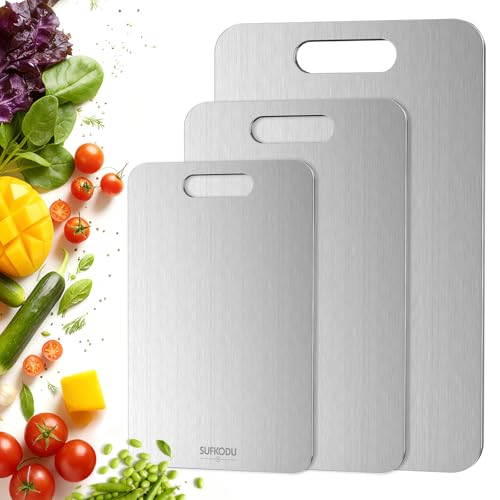
sufkodu Titanium Board Set: does titanium scratch? 988 reviews
A three-size titanium board set for $59.99 that buyers call well-made, light and easy to clean. It has under 1,000 ratings, the scratch reports are mixed, and the titanium claims come from the seller.
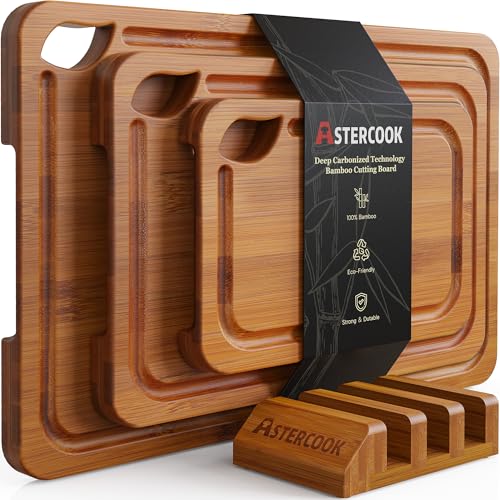
Astercook Bamboo Cutting Board Set: why some boards crack
A $24.99 bamboo set with three reversible boards and a stand. Buyers love the look and the gift appeal, but some report cracking and boards smaller than expected.
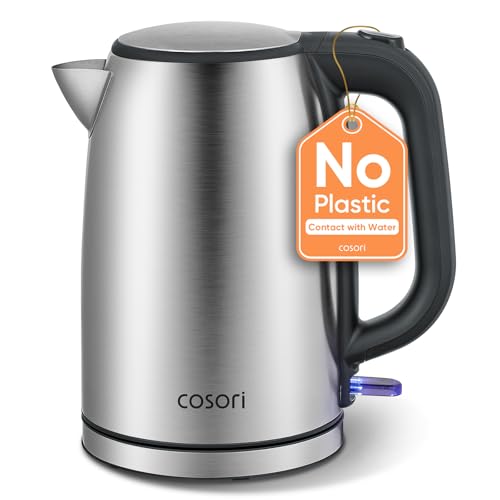
Cosori Stainless Steel Kettle: 304 steel inside, but does it last?
A $35.99 stainless steel kettle with a 304 stainless interior. Buyers praise speed and value, but some report it breaking after about 10 months.
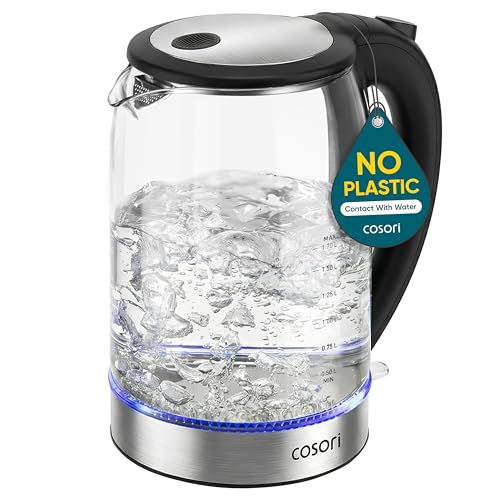
Cosori Glass Kettle: does water really never touch plastic?
A $24.43 borosilicate glass kettle that the maker says has no plastic touching the water. Heats fast and has 49,713 Amazon ratings, but durability is a clear concern.
Some links on this site are affiliate links. If you buy through them we may earn a small commission, at no extra cost to you.