Home › Guides › Plastic-free storage and meal prep
Is plastic microwave safe? What the label and BPA-free mean
Microwave-safe means low chemical migration under FDA testing, not zero. A 2023 study found polypropylene sheds nanoplastics when heated. Reheat in glass or ceramic.
Microwaving plastic is a yes-with-conditions. A container marked "microwave-safe" has passed an FDA migration standard, so it will not melt and the chemicals that move into food stay far below the amounts that harmed lab animals. But "microwave-safe" does not mean "nothing migrates," and a 2023 study found that FDA-approved polypropylene containers shed billions of nanoplastic particles in three minutes at full power. Takeout tubs, yogurt cups and anything without the label should stay out of the microwave. Glass or ceramic is the simpler choice.
What "microwave-safe" actually means
The label is about chemical migration, not about the plastic being inert. According to Harvard Health, the FDA requires makers to measure how much of a container's chemicals move into food at microwave temperatures, and the allowed amount is "100–1,000 times less per pound of body weight than the amount shown to harm laboratory animals over a lifetime of use." The FDA's own microwave oven page covers the mechanical side: microwaves pass through glass, paper, ceramic and plastic, but "some plastic containers should not be used in a microwave oven because they can be melted by the heat of the food inside."
So the label tells you two things. The container was tested at microwave heat, and the migration numbers came in under a safety margin. It does not tell you the migration was zero, and it does not cover a container that has been scratched, stained or run through the dishwasher for five years.
Where BPA stands
BPA (bisphenol A) is the building block of polycarbonate, the hard, clear plastic once used for baby bottles and some reusable food containers. The FDA's current position is that "BPA is safe at the current levels occurring in foods," based on a four-year review of more than 300 studies. In 2012 the agency stopped authorizing BPA-based polycarbonate in baby bottles and sippy cups, and in 2013 BPA-based epoxy linings in infant formula packaging. The FDA says those actions were "not based on safety" but on the fact that manufacturers had already abandoned those uses.
That is the honest summary: the regulator says current exposure is safe, the industry walked away from the infant uses anyway, and "BPA-free" on a label only means that one chemical is not in the resin. It says nothing about phthalates, other bisphenols or microplastics.
Heat, fat and phthalates
Phthalates are plasticizers added to make some plastics flexible. Harvard Health notes that when food is wrapped in plastic or microwaved in a plastic container, "BPA and phthalates may leak into the food," and that "any migration is likely to be greater with fatty foods such as meats and cheeses." Old, scratched or cracked containers may release more.
The measured numbers are small but not zero. A 2013 study in the International Journal of Environmental Research and Public Health microwaved water in ten polypropylene containers, five new and five used for about a year, at three power levels. Dibutyl phthalate turned up at concentrations up to 7.5 µg/L, benzylbutyl phthalate was not detected, and migration was higher in the used containers and rose with heating time. Every result stayed under the regulatory limit the authors compared against. The takeaway is not panic. It is that age and heat both push the number up.
The 2023 microplastics result
This is the study that changed the conversation. Researchers at the University of Nebraska–Lincoln, publishing in Environmental Science & Technology, microwaved FDA-approved polypropylene baby food containers and a polyethylene pouch, filled with water or 3% acetic acid, for three minutes at full power in a 1,000-watt oven. Per the university's summary, some containers released "more than 2 billion nanoplastics and 4 million microplastics for every square centimeter of container." Six months of simulated refrigerator and room-temperature storage also released particles, just fewer. Nanoplastics outnumbered microplastics by roughly 1,000 to 1.
The same team exposed cultured embryonic kidney cells to particle concentrations an infant might accumulate over time and reported about 77% cell death after two days. Two caveats matter. The cell test used concentrations built up over many days, not one meal, and the researchers state that "the health effects of consuming micro- and nanoplastics remain unclear." WebMD's coverage makes the same point. The study measures release, not harm. It is still the best reason to reheat in glass when you can.
Resin codes 1 to 7: which ones to keep out of the microwave
The number inside the recycling triangle is a resin identification code, and it was designed for recyclers, not for cooks. University of Illinois Extension lists them: 1 PET (water and soda bottles), 2 HDPE (cleaner bottles, some food containers), 3 PVC (toys, detergent and shampoo bottles), 4 LDPE (thin bags), 5 PP (straws, cups, some food containers), 6 PS (foam takeout containers and cups), 7 "other" (polycarbonate, BPA and everything else).
A few practical rules fall out of that list:
- 5 PP is the resin behind most containers that carry a microwave-safe label. It is also the material in the 2023 Nebraska study, so "microwave-safe" and "sheds particles" are both true of it.
- 6 PS foam is a no. It softens with hot food, and styrene, its building block, is listed in the National Toxicology Program's Report on Carcinogens. Takeout clamshells go onto a plate first.
- 7 is a catch-all. If the container is polycarbonate, it may contain BPA. If it has no microwave-safe mark, treat it as not.
- 1 PET and 3 PVC are bottle and film resins, not reheating containers. Harvard's advice on film is simple: do not let plastic wrap touch food in the microwave, because it may melt.
- 2 HDPE and 4 LDPE are jug and bag resins. Neither is sold as a microwave container, so there is no reason to try.
What to use instead
Glass and ceramic do not have a migration story to tell. A plain glass bowl with a plate on top, or a ceramic dish, heats leftovers without the question ever coming up. Our guide to glass vs plastic meal prep containers covers the lid problem, and what to look for in glass food storage covers lids, oven ratings and thermal shock.
If you cover food, Harvard suggests parchment paper or a loose lid rather than plastic film. Reynolds Kitchens Unbleached Parchment Paper works for that. For hot water, the same logic applies off the microwave: a kettle like the Cosori 1.7L Glass Electric Kettle (4.5 stars from 49,713 ratings on Amazon as of October 2026) or the Cosori 1.7L Stainless Steel Kettle is sold on the claim that no plastic touches the water. That is a maker's claim, and the lid gasket on most kettles is still silicone or plastic.
Swapping the microwave container is one of the easier moves on our plastic-free kitchen swaps list, and it connects to the bigger picture in microplastics in the kitchen. Once the food is in glass, the next question is how long it keeps, which our meal prep storage guide answers with USDA numbers.
Bottom line
A microwave-safe label means the container passed an FDA migration standard and will not melt. It does not mean zero migration, and the 2023 Nebraska study shows polypropylene sheds large numbers of nanoplastics under microwave heat, with health effects still unknown. Phthalate and BPA migration are small by measurement but rise with heat, fat and container age. Keep foam, takeout tubs and anything unlabeled out of the microwave, and reheat in glass or ceramic when you can. If you are pregnant, feeding an infant or have a health condition and want to cut exposure, ask your doctor or pediatrician; this is a kitchen guide, not medical advice.
Sources
- Harvard Health — Microwaving food in plastic: Dangerous or not? — accessed 2026-10-09
- FDA — Microwave Ovens — accessed 2026-10-09
- FDA — Bisphenol A (BPA): Use in Food Contact Application — accessed 2026-10-09
- Moreira et al., 2013, Int. J. Environ. Res. Public Health — Analysis of Phthalate Migration to Food Simulants in Plastic Containers during Microwave Operations — accessed 2026-10-09
- University of Nebraska–Lincoln — Nebraska study finds billions of nanoplastics released when microwaving containers (Environmental Science & Technology, 2023) — accessed 2026-10-09
- WebMD — Study Says Avoid Microwaving Plastic Baby Food Containers — accessed 2026-10-09
- University of Illinois Extension — Understanding recycling: resin identification codes — accessed 2026-10-09
- National Toxicology Program — Report on Carcinogens (15th edition), styrene profile listed — accessed 2026-10-09
Products mentioned in this guide
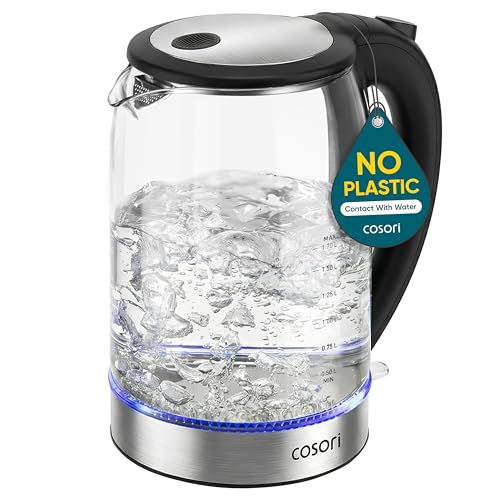
Cosori Glass Kettle: does water really never touch plastic?
A $24.43 borosilicate glass kettle that the maker says has no plastic touching the water. Heats fast and has 49,713 Amazon ratings, but durability is a clear concern.
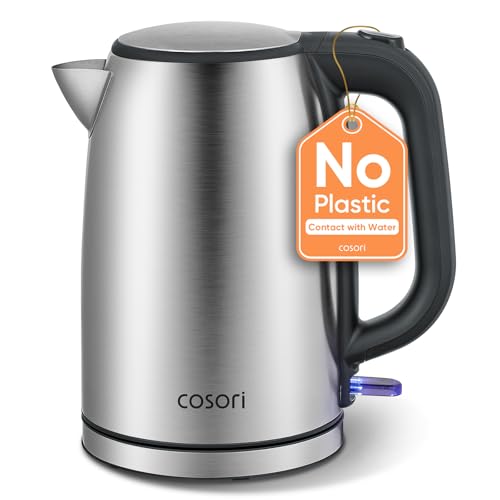
Cosori Stainless Steel Kettle: 304 steel inside, but does it last?
A $35.99 stainless steel kettle with a 304 stainless interior. Buyers praise speed and value, but some report it breaking after about 10 months.
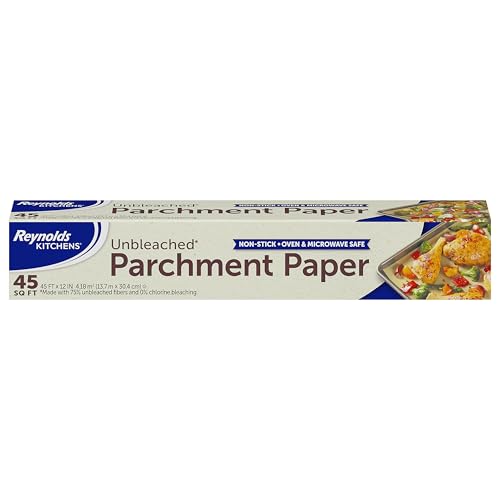
Reynolds Unbleached Parchment: OK in an air fryer?
A $3.59 roll of 12-inch unbleached parchment with 4.8 stars from 23,694 Amazon ratings. A cheap, well-liked baking staple, though it isn't made for air fryer baskets.
Some links on this site are affiliate links. If you buy through them we may earn a small commission, at no extra cost to you.