Home › Guides › Plastic-free storage and meal prep
How to store meal prep safely: 2 hours, 40°F, 4 days, 165°F
USDA and FDA rules for meal prep: chill within 2 hours, fridge at 40°F for 3–4 days, freezer at 0°F, reheat to 165°F. Glass for reheating, stainless for cold transport.
Cooked meal prep keeps 3 to 4 days in a refrigerator held at 40°F or below. Food frozen at 0°F stays safe indefinitely, though quality fades after 2 to 6 months. Get cooked food into the fridge within 2 hours (1 hour if the room is above 90°F), cool it in shallow containers, and reheat every portion to 165°F on a food thermometer. Those are USDA and FDA numbers, and the rest of this guide is how to hit them with glass, stainless or plastic.
The 2-hour rule and the danger zone
Bacteria that cause food poisoning "multiply quickest between 40°F (4°C) and 140°F (60°C)," according to FoodSafety.gov, the federal portal run with USDA and FDA. The rule that follows: never leave perishable food out of refrigeration for more than 2 hours, and cut that to 1 hour when the air is above 90°F, as in a hot car or a summer kitchen. The FDA puts it plainly: "Leaving perishable foods out for 2 hours or more allows bacteria to multiply rapidly."
For a Sunday cook, the clock starts when the food comes off the heat, not when you finish eating. If you roast chicken at 5 p.m., eat at 6 and start boxing leftovers at 7:30, you are inside the window but close to the edge. Portion while things cool, not after the dishes.
Cool it fast: shallow beats deep
A deep container of chili or rice stays warm in the middle for a long time, and that middle is sitting in the danger zone. FoodSafety.gov's instruction is that "leftovers should be placed in shallow containers and refrigerated promptly to allow quick cooling." The FDA says the same: "divide leftovers into smaller containers before putting them in the refrigerator."
In practice that means spreading a big batch across several wide, flat containers instead of one tall one, and leaving the lids loose until the steam stops. Wide and shallow matters more than the material.
Fridge: 40°F or below, 3 to 4 days
The FDA's cold facts page says to keep the refrigerator "at 40°F or below" and the freezer at 0°F, and notes that "few refrigerator controls show actual temperatures." An appliance thermometer, a few dollars at any hardware store, is the only way to know.
The FoodSafety.gov cold storage chart lists cooked meat or poultry leftovers at 3 to 4 days, soups and stews at 3 to 4 days, casseroles at 3 to 4 days after baking, and egg, chicken, ham or tuna salads at 3 to 4 days. That is the whole range for a typical meal prep box. Rice, pasta and cooked vegetables are not on the chart, but a mixed container is only as safe as its most perishable part, so 4 days is the sensible ceiling for everything.
Prep on Sunday, and Thursday lunch is day 4. Friday's box should come from the freezer.
Freezer: 0°F, safe forever, good for a few months
The same chart states that freezer guidelines "are for quality only — frozen foods stored continuously at 0°F (-18°C) or below can be kept indefinitely." Quality windows: cooked meat or poultry 2 to 6 months, soups and stews 2 to 3 months, casseroles with eggs 2 to 3 months, pizza 1 to 2 months. Past those marks the food is still safe, just drier.
One warning from FoodSafety.gov that surprises people: "Freezing does not destroy harmful germs, but it does keep food safe until you can cook it." Freezing food that already sat out too long does not reset it. And thawing belongs in the refrigerator, cold water or the microwave, never on the counter.
Reheat to 165°F, and check it
The FoodSafety.gov temperature chart gives one number for leftovers of any type: 165°F (74°C). Casseroles and precooked ham to reheat are also 165°F. The page's first instruction is "always use a food thermometer," because the surface of microwaved rice can be steaming while the center is lukewarm.
For microwave reheating, FoodSafety.gov adds two steps: stir in the middle of heating, and respect standing time, because "letting microwaved food sit for a few minutes allows food to cook thoroughly as colder areas absorb heat from hotter areas." Probe the center after the standing time, not before.
Any instant-read thermometer works for this. The Alpha Grillers Instant Read Meat Thermometer is the one most buyers pick, with 4.8 stars from 92,609 ratings on Amazon as of October 2026, though about 627 of roughly 4,500 accuracy mentions in Amazon's summary are negative. The ThermoMonster 0.5 Sec Thermometer advertises NIST-traceable ±0.5°F accuracy; that is a maker's claim. Our meat thermometer basics guide covers how to probe and what the speed claims mean.
Glass vs stainless vs plastic, job by job
Each material wins somewhere and loses somewhere.
- Glass is the only one of the three that goes fridge to microwave to table without a question. It is heavy, and most glass sets ship with plastic lids, which is why our glass vs plastic meal prep containers guide spends so long on the lid. Let hot glass cool before it hits a cold shelf, and follow the maker's temperature limits; those limits vary by brand.
- Stainless steel is light, unbreakable and good for lunch bags, the fridge and the freezer. It does not go in the microwave. The FDA notes that "metal pans or aluminum foil should also not be used in a microwave oven, as the microwaves are reflected off these materials causing the food to cook unevenly and possibly damaging the oven." Stainless also hides its contents, so the date label matters more.
- Plastic is cheap, light and freezer-friendly, and it is fine for cold storage and transport. Reheating in it is a separate question, which our guide on whether it is safe to microwave plastic covers: a microwave-safe label means low migration, not zero, and a 2023 study measured heavy nanoplastic release from polypropylene under microwave heat. The practical split is plastic for cold, glass for hot.
If you are choosing a glass set, what to look for in glass food storage containers walks through lid types and oven ratings.
Label every box
A date on the lid is the cheapest food-safety tool in the kitchen. Masking tape and a marker beat memory. Write what it is, the date it was cooked, and for the fridge a "use by" that is cooked date plus 4 days. For the freezer, write the date it went in and aim to use it inside the quality window above. Put new boxes behind old ones so the oldest comes out first.
Reheating in an air fryer
An air fryer is a good way to bring fried or roasted leftovers back to life, because the circulating air crisps the outside while the inside comes up to temperature. A basket model like the Cosori TurboBlaze 6-Qt Air Fryer (4.8 stars from 22,159 ratings on Amazon as of October 2026) handles a lunch-sized portion in one layer. The 165°F rule does not change. Times vary with the model and the thickness of the food, so the thermometer, not the timer, is the stop signal. Spread food in a single layer, shake or flip halfway, and probe the thickest piece.
If you are new to the appliance, our first-time air fryer guide covers setup and basket materials, and 12 air fryer mistakes covers the overcrowding that leaves cold centers. Storage containers themselves stay out of the basket unless the maker rates them for it; plastic lids and boxes are not made for that heat. Move the food onto the basket or a parchment liner first.
Bottom line
Four numbers run meal prep: 2 hours to get food cold, 40°F in the fridge, 4 days before it is done, and 165°F when it comes back. Cool food in shallow containers, date every lid, and keep an appliance thermometer in the fridge so the 40°F is real. Use glass for anything you will reheat, stainless for cold transport, and plastic for cold storage only. These are USDA and FDA rules for healthy adults; if you are pregnant, immunocompromised or feeding small children, ask your doctor, since some foods carry extra rules. Moving the whole system to glass and steel is one piece of our plastic-free kitchen swaps plan.
Sources
- FoodSafety.gov — 4 Steps to Food Safety — accessed 2026-10-09
- FoodSafety.gov — Cold Food Storage Chart — accessed 2026-10-09
- FoodSafety.gov — Cook to a Safe Minimum Internal Temperature — accessed 2026-10-09
- FDA — Refrigerator Thermometers: Cold Facts about Food Safety — accessed 2026-10-09
- FDA — Microwave Ovens — accessed 2026-10-09
Products mentioned in this guide

Alpha Grillers Thermometer: why 92,609 buyers rate it 4.8
A $14.97 instant-read thermometer with 4.8 stars from 92,609 Amazon ratings. A well-liked, easy-to-read pick for air fryer chicken and steaks, though durability is mixed.
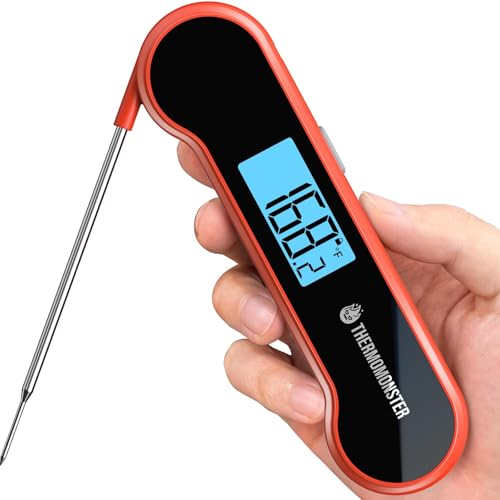
ThermoMonster 0.5-Sec Thermometer: maker's claims vs 8,323 reviews
A $14.99 instant-read thermometer with 4.8 stars from 8,323 Amazon ratings. Buyers praise quick, clear readings, and no big complaint has surfaced, but the track record is shorter.
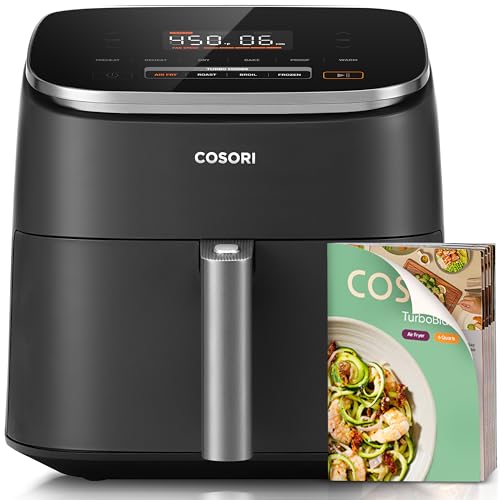
Cosori TurboBlaze 6-Qt: what 22,159 reviews agree on
The most-reviewed basket air fryer here: 4.8 stars from 22,159 Amazon ratings at $89.99. A roomy 6-quart square basket for families who want crisp results without paying for a dual-zone model.
Some links on this site are affiliate links. If you buy through them we may earn a small commission, at no extra cost to you.