Home › Guides › Plastic-free storage and meal prep
Plastic-free kitchen swaps: one drawer at a time
Swap heated and abraded plastic first: microwave containers, cutting board, kettle, utensils. Cold storage, sponges and wraps can wait. Six drawers, each with the greenwashing trap to skip.
Start with the plastic that gets heat and friction: the container you microwave, the cutting board, the kettle, and the utensils that sit in a hot pan. Cold storage, wraps and sponges come last. Studies from 2020 to 2024 put the largest particle counts on heated plastic (billions per square centimeter in a microwave) and chopped plastic (up to about 50 grams a year from a cutting board); cold plastic releases far less. This pillar goes drawer by drawer: what to swap first, what to keep, and the claims that look like a swap but are not.
The order: heat and abrasion first
Two studies set the priority. University of Nebraska-Lincoln researchers microwaved polypropylene baby-food containers for three minutes at full power and counted more than 2 billion nanoplastics and 4 million microplastics per square centimeter; six months of cold storage released far fewer (University of Nebraska-Lincoln, 2023). A 2023 cutting board study modeled 7.4 to 50.7 grams of microplastics a year from polyethylene boards and 49.5 grams from polypropylene (Yadav et al., Environmental Science & Technology 2023).
One caution. The WHO's 2022 review found that "the limited data provide little evidence" of harm to people and that the data are "of only very limited use" for risk assessment (Food Packaging Forum on the WHO 2022 report). The studies measure release, not disease. If you have a health condition, ask your doctor. The source-by-source rundown is in our microplastics in the kitchen explainer.
Drawer 1: food storage and meal prep
Swap first: any plastic container you reheat in. That is where the Nebraska numbers come from, and Harvard Health's advice is blunt: avoid microwaving food in plastic and buy food with minimal packaging where you can (Harvard Health Publishing). Glass with a glass or silicone-rimmed lid is the standard replacement; our glass versus plastic meal prep comparison covers the lid problem, and what to check in a glass food storage container lists the features that matter. We have not reviewed specific glass containers yet.
Keep: plastic for dry goods, freezer bags, and any container that stays cold. Move food to glass or ceramic before it meets heat; our meal prep storage guide has fridge and freezer times.
Greenwashing trap: "BPA-free." The FDA says BPA is used in polycarbonate bottles and epoxy can linings, and that it dropped BPA from baby bottles and sippy cups in 2012 because industry had abandoned the use, "not based on safety" (FDA, Bisphenol A (BPA): Use in Food Contact Application). A BPA-free label says one chemical is out, nothing about particle shedding or what replaced it. The FTC's Green Guides treat "free-of" claims as deceptive when the product never contained the substance or swapped in one with similar risk (FTC Green Guides, 16 CFR 260.9). "Microwave-safe" is narrower than it sounds too; our microwave-safe and BPA-free explainer takes it apart.
Drawer 2: cutting boards
Swap first: the plastic board you chop on every day. The Yadav study found polypropylene boards shed 5 to 60 percent more mass than polyethylene, and that chopping carrots released more than chopping on a bare board. The same paper's preliminary test on mouse cells found no effect on viability over 72 hours, the fair counterpoint.
Replacements we have reviewed: the sufkodu Titanium Cutting Board Set of 3 ($59.99, 4.5 stars, 988 ratings on Amazon as of October 2026), the Mirtan Dual-Sided Titanium Cutting Board ($25.19, 4.6 stars, 155 ratings), and the Astercook Deep-Carbonized Bamboo Cutting Board Set ($24.99, 4.5 stars, 3,281 ratings; hand wash only). The three-item version, with the sponge and tea bags, is our swap-first guide.
Keep: a plastic board used only for bread, or a dishwasher-sanitized raw-meat board if that is your routine; our raw-meat cutting board guide weighs titanium against wood and bamboo.
Greenwashing trap: "100% pure titanium." It is a maker's claim that buyers on Amazon dispute for several brands; our titanium or steel investigation covers what can be verified. Also watch "bamboo" on bowls, cups and plates, a different material from a solid bamboo board. Germany's BfR found "bamboo" cups are melamine-formaldehyde resin with bamboo fiber as filler, release about 30 percent more formaldehyde and melamine than plain melamine cups when hot, and advised against hot food or drink in them (Food Packaging Forum on the BfR statement). A 2025 Food Control study found melamine in 20 of 21 "bamboo" items (Food Packaging Forum, 2025).
Drawer 3: the kettle
Swap first: a kettle where polypropylene sits in boiling water. The polymer evidence comes from baby bottles: polypropylene bottles prepared with hot water released up to 16.2 million particles per liter, and the authors recommended an extra rinse after sterilizing (Food Packaging Forum on Li et al., Nature Food 2020). Kettle lids, water windows and filter baskets are often that plastic.
Replacements we have reviewed, both with a "no plastic contact with water" maker's claim: the Cosori 1.7L Stainless Steel Electric Kettle ($35.99, 4.5 stars, 5,486 ratings on Amazon as of October 2026; some buyers report breakage at about 10 months) and the Cosori 1.7L Glass Electric Kettle ($24.43, 4.5 stars, 49,713 ratings; several report failure at about 4 months).
Keep: a kettle whose only plastic is an exterior handle or base.
Greenwashing trap: "no plastic contact" that stops at the body. Check the lid underside, the water window and the spout filter; our guide to which kettle parts touch the water goes part by part.
Drawer 4: utensils and pans
Swap first: black plastic spatulas and spoons that sit in hot oil. A 2024 Chemosphere study tested 203 black plastic products, 109 of them kitchenware, and found flame retardants from recycled electronics in 85 percent of the bromine-flagged samples (Food Packaging Forum on Liu et al., Chemosphere 2024). The exposure math was corrected in January 2025; the revised daily intake is about a tenth of the EPA reference dose, so the risk is lower than first reported, though the authors still recommend wood or stainless (News Tribune, December 2024).
Pans are their own subject. Cast iron, stainless and enameled iron have no coating to wear off: see the Lodge 10.25-Inch Cast Iron Skillet ($22.91, 4.6 stars, 87,490 ratings on Amazon as of October 2026), the Cuisinart Chef's Classic Stainless 11-Piece Set ($113.15, 4.3 stars, 9,820 ratings) and the Lodge 6-Quart Enameled Dutch Oven ($69.99, 4.7 stars, 39,227 ratings). Our cookware materials pillar compares six options, and our ranked best non-toxic pans guide sorts them into avoid, OK and best.
Keep: a nonstick pan that is intact. Replace it when the coating flakes; our guide to when to replace a nonstick pan lists the signs.
Greenwashing trap: "non-toxic" on the box. The FTC's Green Guides say a non-toxic claim needs competent scientific evidence that the product will not cause adverse effects under normal use; blanket claims are deceptive when a product can be toxic at some concentration or condition (FTC Green Guides, 16 CFR 260.10).
Drawer 5: sponges and dish cleaning
Swap first: crumbling melamine foam. A 2024 study measured more than 6.5 million microplastic fibers per gram of worn melamine sponge, with denser foam shedding less (Open Access Government on Su, Xing and Ji, ES&T 2024). Those fibers go down the drain, not into food, which is why this drawer ranks low. Cellulose sponges, loofah, coconut-fiber scrubbers and cotton dishcloths replace it one for one; details in our sponge, tea bag and cutting board guide.
Keep: one dense melamine block for sink scuffs, retired when it crumbles.
Greenwashing trap: "plant-based" sponges with a cellulose face glued to a plastic scrub layer. Turn it over.
Drawer 6: parchment, liners and wraps
Swap first: plastic wrap over hot leftovers. A glass lid or a plate solves it.
Parchment is paper, not a plastic swap, but it has rules. Reynolds rates its parchment oven-safe to 425°F and sells an unbleached, chlorine-free line it calls home compostable (Reynolds Kitchens parchment paper). The Reynolds Kitchens Unbleached Parchment Paper Roll ($3.59, 4.8 stars, 23,694 ratings on Amazon as of October 2026) is not pre-cut and not made for air fryer baskets. Pre-cut liners such as the Baker's Signature Unbleached Air Fryer Liners ($9.98, 4.6 stars, 28,484 ratings) carry buyer fire reports, usually when the liner touches the heating element or is used during preheat; our air fryer liner safety guide covers parchment and silicone side by side.
Keep: aluminum foil for grilling and covering, not as a liner under a heating element.
Greenwashing trap: "compostable" and "biodegradable" without a qualifier. The FTC has brought cases over unqualified biodegradability claims, and the Green Guides require substantiation (FTC Green Guides). Industrial compostable is not backyard compostable.
A 30-day order
- Week 1: stop reheating in plastic. Glass or ceramic for anything that goes in the microwave. Often zero cost.
- Week 2: replace the daily cutting board. $25 to $60.
- Week 3: check the kettle. If plastic sits in the water, replace it ($24 to $36 for the two above); if not, leave it.
- Week 4: swap black plastic utensils for wood or stainless, and the melamine sponge for cellulose. Both cheap.
- Whenever: keep cold-storage plastic until it cracks, then replace with glass.
Bottom line
Heat and friction decide the order. Microwaved plastic and chopped plastic produce the largest measured particle counts, so the container you reheat in and the board you chop on go first. The kettle is next if plastic meets the water. Utensils and sponges are cheap swaps for any time; cold-storage plastic can wait. No study here proves harm in people, so spend money on the heated items and patience on the rest.
Sources
- University of Nebraska-Lincoln: Nebraska study finds billions of nanoplastics released when microwaving (Hussain et al., ES&T 2023) — accessed 2026-10-09
- Yadav et al., "Cutting Boards: An Overlooked Source of Microplastics in Human Food?", Environmental Science & Technology 2023 (abstract via Europe PMC) — accessed 2026-10-09
- Food Packaging Forum: WHO report on potential human health implications of microplastics (2022) — accessed 2026-10-09
- Harvard Health Publishing: Microwaving food in plastic: Dangerous or not? — accessed 2026-10-09
- FDA: Bisphenol A (BPA): Use in Food Contact Application — accessed 2026-10-09
- FTC Green Guides (16 CFR Part 260), PDF — accessed 2026-10-09
- Food Packaging Forum: BfR statement on bamboo cups and tableware — accessed 2026-10-09
- Food Packaging Forum: Bio-based tableware melamine safety concerns persist (Food Control 2025) — accessed 2026-10-09
- Food Packaging Forum: Study investigates microplastics release from baby bottles (Li et al., Nature Food 2020) — accessed 2026-10-09
- Food Packaging Forum: Black kitchen utensils contain banned flame retardants (Liu et al., Chemosphere 2024) — accessed 2026-10-09
- News Tribune: Black plastic kitchen utensils not so toxic after all — accessed 2026-10-09
- Open Access Government: melamine sponges and microplastic fibers (Su, Xing, Ji, ES&T 2024) — accessed 2026-10-09
- Reynolds Kitchens: Parchment Paper — accessed 2026-10-09
Products mentioned in this guide
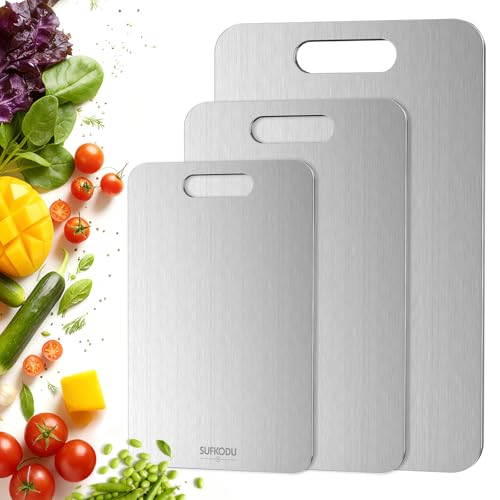
sufkodu Titanium Board Set: does titanium scratch? 988 reviews
A three-size titanium board set for $59.99 that buyers call well-made, light and easy to clean. It has under 1,000 ratings, the scratch reports are mixed, and the titanium claims come from the seller.
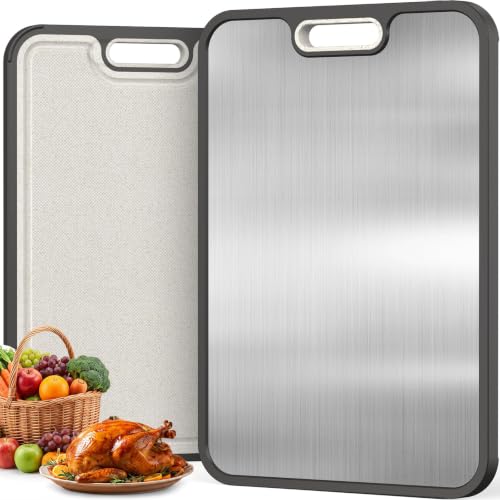
Mirtan Titanium Cutting Board: $25, 155 reviews, too new?
The cheapest board in this group at $25.19, with a titanium side for raw meat and a PP plastic side for produce. Early buyer feedback is positive, but it has only 155 ratings.
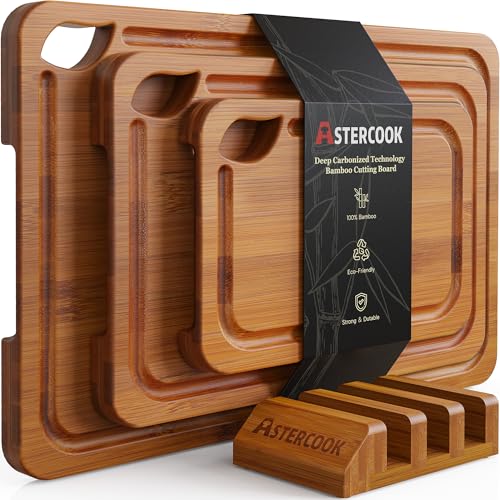
Astercook Bamboo Cutting Board Set: why some boards crack
A $24.99 bamboo set with three reversible boards and a stand. Buyers love the look and the gift appeal, but some report cracking and boards smaller than expected.
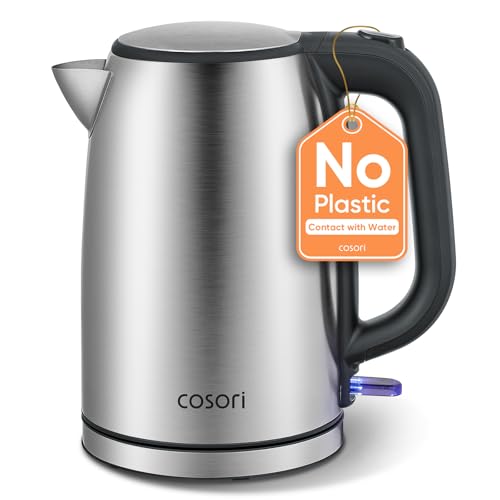
Cosori Stainless Steel Kettle: 304 steel inside, but does it last?
A $35.99 stainless steel kettle with a 304 stainless interior. Buyers praise speed and value, but some report it breaking after about 10 months.
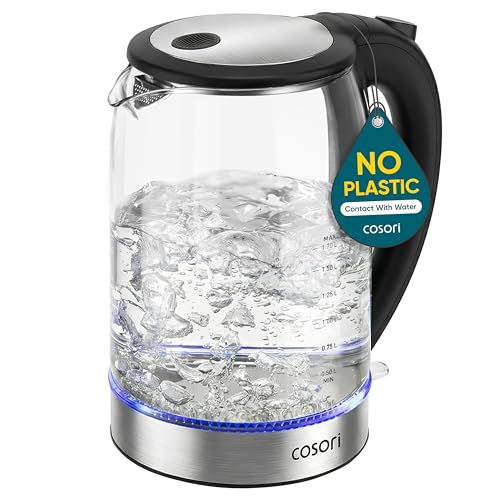
Cosori Glass Kettle: does water really never touch plastic?
A $24.43 borosilicate glass kettle that the maker says has no plastic touching the water. Heats fast and has 49,713 Amazon ratings, but durability is a clear concern.
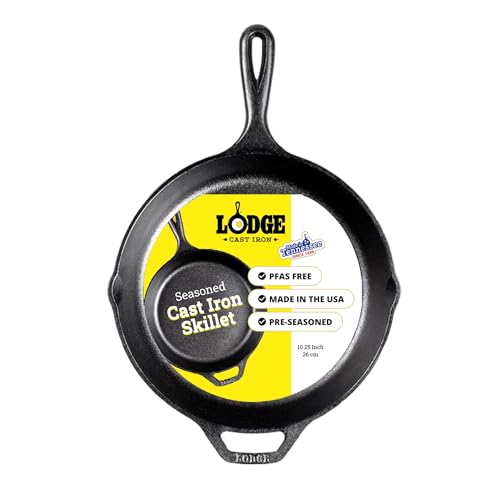
Lodge 10.25-Inch Cast Iron Skillet: 87,490 reviews, rust explained
The classic American cast iron skillet at about $22.91 with 87,490 Amazon ratings. Tough and versatile, but some buyers report rust after first use and food sticking.

Cuisinart Chef's Classic Stainless Set: no coating, some staining
A $113.15 stainless steel set with aluminum-encapsulated bases and glass lids, no nonstick coating. Buyers like the look and even heat, but some report staining and food sticking.
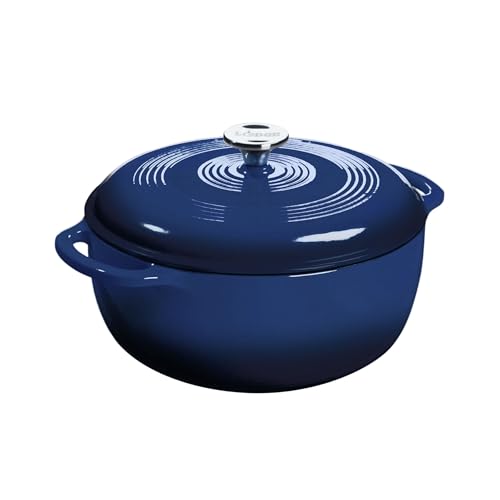
Lodge 6-Qt Enameled Dutch Oven: $69.99, does the enamel chip?
A $69.99 enameled cast iron Dutch oven with 4.7 stars from 39,227 ratings. Buyers love the quality and cleanup, but some report enamel chipping and a heavy build.
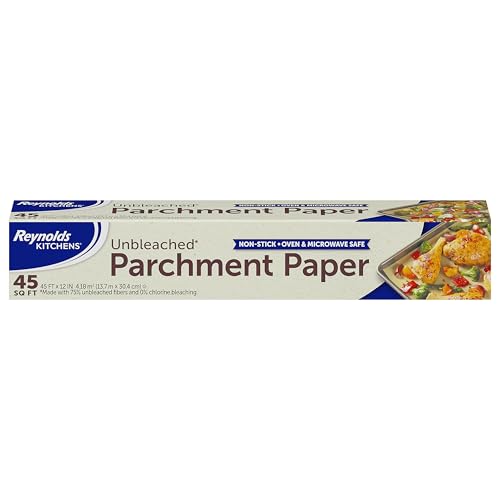
Reynolds Unbleached Parchment: OK in an air fryer?
A $3.59 roll of 12-inch unbleached parchment with 4.8 stars from 23,694 Amazon ratings. A cheap, well-liked baking staple, though it isn't made for air fryer baskets.
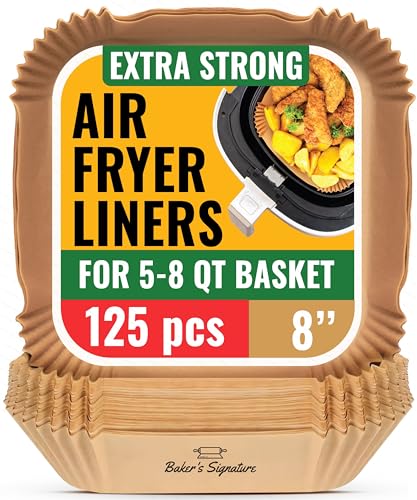
Baker's Signature Air Fryer Liners: can parchment liners catch fire?
Disposable parchment liners for 5 to 8 quart baskets, about $9.98 for 125 sheets. Buyers like the easy cleanup, but some report fires, so use them correctly.
Some links on this site are affiliate links. If you buy through them we may earn a small commission, at no extra cost to you.