Home › Guides › Air fryer know-how
Air fryer liners: are parchment and silicone actually safe?
Parchment and silicone liners are safe below their rated temperature with food holding them flat; nearly every fire report traces to preheating with a liner or a sheet lifting into the element.
Parchment and silicone air fryer liners are safe to use as long as two things are true: the liner stays below the temperature its maker rates it for, and food is holding it flat the whole time. The hazard is not the paper or the silicone. It is a loose liner lifting into the heating element, which is why Reynolds and Cosori print nearly the same warning: never preheat with a liner in the basket, and never run a liner without food on top. Here is what each liner type is made of, why they catch fire, what the PFAS testing actually shows, and six rules that cover almost every reported problem.
Parchment, silicone or foil: what each one is
Parchment liners are paper with a nonstick surface. Many brands describe that surface on the box as a thin food-grade silicone layer; Reynolds describes its own as a "parchmentizing process" (Reynolds Kitchens). Air fryer versions are pre-cut, often with holes for airflow. The two big sellers on Amazon are Baker's Signature Unbleached Parchment Air Fryer Liners and Vailnd 8-Inch Square Air Fryer Liners, each about $10 for 125 sheets, both rated 4.6 stars, as of October 2026.
Silicone liners are reusable molded trays. Silicone elastomers are on FDA's list of rubber articles intended for repeated use in contact with food, 21 CFR 177.2600. The maximum temperature printed on a silicone liner's box is the maker's claim and it varies by brand, so read it before you set the air fryer to 400°F.
Aluminum foil is the old standby. Cookware maker Our Place says to keep foil off the heating element and interior walls, skip it with acidic foods such as tomato sauce or citrus marinades, and make sure food weighs it down, because the air fryer's "high-velocity convection currents can easily lift a light sheet of metal toward the hot coils" (Our Place).
Why liners catch fire
The Amazon customer summary for the Vailnd liners counts 513 mentions of fire, out of 33,797 ratings, as of October 2026. For the Baker's Signature liners, some buyers report fires even at 325°F. Read the stories and the same three conditions keep showing up:
- The liner touched the heating element. Most basket air fryers have the element a few inches above the food. A liner that climbs the basket wall or folds up over the food reaches it.
- The liner went in during preheat. With nothing on it, the fan lifts the sheet straight up.
- Nothing was holding it down. One chicken thigh in the middle of a big sheet leaves the edges free to flap.
Cosori's own liner page carries this warning: "Do not place the paper liner in the basket during preheating. Always ensure that there is enough food on the liner to prevent it from lifting and touching the upper heating element, which can cause overheating and risk of fire" (Cosori). Reynolds says the same thing in different words: "Never use a parchment liner by itself, as it can be lifted by the circulating air and come into contact with the heating element, which is a fire hazard" (Reynolds Kitchens).
So a fire at 325°F is not a mystery. The dial temperature is the air temperature. The liner's rating is for hot air, not for resting against a glowing element. Preheating with a liner also tops our list of air fryer mistakes that ruin food.
How hot can parchment go?
Reynolds rates its standard parchment paper for a conventional oven "at temperatures up to 425°F," says to always preheat the oven first, and says never to let the paper touch an open flame or use it with a broiler or toaster oven (Reynolds Kitchens). Its pre-cut air fryer liners carry a lower rating, "heat-safe up to 400°F on the air fryer setting only," and Reynolds says not to use them in rectangular, toaster-oven-style air fryers, where the element sits right above the tray (Reynolds Kitchens).
That matters if you plan to cut your own liners from a roll. Reynolds Kitchens Unbleached Parchment Paper costs $3.59 for 45 square feet on Amazon, rated 4.8 stars across 23,694 ratings as of October 2026, which makes it far cheaper per sheet than pre-cut liners. Reynolds says regular parchment "can be used in some air fryers if it's cut to fit the basket and securely weighed down with food," but calls it a second choice because it can block airflow, shift during cooking, and needs trimming. Strange basket shape: use the roll. Otherwise, buy pre-cut.
What "unbleached" and "silicone-coated" mean
Unbleached is about how the pulp was made, not about food safety. Reynolds says its unbleached paper "is produced with pulp that has not been bleached with chlorine," is "Totally Chlorine Free & 75% Non-Bleached," and keeps the natural brown color because chlorine bleaching agents are "harmful to the environment, particularly aquatic areas" (Reynolds Kitchens). White parchment is not unsafe; brown parchment is a lower-impact process. Pick by price and fit.
Silicone-coated means the nonstick release layer is silicone, the same material family FDA lists for repeated food contact in the regulation above. It is what keeps a chicken thigh from welding to the paper.
PFAS in parchment: what the tests found
PFAS are the "forever chemicals" that were used for decades as grease-proofing on fast-food wrappers and popcorn bags. In February 2024, FDA announced that PFAS grease-proofing agents on paper and paperboard for food contact "are no longer being sold by manufacturers into the U.S. market," and in January 2025 it formally revoked the 35 food-contact notifications that had allowed them (FDA).
For parchment specifically, the only published consumer test we could open is from Mamavation, which in April 2021 sent products to an EPA-certified lab for total fluorine, a screening marker for PFAS. Reynolds parchment came back at 14 ppm, and If You Care parchment showed no detectable fluorine. For scale, the same lab method found 605 ppm in a McDonald's clamshell, and the compostable-packaging threshold used by BPI is 100 ppm (Mamavation). Total fluorine is a screen, not a measurement of any specific PFAS, and 14 ppm is close to the floor of what the method can see.
We found no government or Consumer Reports test of air fryer liners as a category, and no evidence that mainstream parchment brands use PFAS coatings. That is not the same as proof of zero. If you want the lowest-information-risk option, a silicone liner or no liner at all removes the question. If you have a health condition and worry about chemical exposure, ask your doctor rather than a product label.
6 steps to use a liner safely
- Preheat empty. Liner stays on the counter until the preheat beep.
- Check the rating on the box and cook at or below it. Reynolds liners: 400°F. Silicone: whatever the maker prints.
- Lay the liner flat after preheating. Trim any edge that climbs the basket wall.
- Cover it with food right away. Spread food so it pins the corners, not one piece in the center.
- Keep it away from the element. Never fold parchment up over food, and skip paper liners in toaster-oven-style units unless the manual allows it.
- One use, then toss. Parchment is single-use; a sheet with scorched spots is done. Wipe the basket after, following our guide on cleaning an air fryer basket without wrecking the coating.
If your air fryer's manual says no liners, the manual wins. And if you are using a liner mainly to protect a nonstick coating, it is worth reading what air fryer baskets are actually made of, because a stainless or glass basket needs no protecting.
Bottom line
Parchment and silicone liners are safe when food holds them flat and the temperature stays under their rating. Nearly every fire report traces back to preheating with a liner in, or a sheet that lifted into the element. Unbleached means chlorine-free pulp, not extra safety. PFAS tests on parchment have come back at or near detection limits, and FDA has ended the PFAS grease-proofing agents that used to be the main concern. Set up your first batch the way our first-time air fryer guide describes and a liner is a convenience, not a risk.
Sources
- Reynolds Kitchens: Can I Put Parchment Paper in an Air Fryer? — accessed 2026-10-09
- Reynolds Kitchens: Parchment Paper Rolls — accessed 2026-10-09
- Reynolds Kitchens: Introducing Unbleached Parchment Paper — accessed 2026-10-09
- Cosori Air Fryer Liners product page — accessed 2026-10-09
- FDA: Authorized Uses of PFAS in Food Contact Applications — accessed 2026-10-09
- 21 CFR 177.2600, Rubber articles intended for repeated use (Cornell LII) — accessed 2026-10-09
- Mamavation: Reynolds Parchment Paper PFAS results — accessed 2026-10-09
- Our Place: Can You Put Aluminum Foil in an Air Fryer? — accessed 2026-10-09
- The Daily Meal: Preheating Your Air Fryer With Parchment Paper Is A Dangerous Mistake — accessed 2026-10-09
Products mentioned in this guide
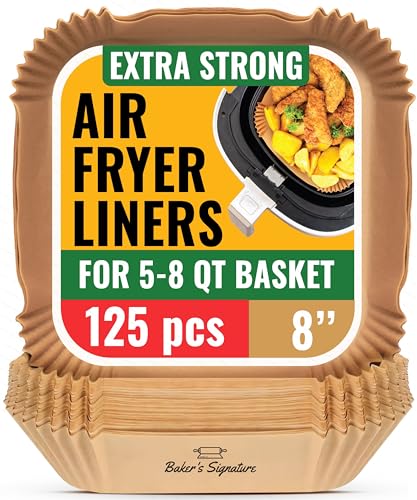
Baker's Signature Air Fryer Liners: can parchment liners catch fire?
Disposable parchment liners for 5 to 8 quart baskets, about $9.98 for 125 sheets. Buyers like the easy cleanup, but some report fires, so use them correctly.
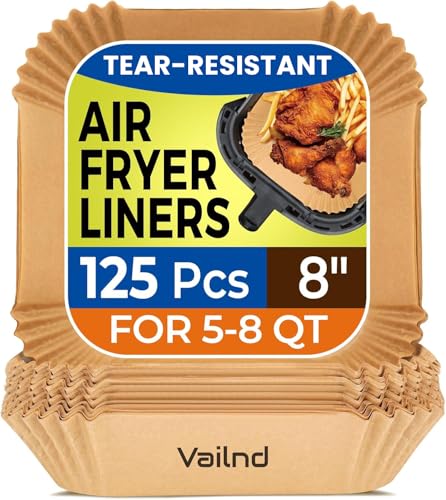
Vailnd Air Fryer Liners: 513 fire mentions, what they mean
A 125-pack of disposable parchment liners for 5–8 qt air fryers at $9.97. They make cleanup easy, but buyers report liners catching fire, so follow the safety steps every time.
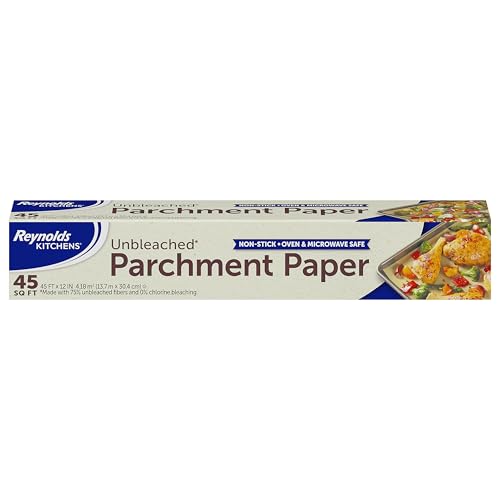
Reynolds Unbleached Parchment: OK in an air fryer?
A $3.59 roll of 12-inch unbleached parchment with 4.8 stars from 23,694 Amazon ratings. A cheap, well-liked baking staple, though it isn't made for air fryer baskets.
Some links on this site are affiliate links. If you buy through them we may earn a small commission, at no extra cost to you.