Home › Guides › Cookware materials, explained
Is ceramic cookware safe? Sol-gel facts vs Teflon and stainless
Ceramic nonstick is a silica sol-gel film on aluminum, not real ceramic. It avoids PTFE and PFOA but wears out in months, while stainless lasts for decades.
Ceramic nonstick cookware is reasonable to cook on while the coating is intact and the heat stays moderate, but "ceramic" here is a marketing word, not a material. These pans are aluminum with a thin sol-gel coating built from silica, and no US law defines what "ceramic" or "nontoxic" means on a box. Compared with PTFE (Teflon) pans they skip the fluoropolymer; compared with stainless steel they wear out far sooner. Here is how the three stack up, with sources.
What "ceramic nonstick" actually is
The pans sold as ceramic by brands like Our Place, Caraway and GreenPan are not fired clay or glazed stoneware. According to a June 2025 investigation by Tom Perkins for The Guardian, they use a "sol-gel" coating, a mix of silica, metals and other chemicals sprayed onto an aluminum body and cured at much lower temperatures than true ceramic. Our Place told the paper its coating is a "ceramic precursor" that contains both organic polymers and inorganic, glass-like silica.
The chemistry is public. A European patent for a non-stick ceramic coating describes a matrix formed when colloidal silica sol reacts with an organoalkoxysilane such as methyltrimethoxysilane (MTMS), with a silicone additive (PDMS) for slip, cured at 120 to 300°C. That is a silica-based glassy film with organic groups on it, which is why it loses slickness once those surface groups wear away.
The same Guardian piece makes two points worth remembering. First, there is no federal legal definition of "nontoxic" or "ceramic," so companies can use both words freely while keeping the formula a trade secret. Second, independent testing cited in the article found substances such as titanium dioxide, siloxanes and in some cases lead in various quasi-ceramic pans, which is why Washington state ordered makers to disclose their nonstick ingredients. None of that shows a ceramic pan will hurt you; it shows the "nontoxic" label is a claim, not a tested standard. Our guide to what PFAS-free, PFOA-free and non-toxic labels actually mean goes deeper on the wording.
Ceramic vs Teflon (PTFE): which is safer?
Both coatings sit on aluminum. The difference is the top layer.
PTFE is a fluoropolymer, a member of the PFAS family. The FDA has authorized it for nonstick pots and pans since the 1960s and says the coating is bonded at very high temperature so that only negligible amounts can migrate to food. The real limit is heat: PTFE starts to break down above roughly 500°F (260°C), and the fumes from an overheated pan can cause "polymer fume fever," a short flu-like illness, according to Poison Control and Healthline. An empty pan on high heat or under the broiler can get there. Our Place, which sells ceramic pans, states the same 500°F threshold in its own PFAS vs PFOA vs PTFE explainer.
The historical worry about Teflon was PFOA, a processing aid once used to make PTFE. Under the EPA's 2010/2015 PFOA Stewardship Program, the eight major fluorochemical makers committed to a 95 percent cut by 2010 and to work toward eliminating PFOA from products by 2015, and all of them report meeting those goals. The American Cancer Society notes that PFOA and PFOS are no longer made in the US, while also noting that IARC classifies PFOA as carcinogenic to humans. So a new PTFE pan is made without PFOA; the environmental record of PFAS manufacturing is a separate issue.
Ceramic sol-gel coatings contain no PTFE and no PFOA. That is their genuine advantage: no fluoropolymer, no fume-fever risk from an empty pan left on high. The trade-off is what the Guardian found: undisclosed ingredients and a coating that, in the paper's reporting, can wear down within months. Consumer Reports, quoted in a January 2026 syndicated report, says you are unlikely to be exposed to significant PFAS if a PTFE pan is in good condition, and lists ceramic-coated pans as an option for people who want to move away from PTFE.
The "nontoxic" marketing has limits in both camps. In 2023 consumers sued HexClad for calling its PTFE-coated hybrid pans nontoxic, and the company settled for $2.5 million without admitting fault, as reported by the New York Times and Chowhound. We cover that case in Is HexClad non-toxic?, and the broader PTFE question in Is Teflon safe in 2026?.
Verdict on this pair: on an intact pan used at medium heat, neither coating has a documented health effect from normal cooking in the sources above. Ceramic avoids fluoropolymers entirely; PTFE lasts longer and its chemistry is far better studied.
Ceramic vs stainless steel
Stainless steel has no coating to wear off, which is why Consumer Reports says stainless and cast iron "with proper care, can last a lifetime" in the same 2026 report. It is the pan we point to for high-heat searing and for anyone who does not want to think about coatings at all. Its downsides are practical: eggs and fish stick unless you manage heat and fat. Buyers of the Cuisinart Chef's Classic Stainless 11-Piece Set ($113.15, 4.3 stars from 9,820 ratings on Amazon as of October 2026) report staining and food sticking when there is not enough heat or oil. How to cook on stainless steel without sticking shows the water-drop trick that fixes most of that. Nickel and chromium in stainless are a separate topic, covered in Is stainless steel cookware safe?.
Ceramic wins on convenience for the first stretch of its life: eggs slide, cleanup is a wipe. Stainless wins on everything after that.
How long ceramic nonstick lasts
This is where ceramic loses to both rivals. The patent cited above claims a 9H pencil hardness versus 3H to 4H for PTFE, but hardness is not slickness. The Guardian reports the coatings can wear down within months, and Amazon buyer summaries for the pans we review say the same thing in plain language. All figures are on Amazon as of October 2026.
- Sensarte Ceramic Nonstick Frying Pan with Lid: $26.99, 4.4 stars, 10,690 ratings. Some buyers report the nonstick fades within a week; durability feedback is mixed.
- Sensarte 13-Piece Ceramic Nonstick Cookware Set: $65.95, 4.5 stars, 6,447 ratings. Reports of chipping handles and mixed stick resistance.
- Carote 21-Piece Ceramic Cookware Set, Green: $99.99, 4.6 stars, 3,935 ratings. Coating peeling shows up in 231 durability mentions; handles get hot.
- Our Place Always Pan 2.0: $95.00, 4.3 stars, 3,531 ratings, the lowest rating in this group. Value is disputed and nonstick performance is mixed.
Consumer Reports tests durability by rubbing the hot surface with steel wool for up to 2,000 strokes, per its least-durable nonstick pans article, and says plainly that any nonstick pan "will deteriorate over time." Expect a ceramic pan to be a consumable, not an heirloom. You can slow the decline considerably; see how to make a ceramic nonstick pan last longer, and learn when to give up on it in when to replace a nonstick pan.
Who should buy ceramic, and who should not
Buy ceramic if you want a fluoropolymer-free egg pan, cook mostly at low to medium heat, and are fine replacing it every year or two. Skip it if you sear at high heat, rely on the dishwasher, or want one pan for a decade: that is stainless or cast iron territory, mapped out in our non-toxic cookware materials guide. Either way, treat "nontoxic" on the box as the maker's claim. If you have a health condition that makes you cautious about any exposure, ask your doctor rather than a label.
Bottom line
Ceramic nonstick is a silica sol-gel film on aluminum, not real ceramic, and no law polices the words "ceramic" or "nontoxic." It avoids PTFE and PFOA; PTFE pans have been made without PFOA since the EPA phase-out that ended in 2015. Against Teflon, ceramic trades fume risk for a shorter life and undisclosed ingredients. Against stainless, it trades decades of use for a few months of effortless eggs. Keep the heat moderate, retire it when it sticks, and you get the best version of that deal.
Sources
- The Guardian via Yahoo News: Toxic truth? The cookware craze redefining 'ceramic' and 'nontoxic' (Tom Perkins, 9 June 2025) — accessed 2026-10-09
- Google Patents: EP1835002A2, Non-stick ceramic coating composition and process — accessed 2026-10-09
- FDA: Authorized Uses of PFAS in Food Contact Applications — accessed 2026-10-09
- Poison Control: Teflon flu (polymer fume fever) — accessed 2026-10-09
- Healthline: Is Nonstick Cookware Like Teflon Safe to Use? — accessed 2026-10-09
- Our Place: PFAS vs PFOA vs PTFE — accessed 2026-10-09
- EPA: Fact Sheet, 2010/2015 PFOA Stewardship Program — accessed 2026-10-09
- American Cancer Society: Teflon and Perfluorooctanoic Acid (PFOA) — accessed 2026-10-09
- Consumer Reports via Action News 5: How to break up with your nonstick pan (January 2026) — accessed 2026-10-09
- New York Times via PFAS Project Lab: How nontoxic is 'nontoxic' cookware? (Michelle Toh) — accessed 2026-10-09
- Chowhound: The cookware brand Gordon Ramsay reps is in serious trouble over 'nontoxic' claims — accessed 2026-10-09
- Consumer Reports: Least durable nonstick frying pans and what to buy instead — accessed 2026-10-09
Products mentioned in this guide
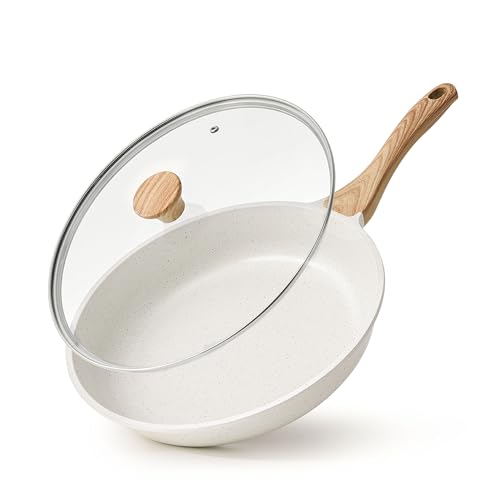
Sensarte Ceramic Frying Pan: is ceramic nonstick worth it?
A $26.99 ceramic-coated pan (price varies by size) with a glass lid. Buyers like the even heat and easy cleanup, but nonstick performance and durability are mixed.

Sensarte 13-Piece Ceramic Set: $65.95, 6,447 reviews, one flaw
A $65.95 thirteen-piece ceramic set that covers a frying pan, sauté pan, saucepan and casserole. Buyers like the look and value, but reviewers report chipping handles and sticking.
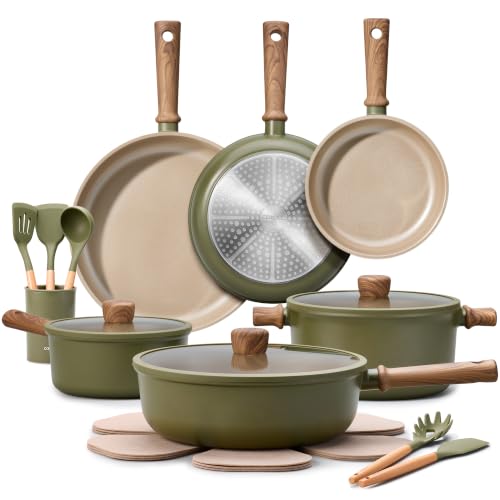
Carote 21-Piece Ceramic Set: does the coating peel?
A $99.99 twenty-one-piece ceramic set with 4.6 stars from 3,935 ratings. Buyers like the value and cleanup, but some report the nonstick coating peeling and handles getting hot.
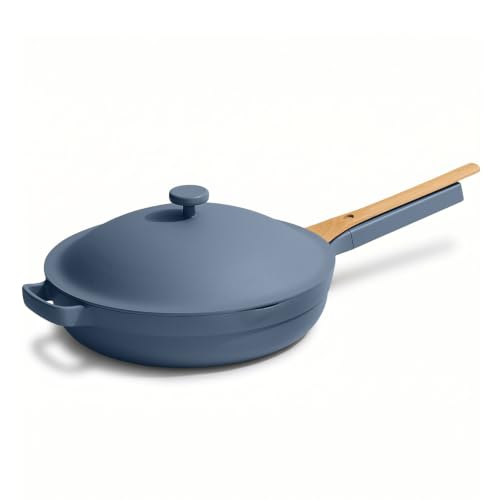
Our Place Always Pan 2.0: is it worth $95?
A $95 ceramic nonstick pan that replaces several pieces with a steamer basket and spatula. Buyers like the cooking, but value and nonstick feedback are mixed.

Cuisinart Chef's Classic Stainless Set: no coating, some staining
A $113.15 stainless steel set with aluminum-encapsulated bases and glass lids, no nonstick coating. Buyers like the look and even heat, but some report staining and food sticking.
Some links on this site are affiliate links. If you buy through them we may earn a small commission, at no extra cost to you.