Home › Guides › Care and cleaning
How to make a nonstick pan last longer: 30/60/90-day egg test
Five maker-backed rules (medium heat, no aerosol spray, no dishwasher, wood or silicone, no thermal shock) plus a 30/60/90-day egg test to track a ceramic pan's decline.
A ceramic nonstick pan lasts longest when you do five things: cook on low to medium heat, skip aerosol cooking sprays, keep it out of the dishwasher, use wood or silicone utensils, and never put a hot pan under cold water. Below they are grouped into three rules. Those rules come straight from the makers and from Consumer Reports. To know whether they are working, fry one egg in a dry pan at 30, 60 and 90 days and watch what changes.
Why ceramic coatings die young
The "ceramic" on these pans is a thin sol-gel film, silica with organic groups bonded to it, sprayed over aluminum and cured at a few hundred degrees, as reported by The Guardian and spelled out in a coating patent. The slickness lives at the surface. High heat bakes oil onto it, abrasion scrapes the organic groups off, and dishwasher detergent attacks both. Once that top layer is gone the pan is still a pan, but food sticks and no re-seasoning brings it back. The Guardian reports these coatings can wear down within months, which matches what Amazon buyers say about the pans we review (more on that below). For how the coating compares with Teflon and stainless, see is ceramic nonstick cookware safe?.
Rule 1: low to medium heat, never an empty pan on high
Carote's official care page says it plainly: "Low to medium heat is sufficient for most frying, sautéing and simmering," and "Avoid heating an empty pan over high heat. Preheat it on low to medium heat for up to 90 seconds, then add food or a small amount of oil or butter," per Carote. Consumer Reports gives the same instruction for every nonstick type: "Don't heat a nonstick pan when it's empty," in its guide Don't ruin that nonstick frying pan. Heat is what kills slickness fastest, because oil that gets too hot cooks onto the surface as a film that will not wash off.
Practical version: if your burner goes 1 to 10, live at 4 to 6. Put a drop of oil in before the pan is fully hot. If the oil smokes, the pan was too hot.
Rule 2: no aerosol spray, and no dishwasher
Consumer Reports says cooking sprays "burn at a lower temperature than butter or oil and can leave a sticky buildup," and notes that Anolon will void its warranty if you use them, in How to make your nonstick frying pan last. Carote's care page: "Avoid using aerosol cooking sprays unless the product instructions allow them." That gummy film is what makes a six-month-old pan feel "worn out." Use a teaspoon of liquid oil or butter instead.
Hand wash, even if the box says dishwasher-safe. CR's advice is to skip the dishwasher entirely, even for pans labeled dishwasher-safe, because high heat and harsh detergents damage the surface. Carote lists some ceramic sets as dishwasher-safe but says "hand washing is the gentler option for preserving the nonstick finish." Warm water, dish soap, soft sponge. For stuck residue, Carote says to fill the cooled pan with warm soapy water and let it soak until the residue softens. CR adds a baking soda and water paste left on for up to 24 hours for stubborn buildup. No scouring powder, no steel wool.
Rule 3: wood or silicone only, and let it cool before it touches water
Metal "can scrape or otherwise mar the nonstick surface, causing food to stick," per CR. Carote: "Use wood, silicone, nylon, or heat-safe plastic utensils." That includes whisks and the edge of a metal spatula used to flip. Store the pan with a cloth or pan protector between stacked pieces, which both CR and Carote recommend; nesting bare pans scratches the one underneath.
On washing, CR warns never to submerge a hot pan in cold water, which is "especially true for nonstick pans, which tend to be lightweight and more prone to warping." A warped base rocks on the burner, heats unevenly and makes the center stick first. Carote's first cleaning instruction is "Allow the cookware to cool before washing." Thirty seconds of patience saves the pan.
The 30/60/90-day egg test (do this yourself)
You cannot see a ceramic coating fail; you can only feel it. So give yourself a fixed benchmark. This is a method we suggest you run at home, not a lab result:
- Day 1: heat the clean pan on medium for 60 seconds, no oil. Crack one egg in. Note whether it slides freely when you tilt the pan, and whether the pan wipes clean with a paper towel afterward.
- Day 30: repeat exactly. Same burner, same setting, same timing, no oil.
- Day 60 and day 90: repeat again. Write each result on a sticky note inside the cabinet door.
What the results mean:
- Slides at 90 days: your habits are right. Keep going.
- Sticks slightly at 60 but releases with a drop of oil: normal aging. Add oil, lower the heat a notch, check again at 90.
- Sticks hard by day 30: either the heat is too high, a spray is being used, or the coating is a dud. Fix the first two before blaming the pan; if it still sticks, this is what return windows are for.
The test also sets realistic expectations. A ceramic pan that needs a little oil at month three is not broken; it is behaving the way the Guardian's reporting and buyer reviews say these coatings behave.
What buyers actually report
Here is the durability picture from Amazon's review summaries, as of October 2026:
- Sensarte Ceramic Nonstick Frying Pan with Lid, $26.99, 4.4 stars, 10,690 ratings: some buyers say the nonstick fades within a week; durability is mixed. The best value in this group, but only with the rules above.
- Sensarte 13-Piece Ceramic Nonstick Cookware Set, $65.95, 4.5 stars, 6,447 ratings: chipping handles and mixed stick resistance.
- Carote 21-Piece Ceramic Cookware Set, Green, $99.99, 4.6 stars, 3,935 ratings: coating peeling appears in 231 durability mentions; handles get hot. Carote's warranty is 12 months from purchase, per its site.
- Our Place Always Pan 2.0, $95.00, 4.3 stars, 3,531 ratings, the lowest rating here: value disputed, nonstick mixed. The price buys design, not a longer coating life.
Peeling and chipping are different from "sticks a little." Peeling means the film is physically leaving the pan.
When the pan is done
Consumer Reports' cookware testing lead, Breann Chai, says any nonstick pan with chips or scratches "should be thrown away," because the coating "could be flaking off into any food." That is the hard stop. The soft stop is the egg test: if an egg sticks on medium heat with a teaspoon of oil in a properly cleaned pan, the coating has done its job and it is time. Ceramic flakes are silica-based rather than PTFE, but none of the sources we opened has studied what swallowing them does, so we do not pretend to know; if you have a health condition and are worried about any exposure, ask your doctor. The full checklist is in when to replace a nonstick pan, and our care guide for non-toxic cookware covers the other materials in your cabinet.
If you are tired of the cycle, the pan that does not wear out is stainless. How to cook on stainless steel without sticking shows the one trick that makes it behave, and how to clean a cast iron skillet covers the other lifetime option.
Bottom line
Ceramic nonstick is a thin silica film, and everything that shortens its life is something you control at the stove or the sink: high heat, spray, dishwasher, metal, thermal shock. Follow the maker's rules, run the 30/60/90 egg test so you know where the pan stands, and retire it the day it chips. Treated this way a $27 pan gives you a fair run. Treated like cast iron, it is done in a season.
Sources
- Carote official site: How to care for CAROTE cookware and FAQ — accessed 2026-10-09
- Consumer Reports: Don't ruin that nonstick frying pan — accessed 2026-10-09
- Consumer Reports: How to make your nonstick frying pan last — accessed 2026-10-09
- The Guardian via Yahoo News: Toxic truth? The cookware craze redefining 'ceramic' and 'nontoxic' (Tom Perkins, 9 June 2025) — accessed 2026-10-09
- Google Patents: EP1835002A2, Non-stick ceramic coating composition and process — accessed 2026-10-09
Products mentioned in this guide
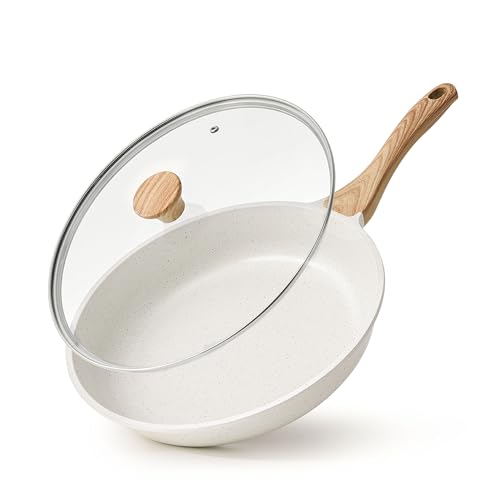
Sensarte Ceramic Frying Pan: is ceramic nonstick worth it?
A $26.99 ceramic-coated pan (price varies by size) with a glass lid. Buyers like the even heat and easy cleanup, but nonstick performance and durability are mixed.

Sensarte 13-Piece Ceramic Set: $65.95, 6,447 reviews, one flaw
A $65.95 thirteen-piece ceramic set that covers a frying pan, sauté pan, saucepan and casserole. Buyers like the look and value, but reviewers report chipping handles and sticking.
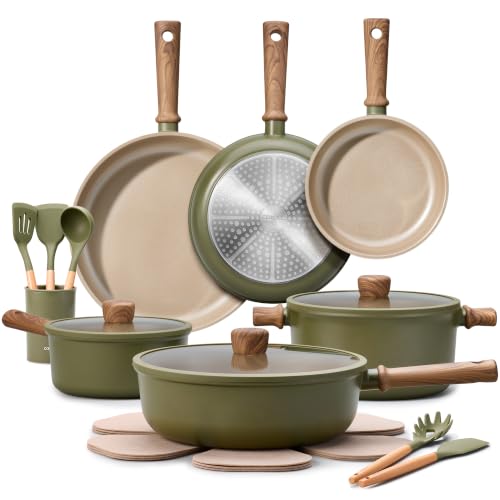
Carote 21-Piece Ceramic Set: does the coating peel?
A $99.99 twenty-one-piece ceramic set with 4.6 stars from 3,935 ratings. Buyers like the value and cleanup, but some report the nonstick coating peeling and handles getting hot.
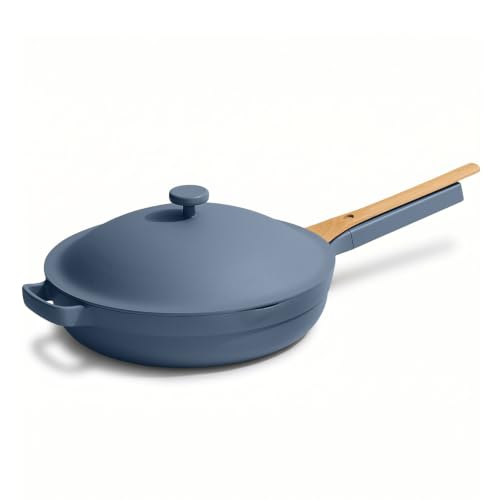
Our Place Always Pan 2.0: is it worth $95?
A $95 ceramic nonstick pan that replaces several pieces with a steamer basket and spatula. Buyers like the cooking, but value and nonstick feedback are mixed.
Some links on this site are affiliate links. If you buy through them we may earn a small commission, at no extra cost to you.