Home › Guides › Buying guides
Best non-toxic air fryers 2026: 6 ranked by basket material
Ranked by basket, not brand: glass (Ninja Crispi Pro) is the only coating-free pick, Cosori's PFAS-free ceramic is the value buy, and four unspecified-nonstick models land in the Avoid tier.
The lowest-risk air fryer basket is one with no coating at all: glass or bare stainless steel. One step down is a sol-gel ceramic coating, which is made without PFAS. Conventional PTFE nonstick is the material Minnesota pulled from store shelves in 2025, and it is still the coating most makers use or decline to name. Of the six air fryers reviewed on this site, only the Ninja Crispi Pro Glass Air Fryer lands in the top tier; the Cosori TurboBlaze 6-Qt is the best buy in the ceramic tier.
Why the basket matters more than the brand
The basket is what holds your food at 400–450°F, gets scraped by tongs and goes through the dishwasher. So the material of the basket and the crisper plate is the only "non-toxic" question with a real answer. Brand does not help: Ninja alone sells a glass dish, an unnamed "nonstick" basket and a toaster oven, and they land in three different tiers below.
Three things decide the tier:
- Whether there is a coating at all.
- If there is, whether it is a fluoropolymer (PTFE, the family that includes Teflon) or a silica-based ceramic.
- Whether the maker actually says which one. Several do not.
This is the same logic behind our ranking of non-toxic pans, applied to a machine that runs hot. For the chemistry in more depth, read air fryer basket materials explained.
Avoid tier: PTFE nonstick, or a coating the maker won't name
PTFE is a PFAS. The EPA describes PFAS as manufactured chemicals in use since the 1940s, many of which "break down very slowly and can build up in people, animals, and the environment over time." The same page lists reproductive effects, developmental delays in children, some cancers and reduced vaccine response among effects linked to certain PFAS at certain exposure levels.
In fairness to the coating: the FDA has authorized fluoropolymer nonstick coatings since the 1960s and says the polymer is bound to the pan so that negligible amounts migrate to food. The problem is heat and manufacturing, not food sitting in a cool basket. Health Canada tells consumers not to use nonstick cookware above 260°C (500°F) and warns that an empty pan left on a burner "may produce irritating or poisonous fumes." Science News reported Environmental Working Group testing in which an empty nonstick pan hit 400°F in two minutes and 730°F in five on a home stovetop. Breathing those fumes causes a flu-like illness called polymer fume fever.
An air fryer tops out at 400–450°F, so a PTFE basket should stay under the 500°F line in normal use. The risk is the edge case: an empty basket on a long preheat, or a scratched coating shedding flakes. When a maker will not name the coating, we rank it here, because every maker with a PFAS-free coating says so in the product title.
OK tier: sol-gel ceramic coating
A "ceramic" basket is a thin silica (silicon dioxide) layer formed from a liquid in what coating makers call a sol-gel process, with a silicone release agent built into the network, according to coating maker Fluorocarbon and the Wikipedia summary of nonstick surfaces. It contains no fluoropolymer. Both sources put its heat tolerance well above PTFE: Wikipedia cites degradation around 370°C (700°F); Fluorocarbon claims continuous resistance to 450°C.
The trade-off is lifespan. Fluorocarbon rates sol-gel release as "very good" against PTFE's "excellent," and on the pan side, buyers on Amazon of the Sensarte ceramic skillet report nonstick fading within a week for some (as of October 2026). The longer story is in is ceramic nonstick cookware safe.
Best tier: glass or bare stainless steel
Glass and bare stainless have nothing to wear off. The costs are weight, breakage and sticking: nothing about glass is nonstick, so food needs oil, a crisper plate or parchment. Glass also has a thermal-shock limit. ChemEd X calculates that borosilicate glass survives a 183 K (about 330°F) temperature swing while soda-lime glass fails at about 54 K (about 100°F). So the glass type matters, as does cooling a hot dish before it meets water.
Bare stainless baskets show up mostly in toaster-oven formats and replacement baskets; none of the six machines below ships one. The three top materials are compared feature by feature in glass vs stainless vs ceramic air fryer baskets.
The 6 air fryers, ranked by basket
Prices, stars and rating counts are from Amazon as of October 2026.
Best tier
- Ninja Crispi Pro Glass Air Fryer (AS101LG) — $249.90, 4.6 stars, 1,373 ratings. Ninja's product pages describe "coating-free, PFAS-free" glass dishes rated for air frying up to 230–240°C (446–464°F). Its Singapore page calls the glass borosilicate; its UK page does not name the type. PFAS-free is the maker's claim. Minus points from our review: the priciest machine here, and the glass is heavier and breakable.
OK tier
- Cosori TurboBlaze 6-Qt 9-in-1 — $89.99, 4.8 stars, 22,159 ratings. Cosori's page says "PFAS-free ceramic-coated, nonstick basket and crisper plate," dishwasher-safe, 90–450°F. That is the maker's claim. Minus points: no halfway-flip reminder, even though Cosori's own page says to shake loads over 1.5 lb, and 115 negative performance mentions against 5,146 positive in Amazon's review summary.
Avoid tier: PTFE, or coating not specified
- Ninja Air Fryer Pro 5-Qt (AF142) — $139.99, 4.7 stars, 17,585 ratings. Ninja's page for the sibling AF141 says only "nonstick basket and crisper plate"; the maker does not specify the coating and makes no PFAS-free claim. Minus points: $50 more than the Cosori for a smaller basket, and noise reports are mixed.
- Chefman 4-Qt Compact Air Fryer (RJ38-4T) — $79.99, 4.6 stars, 3,927 ratings. Chefman's page says "4-quart nonstick basket," top-rack dishwasher-safe, up to 450°F on Hi-Fry; the maker does not specify the coating. Minus point: 4 quarts feeds one or two people in practice.
- Ninja Foodi DualZone 10-Qt (DZ302) — $229.99, 4.7 stars, 1,074 ratings. Ninja's page for the current DZ401 lists "2 nonstick crisper plates" and two 5-qt baskets without naming a coating; the maker does not specify. Minus points: expensive, and at 17.1 x 14.65 x 12.87 in it takes real counter space.
- Ninja Flip Toaster Oven & Air Fryer (SP151) — $149.94, 4.3 stars, 2,112 ratings. Ninja lists a stainless exterior plus an air fry basket, sheet pan and wire rack; Target's listing calls the pan a "Nonstick Pan," coating unspecified. "Cooks unevenly" appears 130 times in Amazon's review summary, and cleaning reports are mixed. Toaster-oven formats get their own checklist in best non-toxic air fryer toaster ovens.
Order within the Avoid tier is by value and basket size, not by chemistry; none of the four makes a PFAS-free claim.
What Minnesota's PFAS law changes
Since January 1, 2025, Minnesota Statute 116.943, known as Amara's Law, bars the sale of cookware with "intentionally added PFAS," and its definition of cookware includes pans, trays and baking sheets. The Minnesota Pollution Control Agency says the bans widen in stages through 2032. PTFE is a PFAS, so a standard nonstick basket falls inside the definition. The Cookware Sustainability Alliance sued in January 2025 to block the law, arguing that fluoropolymers are distinct from the PFAS of health concern, according to Packaging Law; that report notes no ruling. Whatever the courts decide, "PFAS-free" now sits in air fryer product titles, and a maker that stays quiet about its coating is telling you something. How to read those labels: PFAS-free vs PFOA-free vs "non-toxic".
Bottom line
If basket material is your first filter, buy the Ninja Crispi Pro and accept the price and the weight. If $250 is too much, the Cosori TurboBlaze gives you a PFAS-free ceramic coating, the highest rating of the six and the lowest price of the big baskets. The four PTFE-or-unspecified machines are not a hazard under 500°F, but they are the ones you will replace when the coating scratches. Whatever you buy, skip empty preheats and keep the kitchen vented; if you have a health condition that makes fumes a concern, ask your doctor.
Sources
- EPA — Our Current Understanding of the Human Health and Environmental Risks of PFAS — accessed 2026-10-09
- FDA — Authorized Uses of PFAS in Food Contact Applications — accessed 2026-10-09
- Health Canada — Safe use of cookware — accessed 2026-10-09
- Science News — Sticky Situation: Nonstick surfaces can turn toxic at high heat — accessed 2026-10-09
- Fluorocarbon — What is sol-gel coating? — accessed 2026-10-09
- Wikipedia — Non-stick surface — accessed 2026-10-09
- ChemEd X — Borosilicate vs soda-lime glass and thermal shock — accessed 2026-10-09
- Ninja Singapore — CRISPi Pro Glass Air Fryer AS101 — accessed 2026-10-09
- Ninja UK — CRISPi PRO 7-in-1 XL Glass Air Fryer AS101UKLG — accessed 2026-10-09
- Cosori — TurboBlaze 6.0-Quart Air Fryer — accessed 2026-10-09
- Ninja — Air Fryer Pro 4-in-1 AF141 — accessed 2026-10-09
- Chefman — TurboFry Touch Easy-View 4-Quart Air Fryer — accessed 2026-10-09
- Ninja — Foodi 6-in-1 10-qt. XL 2-Basket Air Fryer DZ401 — accessed 2026-10-09
- Target — Ninja Flip Toaster Oven & Air Fryer SP151 — accessed 2026-10-09
- Minnesota Legislature — Statute 116.943 PFAS in products — accessed 2026-10-09
- Minnesota Pollution Control Agency — PFAS in products — accessed 2026-10-09
- Packaging Law — Cookware alliance sues to block MN ban on cookware containing added PFAS — accessed 2026-10-09
Products mentioned in this guide
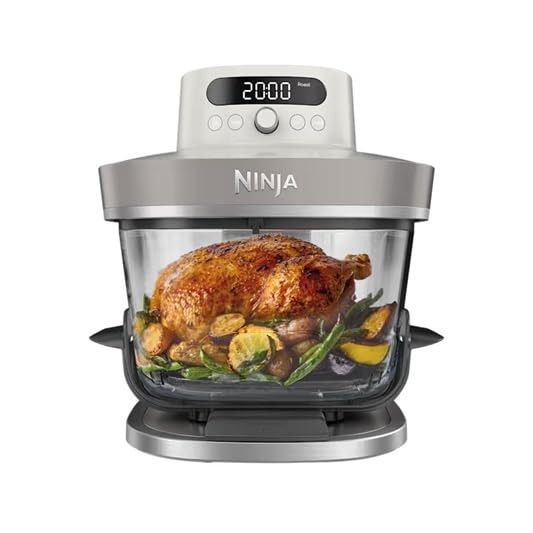
Ninja Crispi Pro Glass Air Fryer: is glass worth $249?
A glass-container Ninja at $249.90 with 4.6 stars from 1,373 Amazon ratings. A 6-quart glass bowl plus a 2.5-quart one, for families who want to cook, store and reheat in the same dish.
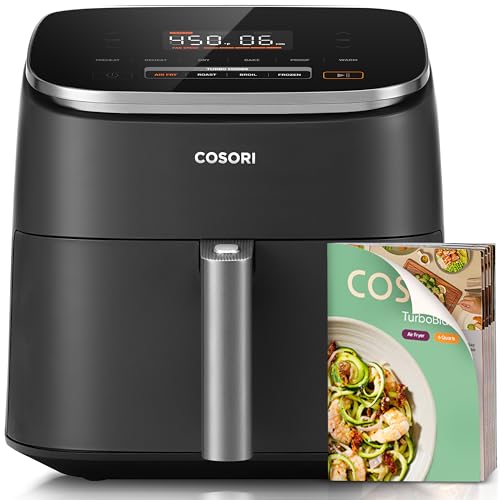
Cosori TurboBlaze 6-Qt: what 22,159 reviews agree on
The most-reviewed basket air fryer here: 4.8 stars from 22,159 Amazon ratings at $89.99. A roomy 6-quart square basket for families who want crisp results without paying for a dual-zone model.

Ninja Air Fryer Pro 5-Qt: worth $50 more than the Cosori?
A 5-quart Ninja at $139.99 with 4.7 stars from 17,585 Amazon ratings. Buyers praise even cooking and ease of use, and many call the size right for two people.

Chefman 4-Qt Compact Air Fryer: enough for two people?
A compact 4-quart air fryer for $79.99 with 4.6 stars from 3,927 Amazon ratings. Best for one or two people who want a small footprint and simple presets.
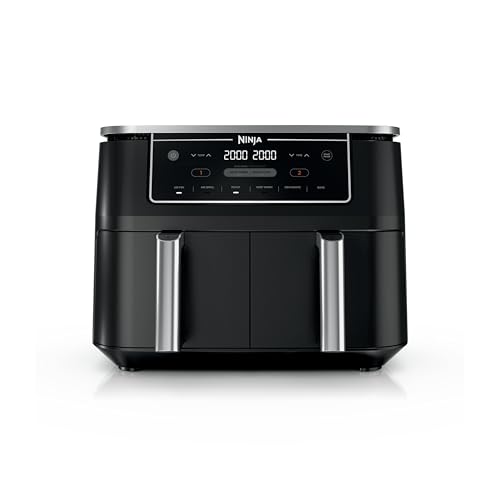
Ninja Foodi DualZone 10-Qt: two baskets, 1,074 reviews, one catch
A 10-quart two-basket Ninja at $229.99 with 4.7 stars from 1,074 Amazon ratings. Best for families who want a main and a side done at the same time.
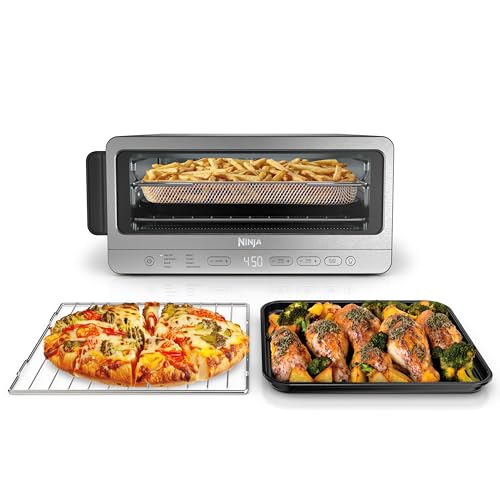
Ninja Flip SP151: why 130 buyers say it cooks unevenly
A flip-up toaster oven and air fryer at $149.94 with 4.3 stars from 2,112 Amazon ratings. Good if counter space is tight, but buyers report uneven cooking.
Some links on this site are affiliate links. If you buy through them we may earn a small commission, at no extra cost to you.