Home › Guides › Buying guides
Glass vs stainless vs ceramic air fryer baskets: 5 differences
Glass and stainless have no coating to wear off; ceramic is PFAS-free but wears; glass is the one that breaks and costs 2.8x more. Compared on the Ninja Crispi Pro, Cosori TurboBlaze and Ninja Pro.
Glass and bare stainless steel baskets have no coating to wear off, which makes them the longest-lived and lowest-chemistry choice. A ceramic (sol-gel) basket is coated but PFAS-free and releases food better. Glass is the only one that can shatter; stainless is the only one you can scrub hard. On price, ceramic wins by a wide margin: the Cosori TurboBlaze 6-Qt is $89.99 against $249.90 for the glass Ninja Crispi Pro on Amazon as of October 2026.
The three baskets in this comparison
- Glass: the Ninja Crispi Pro Glass Air Fryer. Ninja's pages call the dishes "coating-free, PFAS-free" glass rated for air frying up to 230–240°C (446–464°F); the Singapore page says borosilicate, the UK page does not name the glass type. PFAS-free is the maker's claim.
- Ceramic coating: the Cosori TurboBlaze 6-Qt. Cosori says "PFAS-free ceramic-coated, nonstick basket and crisper plate." Also the maker's claim.
- Conventional nonstick, for contrast: the Ninja Air Fryer Pro 5-Qt (AF142). Ninja's page for the sibling AF141 says only "nonstick basket and crisper plate"; the maker does not specify the coating and makes no PFAS-free claim. It stands in for the PTFE basket most people already own.
None of the machines reviewed on this site ships a bare stainless basket, so stainless is described from material facts and regulator guidance rather than from a specific product. The chemistry behind all four materials is in air fryer basket materials explained, and the full six-machine ranking is in best non-toxic air fryers.
Difference 1: coating or no coating
Glass and stainless are the material all the way through. Nothing flakes off, and a scratch is cosmetic. Health Canada lists stainless steel as durable and rust-resistant with one caution: do not store acidic food in it for long. It lists glass alongside ceramic and enamel as easy to clean, subject to lead and cadmium limits in Canada.
A ceramic basket is a thin silica layer, about 35 microns in the industrial version described by coating maker Fluorocarbon, formed from a liquid by a sol-gel process. It contains no fluoropolymer, which is why it can carry a PFAS-free label. It is still a coating: once it thins, the aluminum underneath is what touches the food.
A conventional nonstick basket is PTFE, a fluoropolymer and therefore a PFAS. The FDA has authorized these coatings since the 1960s and says negligible amounts migrate to food. The EPA notes that many PFAS persist and build up in people and the environment, and that is the production-side concern that drove Minnesota to ban intentionally added PFAS in cookware from 2025 under Statute 116.943. Both sides are true at once; the label fight is covered in PFAS-free vs PFOA-free vs "non-toxic".
Difference 2: how much heat each takes
- Stainless: no coating to degrade, so the air fryer's thermostat is the limit.
- Glass: Ninja rates the Crispi Pro dishes to 230–240°C (446–464°F). The limit that matters more is thermal shock. ChemEd X calculates that borosilicate glass tolerates a temperature swing of about 183 K (about 330°F) while soda-lime glass fails near 54 K (about 100°F). Ninja's care guide says to let the glass cool to room temperature before it meets water or the dishwasher, which is good advice for any glass.
- Ceramic: the Wikipedia summary of nonstick surfaces puts sol-gel degradation near 370°C (700°F); Fluorocarbon claims continuous use to 450°C for its industrial grade. The Cosori runs to 450°F, far below either number.
- PTFE: Health Canada says keep it under 260°C (500°F); above that it can give off fumes, and an empty pan on a burner is its example. The Ninja Pro tops out at 400°F, so the margin is there in normal use. The failure mode is an empty basket on a long preheat, not a tray of fries. If fumes are a concern for a health condition, ask your doctor.
Difference 3: weight and breakage
Glass is the heavy, breakable one, but the numbers need context. Ninja's UK page lists the whole Crispi Pro at 5.17 kg (about 11.4 lb), lighter than the Cosori's 13.2 lb listed by Cosori, because the Crispi's heater is a lid that sits on the dish instead of a cabinet around a drawer. What you lift and carry to the table, though, is a full 5.7-liter glass dish, and our review flags it as heavier than a metal basket and breakable. A dropped aluminum basket dents; a dropped glass dish is gone.
Stainless is heavier than aluminum of the same size but will survive a drop. Ceramic-coated and PTFE-coated baskets are both aluminum underneath, so they are the lightest to pull and shake. Ninja lists the AF141 at 10.67 lb for the whole machine.
Difference 4: cleaning
Stainless is the only one you can attack with a scouring pad and a baking-soda paste without shortening its life. Glass takes a sponge, and Ninja says to avoid abrasive tools when hand-washing; the Crispi dishes are dishwasher-safe once cooled. Cosori says its ceramic basket and crisper plate are dishwasher-safe, but a coating is a coating: metal tools, steel wool and dishwasher heat all shorten the time until food starts to stick. The same goes for PTFE. The method that keeps both coatings alive longest is in how to clean an air fryer basket.
Two honest marks against the coated baskets from Amazon reviews as of October 2026: the Cosori shows 115 negative performance mentions against 5,146 positive, and Ninja Pro buyers report mixed noise, not mixed cleaning. Neither has the cleaning complaints that trail the Ninja Flip toaster oven.
Difference 5: price
Amazon prices as of October 2026:
- Cosori TurboBlaze 6-Qt, ceramic: $89.99, 4.8 stars, 22,159 ratings.
- Ninja Air Fryer Pro 5-Qt, unspecified nonstick: $139.99, 4.7 stars, 17,585 ratings.
- Ninja Crispi Pro Glass, glass: $249.90, 4.6 stars, 1,373 ratings.
So the coating-free option costs 2.8 times the ceramic option and gives you a smaller rating pool to judge it by. The Ninja Pro sits in the middle and is the odd one out: $50 more than the Cosori for a smaller basket and no PFAS-free claim. For stainless you are looking at toaster-oven formats or replacement baskets, which is a different purchase.
Which basket for which cook
- You want zero coating and can spend $250: glass. Treat the dish like a casserole dish: oil the food, use the crisper plate, cool it before washing.
- You want PFAS-free at a normal price: ceramic. Buy the Cosori, set a timer to shake at halfway since the machine will not remind you, and plan on more oil after the first year.
- You already own a PTFE basket: keep it until it scratches. Skip empty preheats and keep the vent fan on. When it scratches, the replacement question is the one this article answers.
- You want something you can scrub: stainless, which means a toaster oven with a bare rack and pan. Our checklist is in best non-toxic air fryer toaster ovens.
The pan-side version of this ranking, with cast iron and carbon steel in the mix, is best non-toxic pans.
Bottom line
Glass is the cleanest answer and the most expensive, and it asks you to handle it like glass. Ceramic is the practical answer: PFAS-free by the maker's claim, cheap, highly rated, and a coating you will eventually wear out. Stainless is the toughest surface and the hardest to find in a basket. Conventional PTFE is fine under 500°F and is the one regulators are moving away from. Pick by how you cook and clean, not by the word "non-toxic" on the box.
Sources
- Ninja Singapore — CRISPi Pro Glass Air Fryer AS101 — accessed 2026-10-09
- Ninja UK — CRISPi PRO 7-in-1 XL Glass Air Fryer AS101UKLG — accessed 2026-10-09
- Cosori — TurboBlaze 6.0-Quart Air Fryer — accessed 2026-10-09
- Ninja — Air Fryer Pro 4-in-1 AF141 — accessed 2026-10-09
- Health Canada — Safe use of cookware — accessed 2026-10-09
- Fluorocarbon — What is sol-gel coating? — accessed 2026-10-09
- FDA — Authorized Uses of PFAS in Food Contact Applications — accessed 2026-10-09
- EPA — Our Current Understanding of the Human Health and Environmental Risks of PFAS — accessed 2026-10-09
- Minnesota Legislature — Statute 116.943 PFAS in products — accessed 2026-10-09
- ChemEd X — Borosilicate vs soda-lime glass and thermal shock — accessed 2026-10-09
- Wikipedia — Non-stick surface — accessed 2026-10-09
Products mentioned in this guide
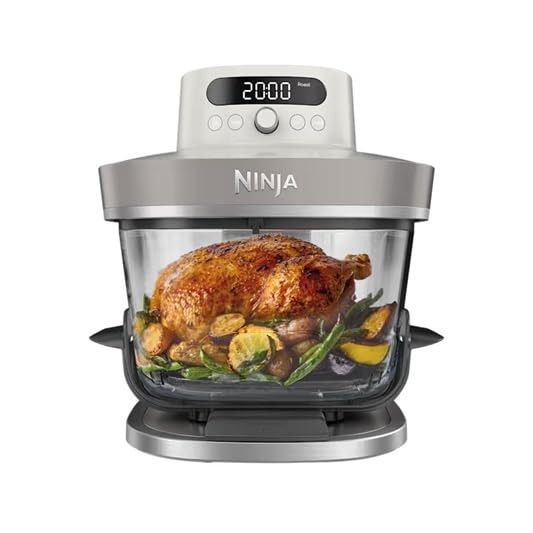
Ninja Crispi Pro Glass Air Fryer: is glass worth $249?
A glass-container Ninja at $249.90 with 4.6 stars from 1,373 Amazon ratings. A 6-quart glass bowl plus a 2.5-quart one, for families who want to cook, store and reheat in the same dish.
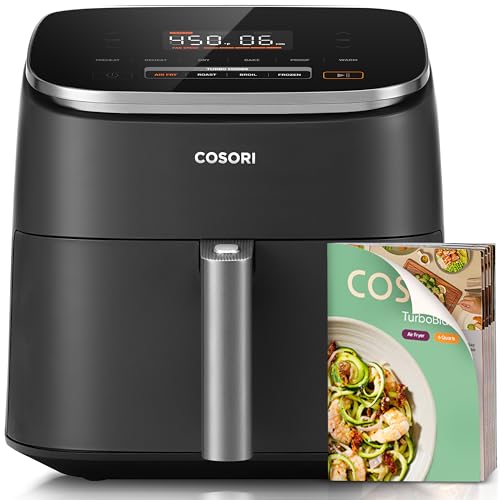
Cosori TurboBlaze 6-Qt: what 22,159 reviews agree on
The most-reviewed basket air fryer here: 4.8 stars from 22,159 Amazon ratings at $89.99. A roomy 6-quart square basket for families who want crisp results without paying for a dual-zone model.

Ninja Air Fryer Pro 5-Qt: worth $50 more than the Cosori?
A 5-quart Ninja at $139.99 with 4.7 stars from 17,585 Amazon ratings. Buyers praise even cooking and ease of use, and many call the size right for two people.
Some links on this site are affiliate links. If you buy through them we may earn a small commission, at no extra cost to you.