Home › Guides › Buying guides
Ceramic vs stainless vs cast iron vs carbon steel: 5 jobs ranked
Ceramic wins eggs, stainless wins acidic sauces, cast iron wins searing and frying, carbon steel matches cast iron at lower weight. Most kitchens want one uncoated pan plus one slick pan.
Ceramic nonstick wins at eggs and loses at everything hot. Stainless steel wins at acidic sauces and deglazing and needs technique for eggs. Cast iron wins at searing and frying and dislikes tomato sauce. Carbon steel does what cast iron does at half the weight, with the same rule about acid. No single pan takes all five jobs, which is why the usual answer is two pans: one uncoated for heat, one slick for eggs. Here is each job and each material, then heat, upkeep, lifespan and price.
The four materials in one minute
Ceramic nonstick is a thin silica glaze bonded to an aluminum pan with a sol-gel process. Consumer Reports describes it as "primarily made of silicon dioxide and other metal oxides, not PTFE or any other PFAS," and found none of 96 PFAS in the two ceramic pans it tested. Example on our list: the Sensarte Ceramic Frying Pan with Lid, $26.99 on Amazon as of October 2026, 4.4 stars, 10,690 ratings.
Stainless steel is an iron-chromium-nickel alloy, usually over an aluminum core. No coating. Example: the Cuisinart Chef's Classic Stainless 11-Piece Set, $113.15, 4.3 stars, 9,820 ratings.
Cast iron is poured iron with a baked-on oil "seasoning" as its release layer. Examples: the Lodge 10.25-Inch Cast Iron Skillet, $22.91, 4.6 stars, 87,490 ratings, and the Lodge 12-Inch Cast Iron Skillet with Handle Holder, $26.68, 4.6 stars, 70,566 ratings.
Carbon steel is a thinner, stamped iron alloy with the same kind of seasoning. Lodge says its carbon steel pans are "lighter and thinner than cast iron" and "heat up and cool down faster." We have no carbon steel review yet, so this guide leans on America's Test Kitchen and Lodge's material pages rather than Amazon data.
For the safety side of each material, start with our ranking of non-toxic pans by material. This page is about which pan does which job.
Job 1: eggs
Ceramic: best. This is the whole reason to own one. Sensarte's product page claims "eggs effortlessly slide off," and Consumer Reports said the ceramic pan it tested fried eggs with no oil. The catch is that the slickness fades; some buyers on Amazon report it fading within a week on the Sensarte.
Stainless: good, with technique. Eggs stick to cold or barely warm steel. Sur La Table's method is to preheat on medium until a flick of water "dances across the pan, sizzles and beads up," add fat, then drop to medium-low. Buyers on Amazon say the Cuisinart sticks without heat or fat. The water-drop test guide walks through it.
Cast iron: good once seasoned. The Lodge listing says the "non-stick finish improves with every use," and buyers on Amazon call non-stick a mixed aspect with 1,100 mentions on the 12-inch. New pans stick; well-used ones do not.
Carbon steel: good. ATK says a good carbon steel pan handles "cooking eggs" along with searing.
Job 2: searing steak
Cast iron: best. Lodge says cast iron "retains heat longer than carbon steel" and is the pick for "pan-frying and roasting." A thick, hot, heavy pan does not drop temperature when a cold steak lands on it.
Carbon steel: best, lighter. ATK used carbon steel for "searing steak" and liked that it was "lighter than cast iron" while still holding heat. ATK found pans under 2.6 mm "tended to scorch food, throw off recipe times, and warp."
Stainless: good. It sears fine and leaves the browned fond for a pan sauce. The Cuisinart is oven and broiler safe to 500°F per the maker, so you can finish in the oven.
Ceramic: avoid. Coating makers name "high heat conditions" alongside dishwashers and abrasion as the stresses a sol-gel coating has to survive, per PPG. A sear is exactly that stress.
Job 3: acidic sauces
Stainless: best. No seasoning to strip, no enamel to chip. In Tasting Table's chef interview, tomato sauce is something the chef "would only cook in a stainless steel pot." One caveat with numbers: an Oregon State University study found that six hours of simmering tomato sauce raised nickel up to 26-fold, that new pans leached the most, and that leaching "stabilized after the sixth cooking cycle." For a normal sauce in a used pan it is minor; if you have a nickel allergy or a health condition, ask your doctor. Our stainless safety guide has the full numbers.
Ceramic: good. The glaze needs no seasoning, so acid strips nothing.
Cast iron: short jobs only. A long tomato simmer does two things. It eats seasoning, and it pulls iron into the food. A 2021 systematic review found "acidity of food is essential for making the most of iron leaching," which is a benefit for many people and a problem for anyone managing iron overload. A quick deglaze with wine is fine; a two-hour ragù belongs in stainless or enamel.
Carbon steel: same rule, stricter. ATK is blunt: "if you simmer an acidic tomato sauce... the acid will strip off most of the pan's dark patina." The thin seasoning layer is the whole nonstick system, so you lose more than you do with cast iron.
Job 4: frying in oil
Cast iron: best. Heat retention keeps the oil temperature from crashing when the food goes in, which is Lodge's "pan-frying" use case. The 12-inch Lodge holds 1.89 liters per the listing, enough for shallow-frying chicken.
Carbon steel: best for quick work. Lodge pairs carbon steel with "flash frying, sautéing" and delicate fish, where fast heat response helps more than deep retention.
Stainless: good. A heavy-bottomed stainless saucepan is a fine fryer and the easiest to clean afterward; the Cuisinart set is dishwasher safe per the listing.
Ceramic: light frying only. Fine for an egg or a cutlet. Deep oil at high heat is the same stress as searing, and the pan is usually too shallow anyway.
Job 5: oven and broiler
Cast iron and carbon steel: best. Lodge says cast iron "can handle any kitchen cooktop, oven, grill, and open flame," and its carbon steel page lists "stovetop (including induction!), oven, grill, campfire." No temperature ceiling, no handle to remove.
Stainless: best. Cuisinart lists the Chef's Classic set as oven safe to 500°F and broiler safe.
Ceramic: it depends on the handle. Sensarte lists its ceramic pan as "oven safe to 550°F" but says to "remove the handle before placing the pan in the oven." The Our Place Always Pan 2.0 ($95.00, 4.3 stars, 3,531 ratings) is oven safe to 450°F per the maker.
Heat, upkeep, lifespan and price
- Heat tolerance. Cast iron and carbon steel: effectively unlimited. Stainless: 500°F oven and broiler on the Cuisinart. Ceramic: 450°F to 550°F per maker, and less is better for the coating.
- Upkeep. Lodge's routine for cast iron is "warm, soapy water," dry completely, then "a thin layer of oil." Soap is fine, the dishwasher is not ("A dishwasher will remove the seasoning and likely cause rust"), and "soaking cast iron in water is a recipe for rust." Carbon steel is identical: Lodge says both "are cleaned the exact same way: wash in warm water, dry, and oil." Stainless: dishwasher safe, scrub hard. Ceramic: the Sensarte listing says dishwasher safe but hand wash recommended; soft tools only. Full routines are in our care guide, with rust repair and seasoning as separate pages.
- Lifespan. Cast iron: Lodge says "generations." Stainless: no coating to fail. Carbon steel: same as cast iron. Ceramic: the shortest on the page; our replacement guide lists the signs.
- Price on Amazon, October 2026. Lodge 10.25-inch cast iron $22.91. Sensarte ceramic with lid $26.99. Cuisinart 11-piece stainless $113.15. Carbon steel: ATK's winner was $120, but it adds that "you don't need to spend hundreds of dollars." Our budget guide sorts the whole list by price.
Bottom line
If you can own two pans, make one cast iron or carbon steel for searing, frying and the oven, and one stainless for sauces and deglazing; add a cheap ceramic pan only if eggs are a daily fight. If you can own one, stainless covers the most jobs with no coating and the fewest rules, as long as you learn the preheat. Cast iron is the best value per dollar on the list and the one that improves with age. Ceramic is the easiest today and the first to be replaced.
Sources
- Consumer Reports: You can't always trust claims on non-toxic cookware — accessed 2026-10-09
- Lodge: Cast iron vs carbon steel — accessed 2026-10-09
- Lodge: Cast iron cleaning and care — accessed 2026-10-09
- Lodge: How to clean cast iron — accessed 2026-10-09
- Lodge: Carbon steel care — accessed 2026-10-09
- America's Test Kitchen: The best carbon steel skillets — accessed 2026-10-09
- Sensarte: Ceramic frying pan — accessed 2026-10-09
- Sur La Table: How to cook eggs in stainless steel — accessed 2026-10-09
- Tasting Table: Carbon steel vs stainless steel pans — accessed 2026-10-09
- Oregon State University: Stainless steel leaches nickel and chromium into foods during cooking — accessed 2026-10-09
- Systematic review: Effect of cooking food in iron-containing cookware (PMC8266402) — accessed 2026-10-09
- PPG Fusion Pro sol-gel ceramic nonstick coating — accessed 2026-10-09
Products mentioned in this guide
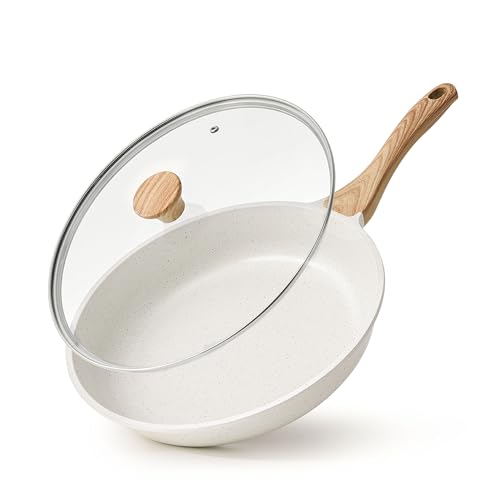
Sensarte Ceramic Frying Pan: is ceramic nonstick worth it?
A $26.99 ceramic-coated pan (price varies by size) with a glass lid. Buyers like the even heat and easy cleanup, but nonstick performance and durability are mixed.

Cuisinart Chef's Classic Stainless Set: no coating, some staining
A $113.15 stainless steel set with aluminum-encapsulated bases and glass lids, no nonstick coating. Buyers like the look and even heat, but some report staining and food sticking.
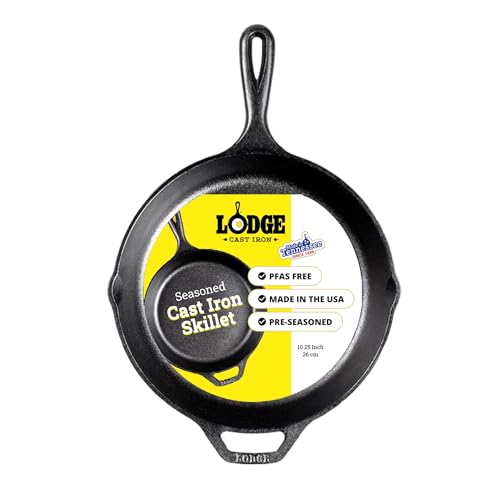
Lodge 10.25-Inch Cast Iron Skillet: 87,490 reviews, rust explained
The classic American cast iron skillet at about $22.91 with 87,490 Amazon ratings. Tough and versatile, but some buyers report rust after first use and food sticking.
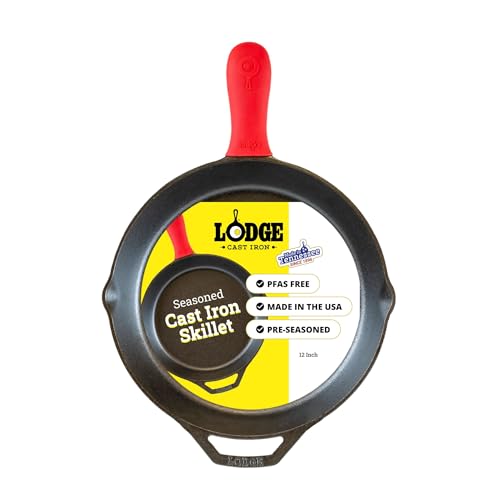
Lodge 12-Inch Cast Iron Skillet: too heavy, or just right?
A 12-inch pre-seasoned cast iron skillet at $26.68 with a red silicone handle holder and 70,566 Amazon ratings. Buyers praise durability, but size, weight and nonstick feedback are split.
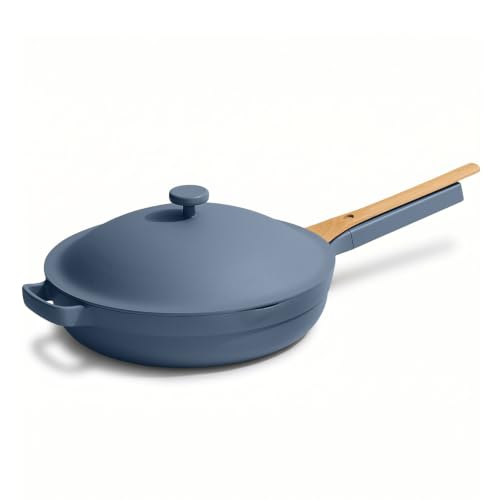
Our Place Always Pan 2.0: is it worth $95?
A $95 ceramic nonstick pan that replaces several pieces with a steamer basket and spatula. Buyers like the cooking, but value and nonstick feedback are mixed.
Some links on this site are affiliate links. If you buy through them we may earn a small commission, at no extra cost to you.