Home › Guides › Air fryer know-how
Is the air fryer bad for you? Acrylamide, fumes and coatings
Evidence does not show air fryers are worse than ovens or deep fryers. Acrylamide tracks browning, coatings stay under the 500F breakdown unless scratched, and the plastic shell never touches food.
The published evidence does not show that an air fryer is worse for you than an oven or a deep fryer; one controlled study found air-fried fries carried about half the acrylamide of deep-fried ones. The real issues are narrower: acrylamide forms in starchy food at high heat no matter which appliance you use, nonstick coatings are stable at air fryer temperatures but should not be scratched, and the plastic housing never touches your food. Here is what each concern rests on.
Acrylamide: the one that applies to every air fryer
Acrylamide is a chemical that forms in food, not in the appliance. The FDA says it "forms through a natural chemical reaction between sugars and asparagine, an amino acid, in plant-based foods" during "high-temperature cooking, such as frying, roasting, and baking," with potato and cereal-grain products as the main sources (FDA). The European Food Safety Authority puts the threshold at cooking above 120°C (248°F) with low moisture, which describes every air fryer cycle (EFSA).
On the health side, EFSA's 2015 opinion concluded that "acrylamide in food potentially increases the risk of developing cancer for consumers in all age groups," based mainly on animal studies. The FDA notes that in those studies "the levels of acrylamide used in these studies were much greater than those found in human food" and that there is "no consistent epidemiological evidence" linking dietary acrylamide to cancer in people. Both agencies treat it as worth reducing, not as a reason to stop roasting potatoes. For adults, EFSA says fried potato products and coffee are the largest dietary sources.
Air fryer vs deep fryer vs oven
A 2022 study in Frontiers in Nutrition compared the two methods directly. Air-fried fries cooked at 190°C for 18 minutes contained 342 ng/g of acrylamide; deep-fried fries at 180°C for 6 minutes contained 650 ng/g, a reduction the authors put at up to 47 percent, and they concluded air frying "was relatively healthier" than deep frying (Dong et al., Frontiers in Nutrition, 2022). That is one lab, one potato, one recipe. A 2024 commentary in the same journal criticized a separate air-fryer-versus-oven study for reporting acrylamide values below its own detection limit, which is a reminder that not every headline on this topic rests on solid numbers (Serdar, Frontiers in Nutrition, 2024).
The practical takeaway does not depend on which appliance wins. EFSA describes acrylamide as a product of the same browning reaction that gives fried food its color, so the darker the potato, the more of it you can expect. Pull fries at golden rather than brown, use the lowest temperature that still crisps, and shake the basket so nothing chars in one corner. The air fryer mistakes list covers the over-browning habits that add acrylamide for no flavor gain.
The coating: stable at air fryer heat, not when scratched
Most baskets are aluminum coated with PTFE or a ceramic sol-gel; our basket materials guide explains the difference. For PTFE, the FDA has authorized fluoropolymer cookware coatings since the 1960s and says "studies show negligible amounts of PFAS in this coating can migrate to food" (FDA).
Heat is the next question. The National Capital Poison Center says PTFE "starts to break down when exposed to temperatures above about 500 °F" (Poison Control). Science News reported that an empty nonstick pan on a stovetop can pass 400°F within 2 minutes and reach 730°F in 5 (Science News). An air fryer is different in one important way: a thermostat caps the air temperature at the dial setting. The Cosori TurboBlaze tops out at 450°F per the maker (Cosori); the Ninja Pro line at 400°F (SharkNinja). Neither reaches the breakdown range in normal use.
Scratches are the real weakness. A 2022 study in Science of the Total Environment, reported by Popular Science, estimated that a single crack in a PTFE coating can shed around 9,100 plastic particles during cooking. Poison Control's advice is to inspect nonstick cookware regularly and replace anything chipped. Our cleaning guide shows how to wash a basket without creating those scratches.
The other side of the PTFE debate is about manufacturing, not your kitchen. The American Cancer Society notes that PFOA, a chemical once used to make PTFE, is classified by IARC as carcinogenic to humans, and that PFAS "don't break down easily and can stay in the environment and in the human body for a long time" (American Cancer Society). That is a fair reason to prefer a coating-free basket like the glass Ninja Crispi Pro, which the maker says is "PFAS- & PTFE-free" on cooking surfaces (SharkNinja). It is not evidence that an intact PTFE basket is putting PFOA in your dinner. Our guides on whether Teflon is safe and what PFAS-free really means go deeper.
Smoke and fumes
Air fryers smoke for an ordinary reason: grease on the heating element or fatty drippings hitting a hot drawer. That smoke is cooking smoke, the same particulate matter the EPA lists when it says indoor PM "can be generated through cooking," with the advice to "install and use exhaust fans vented to the outside when cooking" (EPA). Run the unit under the range hood or near a window and keep the element clean.
Polymer fume fever, sometimes called Teflon flu, is a separate thing: flu-like symptoms from inhaling fumes of PTFE heated past its limit. Poison Control lists "chills, fever, fatigue, headache, body aches" that "usually resolve within 1 to 2 days," and notes that birds are far more sensitive and can die from the fumes. Because an air fryer is built to hold the temperature you set, this is a stovetop problem far more than an air fryer problem, but keep pet birds out of the kitchen regardless.
BPA and the plastic shell
The outside of most air fryers is plastic, and so is the drawer front and handle. Food sits in the metal or glass basket, not against that plastic. On BPA itself, the FDA's position is that "BPA is safe at the current levels occurring in foods," and its 2012 and 2013 moves on baby bottles and formula packaging were based on makers abandoning those uses, which the FDA says is "not based on safety" (FDA). Makers such as Ninja label their fryers "BPA-free" on Amazon; that is a maker's claim about a part your food never touches. If plastic in the kitchen is your bigger worry, the question that matters more is whether you microwave in it.
What this means for your cooking
- Cook potatoes and bread products to golden, not dark brown. That is the one habit with real acrylamide leverage.
- Do not run a coated basket above the maker's maximum, and never preheat with an empty basket at max for a long time.
- Inspect the basket monthly. Flaking means replace, not scrub harder.
- Clean the heating element so smoke does not become a routine.
- Vent the kitchen like you would for any frying.
If you have a health condition, are pregnant, or are cooking for a young child, ask your doctor about acrylamide and cookware rather than relying on any website, including this one. For the setup basics, see our first-time air fryer guide.
Bottom line
An air fryer is a small convection oven. The only food-chemistry issue specific to high dry heat, acrylamide, applies to ovens and deep fryers too, and the one direct comparison available favored air frying over deep frying. Coatings are stable below the 500°F breakdown point that no consumer air fryer reaches; scratches are the thing to watch. Smoke is a cleaning problem, and BPA in the shell is a non-issue for food contact. Cook lighter, keep the basket intact, and the air fryer is not the part of dinner to worry about.
Sources
- FDA — Acrylamide — accessed 2026-10-09
- EFSA — Acrylamide — accessed 2026-10-09
- Dong et al. — Effects of Air Frying on French Fries, Frontiers in Nutrition, 2022 — accessed 2026-10-09
- Serdar — Commentary: Acrylamide formation in air-fried versus deep and oven-fried potatoes, Frontiers in Nutrition, 2024 — accessed 2026-10-09
- FDA — Authorized Uses of PFAS in Food Contact Applications — accessed 2026-10-09
- National Capital Poison Center — Teflon flu — accessed 2026-10-09
- Science News — Sticky Situation: Nonstick surfaces can turn toxic at high heat — accessed 2026-10-09
- Popular Science — coverage of the 2022 Science of the Total Environment study on Teflon particles — accessed 2026-10-09
- American Cancer Society — Teflon and Perfluorooctanoic Acid (PFOA) — accessed 2026-10-09
- Cosori — TurboBlaze 6.0-Quart Air Fryer product page — accessed 2026-10-09
- SharkNinja — Ninja Air Fryer Pro AF141 product page — accessed 2026-10-09
- SharkNinja — Ninja Crispi Pro Glass AS101LG product page — accessed 2026-10-09
- EPA — Indoor Particulate Matter — accessed 2026-10-09
- FDA — Bisphenol A (BPA): Use in Food Contact Application — accessed 2026-10-09
Products mentioned in this guide
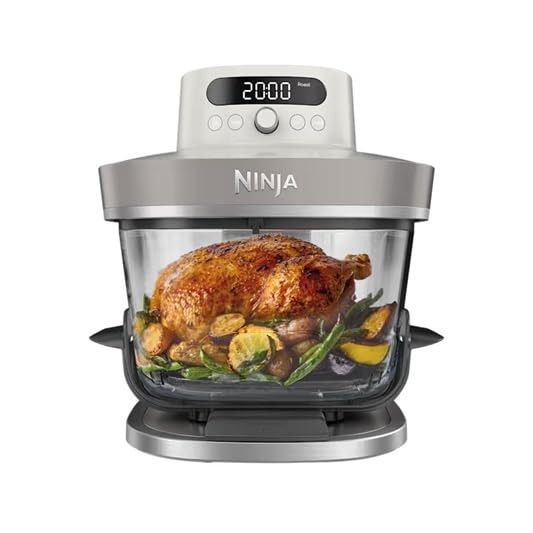
Ninja Crispi Pro Glass Air Fryer: is glass worth $249?
A glass-container Ninja at $249.90 with 4.6 stars from 1,373 Amazon ratings. A 6-quart glass bowl plus a 2.5-quart one, for families who want to cook, store and reheat in the same dish.
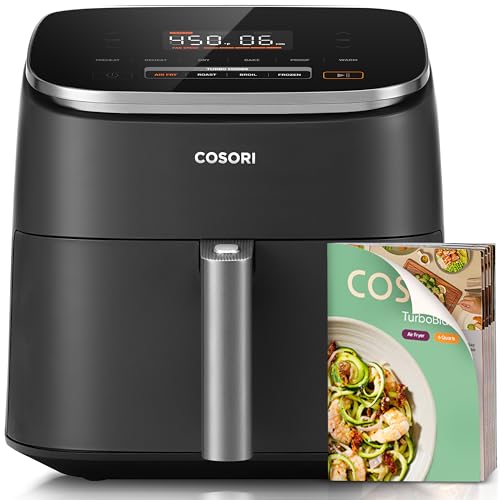
Cosori TurboBlaze 6-Qt: what 22,159 reviews agree on
The most-reviewed basket air fryer here: 4.8 stars from 22,159 Amazon ratings at $89.99. A roomy 6-quart square basket for families who want crisp results without paying for a dual-zone model.
Some links on this site are affiliate links. If you buy through them we may earn a small commission, at no extra cost to you.